Modern Language Association of America
The Modern Language Association of America, commonly known as the MLA, serves as the primary professional organization in the United States for scholars specializing in language and literature. With a mission to strengthen the study and teaching of these disciplines, the MLA supports a global community of over 20,000 members across 100 countries. Its membership primarily consists of professors, graduate students, and academic scholars focused on English, comparative literature, and various modern languages.
While headquartered in New York City, the association's influence is international, providing essential resources and networking opportunities for the humanities academic community.
Key Facts
- Founded: 1883 by Aaron Marshall Elliott.
- Membership: 20,000+ members in 100 countries.
- Core Focus: Study and teaching of modern languages and literatures.
- Key Publication: The MLA Handbook (over 6.5 million copies sold).
- Leadership: Currently led by President Tina Lu and Executive Director Paula M. Krebs.
History and Foundation
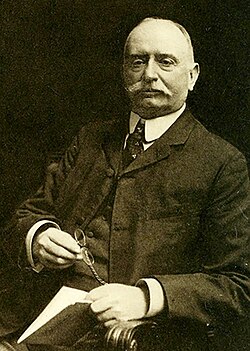
Established in 1883, the MLA began as an advocacy and discussion group dedicated to the study of modern languages—defined as all languages excluding classical ones like ancient Greek and Latin. The organization was formed to promote the scientific and academic study of languages including French, Spanish, German, Italian, and English.
Governance and Leadership
The MLA is governed by an Executive Council, which is periodically elected by the membership in accordance with the MLA Constitution. The association's officers are also elected by its members. Tina Lu currently serves as the president through 2026, and Paula M. Krebs serves as the Executive Director.
Academic Contributions and Activities
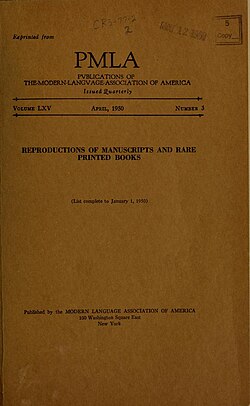
The MLA is renowned for its contributions to academic standardization and scholarly communication. It publishes several high-impact journals, most notably the Publications of the Modern Language Association of America, a prestigious venue for literary studies, and Profession, an online publication hosted on MLA Commons that addresses professional challenges for educators.
One of the association's most visible contributions is the MLA Handbook, a style guide used extensively by undergraduate and high school students. Additionally, the MLA maintains the MLA International Bibliography, the industry-standard database for language and literature research.
The Annual Convention
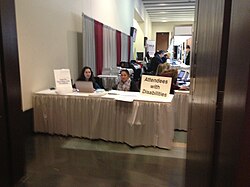
Since 1884, the MLA has hosted a four-day national convention. Originally held in late December, the event now typically begins on the first Thursday following January 2. Attracting between 8,000 and 12,000 attendees, the convention is a critical hub for the profession, featuring approximately 800 sessions, including paper presentations, poetry readings, and interdisciplinary forums.
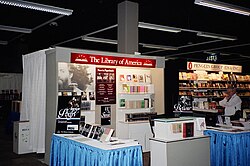
Beyond scholarship, the convention serves as a major recruitment center where university language departments interview candidates for teaching positions, supplemented by the association's online Job Information List (JIL).
Digital Initiatives and Outreach
In 2016, the MLA co-launched Humanities Commons, an open-access hub for crossdisciplinary research, alongside other organizations like the College Art Association. The MLA also provides the MLA Language Map, which utilizes U.S. Census data to visualize the distribution of speakers of various languages across the United States and Canada.
Controversies and Resolutions
The MLA has frequently been a site of debate regarding the intersection of academia and politics. Some critics, such as Roger Kimball and Hilton Kramer, have argued that the association has supported a "politicization" of literary study by elevating popular culture to the same status as classic literature.
The association has also faced internal and external conflict regarding resolutions related to Israel. In 2014, a resolution critical of Israeli academic travel restrictions failed to pass. In 2017, the membership voted 113–79 to reject a proposed boycott of Israeli academic institutions, a move supported by the BDS (Boycott, Divestment and Sanctions) movement. More recently, at the 2025 meeting in New Orleans, the Executive Council blocked a member vote on a BDS resolution, citing legal and fiduciary challenges, which led to protests from some members.
Additionally, the association faced scrutiny in 2018 when then-President-Elect Judith Butler wrote a letter in support of professor Avital Ronell during a sexual harassment suit. The MLA Executive Council stated the letter was unauthorized and contrary to the association's professional ethics.
Organizational Network
| Category | Associated Organizations |
|---|---|
| Regional Associations | Midwest, Northeast, Pacific Ancient and Modern, Rocky Mountain, South Atlantic, and South Central Modern Language Associations. |
| Affiliated Societies | Association of Departments of English, Association of Departments of Foreign Languages, Society for Medieval Feminist Scholarship. |
| International Partners | International Federation for Modern Languages and Literatures (FILLM). |
Frequently Asked Questions
What is the primary purpose of the MLA?
The primary purpose of the Modern Language Association is to strengthen the study and teaching of language and literature through professional support, scholarly publications, and academic networking.
What is the MLA Handbook?
The MLA Handbook is a widely used style guide that provides standards for formatting papers and citing sources, specifically geared toward high school and undergraduate students.
Who can join the MLA?
Membership is primarily open to academic scholars, professors, and graduate students who study or teach English, other modern languages, and comparative literature.
When and where does the MLA Annual Convention take place?
The convention is a four-day event held annually starting the first Thursday after January 2, with the location rotating among major cities across different regions of the United States.
What is the MLA International Bibliography?
It is the standard online bibliographic database used by scholars in the fields of language and literature to locate research and publications.