Mixed-Species Feeding Flocks: Cooperation and Survival in the Avian World
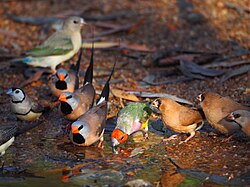
In the natural world, competition for resources is often seen as the primary driver of animal behavior. However, many birds defy this trend by forming mixed-species feeding flocks (also known as mixed hunting parties or "bird waves"). These are groups of typically insectivorous birds from different species that join together and move as a unit while foraging for food.
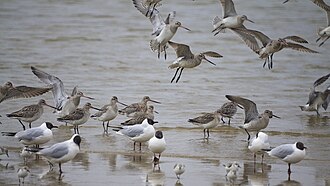
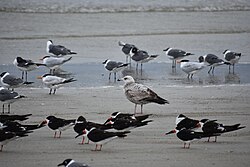
It is important to distinguish these flocks from feeding aggregations. While an aggregation is simply a crowd of various birds gathering at a location with high food availability, a mixed-species flock is a coordinated social structure where different species actively move together through their environment.
While the exact origins of these flocks remain a subject of research, scientists believe they are often initiated by specific "nuclear" species or influenced by the physical structure of the forest. For instance, in Sri Lanka, the greater racket-tailed drongo may use vocal mimicry to initiate these groups, while in the American tropics, packs of golden-crowned warblers often serve a similar purpose.
Key Facts
- Nuclear Species: Act as the core of the flock, stimulating its formation and maintaining cohesion.
- Sentinel Species: Non-gregarious birds that alert the flock to approaching predators.
- Associate Species: Birds that join the flock only when it enters their specific territory.
- Primary Benefits: Increased food discovery and a reduced risk of predation.
- Primary Costs: Potential for kleptoparasitism (food theft) and the use of sub-optimal foraging areas.
The Social Hierarchy of the Flock
Mixed-species flocks are not random gatherings; they typically follow a structured composition based on the roles the birds play:
Nuclear Species
The nuclear species is the anchor of the group. These birds are generally social within their own species and are generalists that use a gleaning strategy (picking insects off leaves or bark). They exert a disproportionately large influence on the flock's movement and stability.
Associate or Attendant Species
Associate species are more opportunistic. They typically trail the flock only after it has entered their territory. Research suggests that these birds often experience higher fitness by following a mixed-species flock.
Sentinel Species
Sentinels are often fly-catching birds that are not naturally social. Their primary contribution to the group is vigilance; they provide critical warnings to the other members when a predator is spotted.
The Evolutionary Trade-off: Benefits vs. Costs
Ecologists generally expect species in the same ecological niche to compete. However, mixed-species flocks prove that cooperation can be more advantageous. Interestingly, birds with similar body sizes, taxonomy, and foraging styles are more likely to cooperate.
The Advantages
- Enhanced Foraging: Birds in these flocks are better at spotting food, avoiding areas that have already been depleted, and flushing insects out of hiding.
- Predation Defense: Being surrounded by other birds reduces the risk of being singled out by a predator. Additionally, a larger group is more likely to detect a predator early.
The Drawbacks
Participation is not without risk. Some birds may abandon their optimal feeding grounds to follow a flock into lower-quality areas. Others may be forced to alter their natural foraging strategies to fit the group's pace. Furthermore, there is an increased risk of kleptoparasitism, where one bird steals food caught by another.
Regional Variations in Flocking Behavior
The complexity and stability of these flocks vary significantly across different global regions.
The Neotropics
In tropical forests, these flocks reach their peak development. In southern Mexico, black-throated shrike-tanagers often act as core members, while three-striped warblers lead in other parts of Central America. In South America, core species include various antbirds, antshrikes, and New World warblers. These flocks typically move slowly, at about 0.3 kilometers per hour, with each species foraging in its preferred niche (such as the ground, trunks, or high foliage).
The Old World Tropics
Flocks in the Old World are generally looser associations. In tropical Asia, particularly Sri Lanka, however, flocks can be very stable and number in the hundreds. In the Sinharaja Forest Reserve, the silence of the jungle is often broken by the noisy calls of the orange-billed babbler and greater racket-tailed drongo. In Africa, bulbuls and sunbirds often serve as core species, while drongos and paradise-flycatchers act as sentinels (though they are also known to steal prey).
Summary of Flock Roles and Characteristics
| Role | Key Characteristics | Primary Function |
|---|---|---|
| Nuclear | Generalists, social, gleaning foragers | Initiation and cohesion of the flock |
| Associate | Territorial, opportunistic | Following the flock for fitness gains |
| Sentinel | Fly-catchers, rarely gregarious | Predator detection and alerting |
Frequently Asked Questions
What is the difference between a feeding flock and a feeding aggregation?
A feeding flock consists of different species that move together as a coordinated unit while foraging. A feeding aggregation is simply a group of various species gathering in one spot because there is a lot of food available.
Why do birds with similar foraging styles flock together?
Research indicates that birds with similar body sizes and foraging styles are more likely to cooperate, as they can collectively improve their ability to find food and avoid predators without competing aggressively.
Do all birds in a mixed-species flock benefit equally?
No. While many gain safety and food, some birds suffer costs, such as leaving their best feeding areas or having their food stolen by other members of the flock.
Which regions have the most developed mixed-species flocks?
The Neotropics (Central and South America) have some of the most highly developed and structured insectivorous feeding flocks, which are a typical feature of their tropical forest bird life.
How fast do these flocks typically move?
In the Neotropics, a typical mixed feeding flock moves through the forest at a pace of approximately 0.3 kilometers per hour (0.19 mph).