Ovenbirds: The Diverse Furnariidae Family of the Neotropics
The Furnariidae, commonly known as ovenbirds or furnariids, represent a vast and ecologically diverse family of small suboscine passerine birds. Found throughout the Neotropics—stretching from Mexico and Central America down to southern South America—this family comprises approximately 321 species across 71 genera. It is important to distinguish these birds from the North American ovenbird (Seiurus aurocapilla), which belongs to the wood warbler family (Parulidae) and is only distantly related.
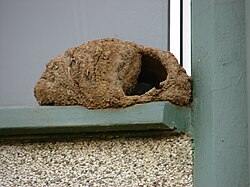
These birds are primarily insectivores, though their nesting habits vary wildly. The family takes its name from the horneros, which construct elaborate, oven-like nests made of clay. The name is derived from the Spanish word for oven, horno. While the horneros are famous for their masonry, other members of the family build nests from sticks or utilize tunnels and rock clefts.
Regardless of the material, furnariid nests always feature a cover. Females typically lay between one and six eggs, which are pale blue, greenish, or white. The incubation period lasts 15 to 22 days, and the young generally fledge within 13 to 20 days after hatching.
Key Facts
- Species Count: Approximately 321 species across 71 genera.
- Distribution: Mexico, Central America, and South America.
- Size: Small to medium-sized birds, ranging from 9 to 35 cm in length.
- Diet: Primarily insectivorous.
- Nesting: Ranges from clay "ovens" to stick nests and rock tunnels.
- Taxonomy: Divided into three main subfamilies: Sclerurinae, Dendrocolaptinae, and Furnariinae.
Habitat and Distribution
Furnariids are highly adaptable and can be found in nearly every Neotropical environment. Their distribution is a testament to their evolutionary success, with different species specializing in specific niches:
- Urban Areas: Rufous horneros are frequently found in city parks.
- Lowlands: Foliage-gleaners are common in the tropical Amazonian lowlands.
- Highlands: Various species of miners inhabit the temperate, barren Andean highlands.
- Coastal Regions: The seaside and surf cinclodes are specifically associated with rocky coastlines.
Taxonomy and Systematics
Modern molecular genetic studies have refined the classification of the Furnariidae family. The family is split into three distinct subfamilies, with Sclerurinae identified as the first group to diverge evolutionarily.
Subfamily Sclerurinae
This group includes the miners (genus Geositta) and leaftossers (genus Sclerurus), totaling 18 species.
Subfamily Dendrocolaptinae
Known as the woodcreepers, this subfamily contains 60 species. They are further divided into the "intermediate" woodcreepers (Tribe Sittasomini) and the "strong-billed" woodcreepers (Tribe Dendrocolaptini), which include the scythebills and narrow-billed woodcreepers.
Subfamily Furnariinae
The "true" ovenbirds and their allies are the most populous group, with 243 species. This subfamily is highly diverse, encompassing several tribes:
- Furnariini: Includes the horneros and earthcreepers.
- Philydorini: Comprises foliage-gleaners and treehunters.
- Synallaxini: Includes spinetails, thornbirds, and canasteros.
- Pygarrhichini: Includes treerunners and xenops.
Recent phylogenetic research, including a major 2020 study by Michael Harvey and collaborators, continues to update these classifications, moving species between genera to better reflect their genetic heritage.
Summary of Furnariidae Classification
| Subfamily | Common Names | Approx. Species Count | Key Characteristics |
|---|---|---|---|
| Sclerurinae | Miners, Leaftossers | 18 | Earliest diverging group |
| Dendrocolaptinae | Woodcreepers | 60 | Strong bills, specialized for climbing |
| Furnariinae | True Ovenbirds, Spinetails | 243 | Most diverse; includes clay-nest builders |
Fossil Record
Compared to other passerine families, the Furnariidae have a notable fossil record. All identified fossils date back to the Pleistocene epoch. Researchers have described five distinct fossil species based on skeletal and cranial remains. Two of these species are classified within existing genera (Cinclodes and Pseudoseisura), while three belong to the extinct genus Pseudoseisuropsis.
Frequently Asked Questions
Are all ovenbirds related to the North American ovenbird?
No. The North American ovenbird (Seiurus aurocapilla) belongs to the Parulidae (wood warbler) family and is only distantly related to the Furnariidae family of the Neotropics.
Why are they called "ovenbirds"?
They are named after the horneros, a group within the family that builds clay nests resembling traditional ovens (hornos in Spanish).
What do ovenbirds eat?
The members of the Furnariidae family are primarily insectivores, feeding on various insects found in their respective habitats.
Where can you find Furnariidae birds in the wild?
They are found throughout the Neotropics, from Mexico and Central America to southern South America, inhabiting everything from Amazonian lowlands to the Andean highlands and rocky coasts.
How long does it take for ovenbird eggs to hatch?
The eggs typically hatch after a period of 15 to 22 days.