Cracidae: The Fascinating World of Chachalacas, Guans, and Curassows
The Cracidae are a family of large, turkey-like birds native to the tropical and subtropical regions of Central and South America. Comprising chachalacas, guans, and curassows, these birds are essential components of Neotropical ecosystems. While most are found deep in the Americas, the plain chachalaca extends its reach into the southernmost parts of Texas in the United States, and specific species inhabit the islands of Trinidad and Tobago.
Key Facts
- Family: Cracidae, established by Constantine Samuel Rafinesque in 1815.
- Distribution: Primarily Central and South America, with one species in the USA.
- Diversity: Includes 11 genera and 57 extant species.
- Diet: Omnivorous, feeding on fruits, insects, and worms.
- Size Range: From the little chachalaca (38 cm) to the great curassow (nearly 1 m).
- Reproduction: Females incubate two to three large white eggs alone in tree nests.
Systematics and Evolution
Historically, the Cracidae were thought to be closely related to the Megapodiidae (Australasian mound-builders), and the two were sometimes grouped together in the order Craciformes. However, modern phylogenetic studies—the study of evolutionary relationships—have revealed that they are not a monophyletic group. Instead, Megapodiidae and Cracidae are recognized as successive early branching lineages within the order Galliformes.
The evolutionary timeline of the family is a subject of ongoing scientific debate. Molecular data suggests an origin as far back as the Late Cretaceous, though this remains a hypothesis due to the inconsistency of molecular evolution rates. Fossil evidence is limited, with some records appearing in the Oligocene. Some researchers propose that the four main modern lineages diverged rapidly between 40 and 20 million years ago.
The Role of Geography in Speciation
Much of the diversity within curassows and piping guans is attributed to vicariant speciation, where geographical barriers divide a population. The uplift of the Andes mountains played a critical role, creating new river basins that isolated bird populations and drove the evolution of distinct species. This is particularly evident in the distribution of curassows, which largely follows the layout of these river systems.
Classification and Diversity
The family is divided into two primary subfamilies: Penelopinae (guans) and Cracinae (which includes chachalacas and curassows). The classification is complex, with some researchers suggesting that all groups except the Penelopinae could be lumped into the Cracinae.
The Guans (Penelopinae)
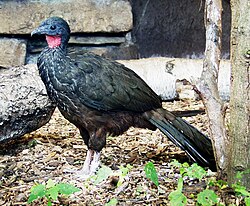
Guans are largely arboreal birds. This group includes the piping guans (genus Aburria), the black and sickle-winged guans (genus Chamaepetes), and the diverse genus Penelope, which contains 15 species.
The Chachalacas and Curassows (Cracinae)
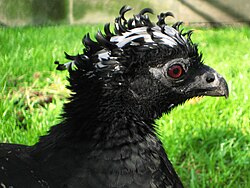
The Cracinae subfamily is further divided into tribes. The Ortalidini contains the chachalacas, which are smaller and prefer open, scrubby habitats. The Oreophasini is represented by a single survivor of an ancient lineage: the horned guan. Finally, the Cracini contains the curassows, including the genera Crax, Mitu (razor-billed curassows), Nothocrax, and Pauxi (helmeted curassows).
| Subfamily | Common Groups | Habitat Preference | Key Characteristics |
|---|---|---|---|
| Penelopinae | Guans | Arboreal (Trees) | Diverse piping and wattled varieties |
| Cracinae | Chachalacas, Curassows | Trees to Open Scrub | Vocal calls; colorful facial ornaments in curassows |
Physical Characteristics and Behavior
Cracids are characterized by their large size and general resemblance to turkeys. While guans and curassows are primarily tree-dwellers, chachalacas are more terrestrial. Many species possess long tails to help them navigate the forest canopy. While their plumage is generally dull, curassows often feature striking facial ornaments.
These birds are highly vocal; the name "chachalaca" is an onomatopoeia derived from the sound of their call. Their breeding habits are specialized: the female handles incubation alone, and the chicks are precocial, meaning they are born relatively mature. These young birds possess an immediate instinct to climb and seek refuge in the nesting tree and can fly within a few days of hatching.
Frequently Asked Questions
Are cracids related to turkeys?
Yes, they belong to the same order, Galliformes, and share a similar general appearance, though they are a distinct family native to the Americas.
Where can cracids be found in the wild?
They are primarily found in tropical and subtropical Central and South America, with the plain chachalaca reaching as far north as southern Texas.
What do cracids eat?
Their diet consists mainly of fruits, insects, and worms.
How do cracid chicks survive after hatching?
The chicks are precocial, meaning they are born with the ability to climb and seek refuge in trees immediately, and they can fly within days.
What caused the different species of curassows to evolve?
Much of their speciation was caused by vicariance, specifically the uplift of the Andes mountains, which isolated populations by creating new river basins.