Misiones Province: Argentina's Lush Northeastern Frontier
Nestled in the northeastern corner of Argentina within the Mesopotamia region, Misiones is a land of vibrant red soil, cascading waterfalls, and deep colonial history. Bordered by Paraguay to the northwest and Brazil to the north, east, and south, this province serves as a unique cultural and ecological bridge in South America.
From the spiritual legacy of the Jesuit missions to the breathtaking power of the Iguazú Falls, Misiones offers a blend of natural splendor and a diverse immigrant heritage that distinguishes it from the rest of the country.
Key Facts
- Capital: Posadas
- Population: 1,280,960 (2022 Census)
- Primary Crop: Yerba mate (Argentina's leading producer)
- Key Landmark: Iguazú Falls, a shared natural wonder with Brazil
- Climate: Humid subtropical (Köppen Cfa)
- HDI: 0.842 (Very High)
History and Cultural Evolution
Long before European arrival, the region was inhabited by various indigenous tribes, including the Kaingang, Xokleng, and later the Guarani. European exploration began in the early 16th century, with Sebastian Cabot discovering Apipé Falls in 1527 and Álvar Núñez Cabeza de Vaca reaching Iguazú Falls in 1541.
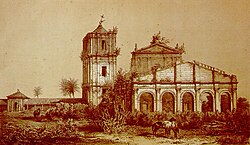
The 17th century marked the era of the Jesuit Reductions—mission villages established by the Society of Jesus to teach the Guarani agriculture and crafts. At its peak, 30 such villages existed, including the notable San Ignacio. However, this prosperity ended in 1773 when the Jesuit Order was suppressed by Pope Clement XIV, leading to the abandonment of the missions and the rise of a brutal plantation economy based on forced labor.
The political status of Misiones remained volatile for decades, contested by Spain, Argentina, and Paraguay. Following the War of the Triple Alliance (1864–1870), Argentina secured definitive control of the territory. To populate the region, President Nicolás Avellaneda passed the Immigration and Colonization Law in 1876, encouraging European settlement.
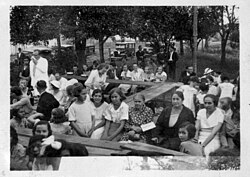
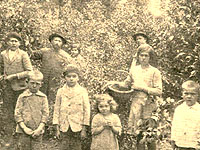
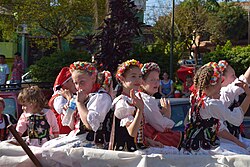
Unlike other Argentine provinces where immigrants arrived via Buenos Aires, many settlers in Misiones entered through Southern Brazil. This brought a rich tapestry of ethnicities, including Poles, Ukrainians, Germans, Italians, and Swedes, who integrated into the local economy through farming and forestry.
Geography and Natural Environment

Misiones is characterized by its distinctive reddish soil, caused by high iron content in the plateau's rocks. The landscape is defined by the Sierra de Misiones, reaching a peak of 843 meters at Cerro Rincón, and is embraced by three major rivers: the Paraná, Uruguay, and Iguazú.
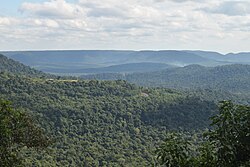
The province is home to the Selva Misionera, part of the larger Alto Paraná Atlantic forests. This biome is largely protected within the Iguazú National Park, which preserves the original rainforest ecosystem.
Climate Patterns
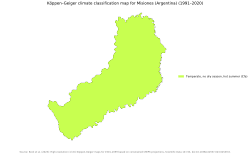
The region experiences a humid subtropical climate (Cfa) with no distinct dry season and abundant rainfall. The mean annual temperature is approximately 21°C (70°F). While summers are hot, often exceeding 32°C (90°F), winters are short and generally mild, though rare polar air incursions can bring frost or even snow to high-altitude towns like Bernardo de Irigoyen.
Economy and Infrastructure
The economy of Misiones is diversified, though it remains relatively underdeveloped compared to the national average. Agriculture is a cornerstone, contributing roughly 10% of the total output. The province is the primary producer of yerba mate in Argentina, yielding approximately half a million tons annually.
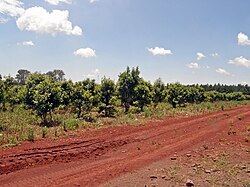
Other agricultural products include tea, citrus fruits, tobacco, and cocoa. Forestry is also significant, with the production of roundwood from species such as the Paraná pine and Eucalyptus. Tourism and light manufacturing each contribute about 13% to the provincial economy.
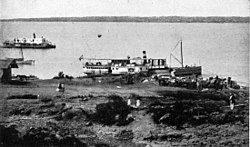
Modern infrastructure is highlighted by the Yacyretá and Itaipú hydroelectric dams on the Paraná River. While these projects increased electricity production, the resulting rise in water levels in the 1990s led to environmental challenges, including an increase in mosquito-borne illnesses like dengue and malaria.
Demographics and Governance
The population of Misiones is a blend of indigenous Guarani descendants, Spanish colonists, and a wide array of European immigrants. This diversity is celebrated in local culture and festivals. The province maintains a high literacy rate of 91.4%.
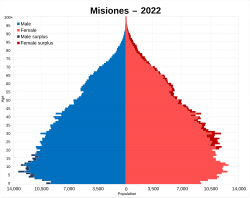
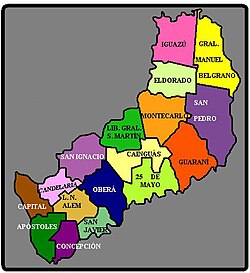
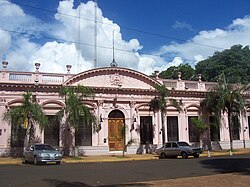
Administratively, the province is led by a popularly elected governor and a legislature of 40 members. It is divided into 17 departments, with the capital, Posadas, serving as the administrative hub.
| Category | Detail |
|---|---|
| Total Area | 29,801 km² |
| Population (2022) | 1,280,960 |
| GDP (2018) | 445 billion pesos (~US$17 billion) |
| Administrative Divisions | 17 Departments, 78 Municipalities |
| Main Rivers | Paraná, Uruguay, Iguazú |
Frequently Asked Questions
What is the primary economic product of Misiones?
The chief source of agricultural income is yerba mate, with Misiones serving as Argentina's leading producer, yielding about 500,000 tons per year.
How did the Jesuit Reductions influence the region?
In the 17th century, Jesuits established 30 mission villages where they taught the indigenous Guarani western-style agriculture and crafts, creating a period of significant regional prosperity before the order's suppression in 1773.
What causes the red color of the soil in Misiones?
The reddish hue of the soil is due to the significant quantities of iron present in the rocks of the Misiones plateau.
Which major natural landmark is located in Misiones?
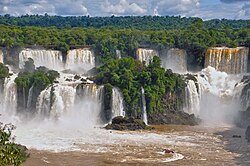
The province is home to the spectacular Iguazú Falls, located in the Iguazú National Park near the city of Puerto Iguazú, shared with Brazil.
Who are the primary ethnic groups in the province?
The population consists of descendants of indigenous peoples (mainly Guarani), Spanish colonists, and various European immigrants, including Poles, Ukrainians, Germans, and Italians.