Minute Pirate Bugs: The Tiny Predators of the Insect World
In the complex ecosystem of agricultural crops and natural habitats, some of the most effective defenders are too small to see easily. The Anthocoridae family, commonly known as minute pirate bugs or flower bugs, consists of tiny, highly efficient predators that play a vital role in biological control. With 500 to 600 species distributed worldwide, these insects are much more than just small bugs; they are essential allies in managing soft-bodied pest populations.
Key Facts
- Common Names: Minute pirate bugs, flower bugs, or insidious flower bugs.
- Size: Typically range from 1.5 to 5 mm in length.
- Diet: Primarily predaceous, feeding on small, soft-bodied arthropods.
- Biological Control: Widely used in greenhouses to combat mites and thrips.
- Life Cycle: Eggs hatch in 3–5 days; nymphs progress through five instars over at least 20 days.
Physical Characteristics and Identification
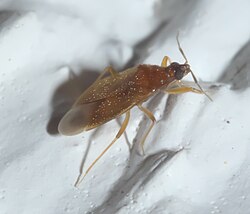
Anthocorids are characterized by their small, elongated, and flat bodies. They often display distinctive black and white patterns. Their anatomy is specialized for a predatory lifestyle, featuring a labium—a three-segmented piercing and sucking beak. This tool allows them to inject digestive enzymes into their prey to facilitate feeding.
While they may superficially resemble plant bugs (family Miridae), they can be distinguished by the presence of two ocelli (simple eyes) in adults. Their wings consist of two pairs: the hemelytra (partially hardened forewings) and membranous hindwings. Their antennae are notably longer than their heads and are visible when viewed from above.
Habitat and Behavior
These insects are highly adaptable. While many species prefer cryptic habitats, such as plant galls, they are frequently found in open surface environments and various agricultural crops. Although some species may consume plant material, most are active predators throughout both their nymph and adult stages.
Beneficial Roles in Agriculture
Because of their predatory nature, Anthocorids are excellent biological control agents. A notable example is Orius insidiosus, often called the "insidious flower bug." This species is frequently released in greenhouse environments to manage populations of mites and thrips. Additionally, Orius insidiosus is known to feed on the eggs of the corn earworm (Helicoverpa zea), providing a natural method of pest suppression.
Life Cycle and Human Interaction
The life cycle of a minute pirate bug begins when eggs are laid within plant material. These eggs typically hatch within 3 to 5 days. The development of the nymphs is a gradual process, requiring at least 20 days to progress through five distinct instars (developmental stages). Once they reach adulthood, these insects generally live for approximately 35 days.
Regarding human interaction, it is possible for these small insects to bite humans. However, it is important to note that they do not feed on human blood, nor do they inject venom or saliva. While reactions to bites can occur, they typically range from no effect at all to minor swelling and irritation.
Scientific Classification and Systematics
The family Anthocoridae belongs to the order Hemiptera (true bugs) and the subfamily Anthocorinae and Lasiochilinae. The taxonomic structure is complex, involving numerous tribes and genera.
| Rank | Classification |
|---|---|
| Kingdom | Animalia |
| Phylum | Arthropoda |
| Class | Insecta |
| Order | Hemiptera |
| Family | Anthocoridae |
| Subfamilies | Anthocorinae, Lasiochilinae |
Frequently Asked Questions
Are minute pirate bugs dangerous to humans?
No. While they can bite, they do not seek human blood and do not inject venom. Most people experience nothing, while some may see minor irritation or swelling.
How do they help farmers?
They act as natural predators. Species like Orius insidiosus are used in greenhouses to eat pests like thrips and mites, reducing the need for chemical pesticides.
What do minute pirate bugs eat?
Most species are predaceous, meaning they hunt and eat other small, soft-bodied arthropods, though some may consume plant material.
How long do these insects live?
Adults typically live for about 35 days, following a nymph stage that lasts at least 20 days.
How can I tell them apart from plant bugs?
The easiest way to distinguish Anthocoridae from Miridae (plant bugs) is by checking for the presence of two ocelli in the adult specimens.