Military Staff Systems: Evolution, Structure, and Command Control
In the complex environment of modern warfare, a commander cannot manage every detail of a large military unit alone. This is where the military staff (or general staff) becomes essential. A military staff is a specialized group of officers, enlisted personnel, and civilians who support a commander in their command and control role. They act as the "brain" of the operation, handling the critical tasks of planning, analysis, and information gathering.
The primary purpose of a staff is to facilitate the flow of information between the commanding officer, subordinate units, and external stakeholders. By coordinating and supervising the execution of orders, the staff ensures that complex, simultaneous operations are carried out accurately. Depending on the organizational philosophy, a staff may be centralized—offering tight top-down control but requiring a larger headquarters—or decentralized, which encourages personal initiative, speed of action, and a faster OODA loop (Observe, Orient, Decide, Act).
Key Facts
- Core Function: Staffs provide planning, analysis, and coordination to support a commander's decision-making.
- Functional Groups: Most staffs are divided into specialized areas such as intelligence, logistics, operations, and administration.
- Continental System: A standardized numbering system (1-9) used by NATO and many modern armies to identify staff functions.
- Commonwealth System: A traditional three-branch system (G, A, and Q) historically used by the UK and its former colonies.
- Rotation: Many systems rotate officers between line command and staff roles to ensure a well-rounded leadership perspective.
Historical Evolution of the General Staff
The Austrian Influence
The concept of a formal general staff gained significant momentum in Austria during the 18th century. Following failures at the Battle of Leuthen, Count Leopold Joseph von Daun advocated for a "great brain" to assist the Commander-in-Chief. This led to the creation of the Grosse Feldgeneralstab and Kleine Generalstab. By 1769, a permanent staff of 30 officers was established under Franz Moritz von Lacy.
Over time, the role of the Chief of Staff evolved from a purely administrative clerk to a strategic advisor. By 1805, Archduke Charles divided the staff into three directorates: Political Correspondence, Operations (planning and intelligence), and Service (administration and supply). This shift allowed the Commander-in-Chief to decide what should happen, while the Chief of Staff determined how it would be executed.
The French and Prussian Models
France's approach differed significantly under Napoleon Bonaparte. While General Louis Alexandre Berthier served as Chief of Staff, his role was primarily administrative—essentially acting as a "chief clerk." Napoleon personally handled all intelligence and operational planning, a workload that eventually became unsustainable.
Prussia, however, adopted and refined the Austrian model. Gerhard von Scharnhorst integrated intelligence and contingency planning into staff duties. Prussia also formalized the rotation of officers between command and staff assignments, a practice that persists in many armies today. In 1814, the Prussian General Staff was formally established by law, creating a blueprint for many modern military organizations.
Modern Staff Structures
The Continental Staff System
The Continental (or NATO) system uses a standardized alphanumeric code to identify staff functions. A letter denotes the type of headquarters, while a number denotes the functional area.
| Code | Functional Area | Description |
|---|---|---|
| 1 | Personnel | Manpower and human resources |
| 2 | Intelligence | Security and information operations |
| 3 | Operations | Current execution of missions |
| 4 | Logistics | Supply, transport, and maintenance |
| 5 | Plans | Future strategy and planning |
| 6 | Signals | Communications and IT |
| 7 | Training | Military education and joint engineering |
Headquarters prefixes include J for Joint (multiple services), N for Navy, A for Air Force, and M for Marine Corps. For example, an "N1" is the personnel officer of a naval headquarters.
The Commonwealth Staff System
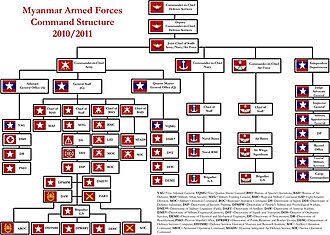
Historically, the United Kingdom and countries like Australia and Myanmar used a three-branch system:
- G Branch (General): Focused on operations and intelligence.
- A Branch (Adjutant): Focused on administration and personnel.
- Q Branch (Quartermaster): Focused on logistics and supplies.
In this system, officers were graded (GSO I, GSO II, GSO III) based on rank, with GSO I typically being a Lieutenant Colonel or Colonel. While the UK transitioned to the Continental system in 1984 and Australia in 1997 to improve interoperability with NATO and the US, some nations continue to use variations of this model.
The United States Joint Staff
The US system was reshaped by the National Security Act of 1947 and the Goldwater-Nichols Act of 1986. Rather than having a permanent career staff corps, the US uses a Joint Staff where members from different services rotate into positions. The Joint Staff supports the Chairman of the Joint Chiefs of Staff, while actual operational command remains with combatant commanders.
Frequently Asked Questions
What is the difference between a commander and a staff officer?
The commander is the decision-maker who holds ultimate responsibility for the unit and decides the objective. The staff officer provides the research, planning, and coordination necessary to turn the commander's decisions into actionable orders.
What is the OODA loop in the context of military staff?
The OODA loop (Observe, Orient, Decide, Act) is a decision-making cycle. A decentralized staff improves the OODA loop by allowing lower-level officers to act on local information quickly without waiting for approval from a distant central headquarters.
Why do some armies rotate officers between staff and command roles?
Rotation ensures that staff officers understand the practical realities of field command, and that commanding officers understand the logistical and planning constraints managed by the staff.
What does "Joint Staff" mean?
A Joint Staff consists of personnel from multiple military branches (e.g., Army, Navy, Air Force) working together under a single headquarters to coordinate multi-service operations.