Military Officers: Roles, Ranks, and Commissioning Pathways
In any armed force or uniformed service, an officer is an individual who holds a position of authority. While the term can broadly encompass commissioned officers, non-commissioned officers (NCOs), and warrant officers, it typically refers to commissioned officers. These are the senior members of a force who derive their legal authority from a commission granted by the head of state.
Key Facts
- Commissioned officers generally make up between 12.5% and 22.2% of modern military personnel, depending on the branch and nation.
- Navies and air forces typically have higher proportions of officers than armies because aircraft and ships require officer command.
- Commissioning pathways vary by country, ranging from university-level academies and ROTC to internal promotion from the ranks.
- Warrant officers serve as technical subject-matter experts and occupy a unique space between enlisted personnel and commissioned officers.
Officer Demographics and Distribution
The proportion of officers within a military varies significantly by era and service branch. In modern forces, commissioned officers typically represent between one-eighth and one-fifth of total personnel. For example, in 2013, officers constituted 17% of the British armed forces and 13.7% of the French armed forces. In 2012, the United States and Germany reported officer proportions of 16.4% and 18%, respectively.
Historically, these numbers were much lower. During World War I, British officers made up less than 5% of the force, a figure influenced in part by high casualty rates among junior officers. Conversely, the Spanish army in the early 20th century had a proportion of 12.5%, which was viewed as unusually high at the time.
Distribution also differs by branch. Armies generally have the highest total number of officers but a lower overall percentage. Navies and air forces maintain higher percentages because officers are required to fly military aircraft and command ships or submarines. In 2013, for instance, the British Army's officer proportion was 13.9%, while the Royal Air Force (RAF) stood at 22.2%.
Commissioning and Training in the United Kingdom
The British Armed Forces utilize three primary entry routes for officers. One common path is for individuals to enlist in the junior ranks and rise to senior non-commissioned officer status (starting at sergeant) before becoming Service Entry (SE) officers, often called "ex-rankers." Those who complete this process after age 30 are designated as Late Entry (LE) officers.
For those entering directly, training is rigorous and branch-specific:
- British Army: Direct Entry (DE) officers undergo a 44-week course at the Royal Military Academy Sandhurst, focusing on militarisation, leadership, and exercises. Army Reserve officers follow a modular course, with the final stages completed at Sandhurst.
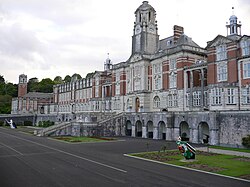
- Royal Navy: Candidates complete a 30-week Initial Navy Training (Officer) course at Britannia Royal Naval College, divided into militarisation and professional training.
- Royal Air Force: DE candidates attend a 24-week Modular Initial Officer Training Course at RAF College Cranwell. Reserve officers undergo a four-month program involving residential weekends and intense training.
- Royal Marines: Officers undergo a 15-month course at the Commando Training Centre, covering combat tactics, leadership, and international affairs.
Historically, British Army commissions were purchased until the Cardwell Reforms of 1871, whereas the Royal Navy maintained a more meritocratic system.
Commissioning Pathways in the United States
The United States employs a diverse array of accession sources to populate its officer corps.
Service Academies
Institutions such as the United States Military Academy (USMA) and the United States Air Force Academy (USAFA) provide four years of training. Graduates typically receive active-duty regular commissions immediately and account for approximately 20% of the U.S. officer corps.

ROTC and Officer Candidate Schools
The Reserve Officers' Training Corps (ROTC) operates across the Army, Navy, Marine Corps, Air Force, and Space Force. Additionally, Federal Officer Candidate Schools (OCS) and Officer Training School (OTS) provide accelerated pathways for college graduates. Other specialized programs include the Marine Corps Platoon Leaders Class (PLC) and National Guard OCS.
Warrant Officers
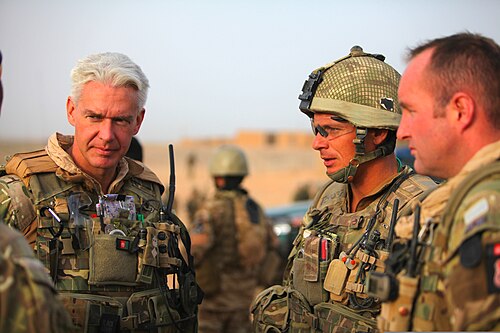
Warrant officers (WO) and chief warrant officers (CWO) are technical specialists who do not require a bachelor's degree. They are selected from experienced senior enlisted ranks. While they are below commissioned officers in the hierarchy, they are entitled to the same customs and courtesies. In the U.S., the Air Force program remained dormant from the 1980s until its resurrection in 2024, while the Space Force has not established warrant ranks.
Historical and Discontinued Programs
The U.S. military has phased out several specialized programs over time. The Aviation Officer Candidate School (AOCS) once produced naval aviators and flight officers but was merged into OCS in the mid-1990s. Similarly, the Naval Aviation Cadet (NAVCAD) and Marine Aviation Cadet (MarCad) programs allowed individuals with some college education to train as pilots before receiving their commissions.
The Air Force also discontinued its aviation cadet program in the 1960s as it moved toward a 100% college-graduate officer corps. Additionally, the Academy of Military Science (AMS), which trained Air National Guard officers, was discontinued in favor of the standard OTS curriculum.

Summary of Officer Types and Training
| Officer Type | Primary Source of Authority | Typical Training/Entry Path | Primary Focus |
|---|---|---|---|
| Commissioned Officer | Head of State (Commission) | Academies, ROTC, OCS, Sandhurst | Command and Leadership |
| Warrant Officer | Warrant/Presidential Commission | Experienced Enlisted Ranks | Technical Specialization |
| Non-Commissioned Officer | Appointment/Promotion | Enlisted Service Progression | Tactical Supervision |
Frequently Asked Questions
What is the main difference between a commissioned officer and a warrant officer?
Commissioned officers are generalists focused on command and leadership, deriving authority from the head of state. Warrant officers are technical subject-matter experts selected from the senior enlisted ranks.
Why do navies and air forces have a higher percentage of officers than armies?
This is primarily because the operation of military aircraft and the command of naval vessels and submarines are roles specifically designated for commissioned officers.
What is a "Service Entry" officer in the British military?
A Service Entry officer is someone who first enlisted in the junior ranks, reached a senior non-commissioned officer rank (such as sergeant), and was subsequently commissioned.
How did the purchase of commissions work in the UK?
Until the Cardwell Reforms of 1871, officers in the British Army could purchase their commissions, meaning they paid for their rank rather than earning it solely through merit or training.
Do all U.S. officers need a college degree?
While most commissioned officers require a bachelor's degree, warrant officers are selected based on experience and technical expertise from the enlisted ranks and do not require a degree.