Militarism: Global Perspectives on State Power and Military Influence
Militarism is the belief or desire of a government or its people that a state should maintain a strong military capability and utilize it aggressively to expand national interests or values. Beyond mere defense, militarism often involves the glorification of the military and the ideals of a professional military class, leading to a state where the armed forces hold a predominant role in administration and policy.
Key Facts
- Definition: The prioritization of military strength and its aggressive use to further national goals.
- Administrative Impact: In highly militarized states, military interests often become identical to national interests.
- Economic Scale: Some nations, such as Ukraine (2024), spend over 30% of their GDP on military needs.
- Political Influence: Militarism can manifest as direct control via military juntas or indirect influence through policy-making.
Militarism in Germany: From Prussia to the Third Reich
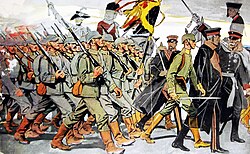
The roots of German militarism are deeply embedded in the 17th-century reign of Frederick William, Elector of Brandenburg, who established an effective military administration. This trend accelerated under Frederick William I, the "soldier king," who in 1713 increased annual military spending to 73% of Prussia's entire budget. By 1740, the Prussian Army grew to 83,000 men, leading observers to describe Prussia not as a country with an army, but as an "army with a country."
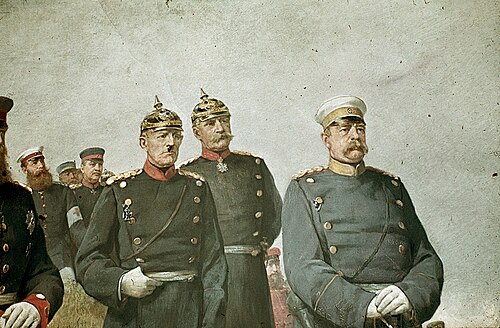
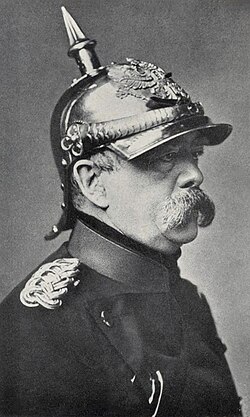
This culture created a system where the officer class dominated civil administration. By the 1900s, this evolved into militant monarchism under Wilhelm II. Although Bismarck was a civilian, the culture was so pervasive that he often wore military uniforms. Eventually, General Erich Ludendorff became the chief policy maker and director of the Reich in 1917, exercising the constitutional powers of the Emperor.
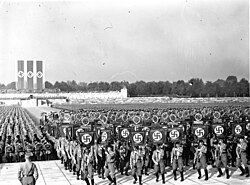
Despite the Treaty of Versailles' attempts to dismantle this system after World War I, militarism persisted. The Weimar Republic (1918–1933) faced constant threats from paramilitary organizations like the Freikorps and Der Stahlhelm. The Black Reichswehr was even created as a secret reserve to bypass the 100,000-man limit imposed by the Allies. Many of these radical elements eventually merged into the Nazi party's Sturmabteilung (SA).
Asian Perspectives: Japan, India, and North Korea
Imperial Japan
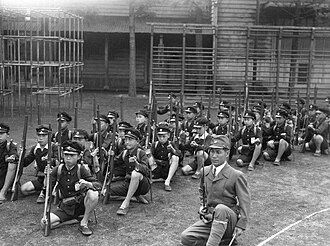
In the 1920s, Japan's military gained immense power through the "Military Ministers to be Active-Duty Officers Law," which gave the army and navy veto power over the Cabinet. This was compounded by gekokujō, or institutionalized disobedience, where junior officers assassinated seniors to push radical agendas, such as during the February 26 Incident of 1936.
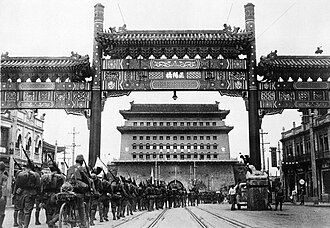
The Great Depression further fueled these ambitions. The Kwantung Army staged the Mukden Incident in 1931, leading to the invasion of Manchuria. This expanded into the Second Sino-Japanese War in 1937 and eventually the attack on Pearl Harbor in 1941.
India and North Korea
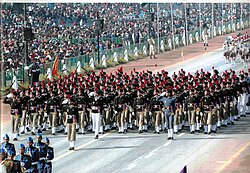
India's military expansion was driven by post-independence tensions with Pakistan over Kashmir and the 1962 Sino-Indian War. This commitment to military preparedness culminated in the 1998 nuclear tests. Today, Jammu and Kashmir remains one of the most militarized regions globally.
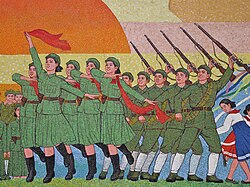
In North Korea, militarism is a central pillar of state identity, often expressed through pervasive propaganda and a "military-first" policy.
Militarism in the Middle East and Eurasia
Turkey
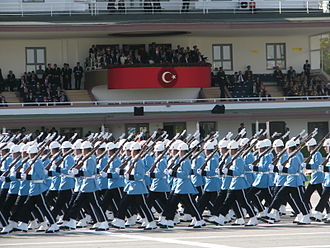
While the Ottoman Empire relied on military might, modern militarism entered Turkish daily life through the Republic's schools after 1923. The military, having led the War of Liberation, viewed itself as the guardian of the state. This led to several military coups in 1960, 1971, and 1980, as well as a "post-modern coup" in 1997 and an unsuccessful attempt in 2016.
Iraq and Syria
Under the Ba'athists from 1968, Iraq aggressively militarized. By 1981, military spending was 370% higher per capita than education spending. By 1990, Iraq was the most militarized country per capita in the world. However, this massive investment did not translate to effectiveness, as the army was routed in 1991 and 2003.
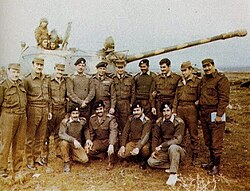
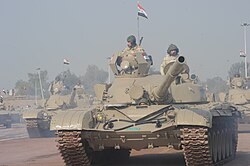
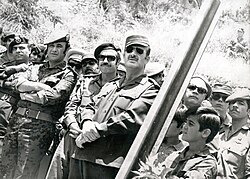
Syria similarly maintained a strong military focus under the Assad regime to secure state power.
Russia and the Soviet Union
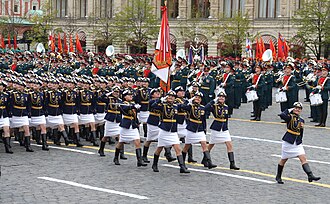
The Soviet Union reached its military peak during the Cold War, dominating Eastern Europe via the Warsaw Pact. In the modern era, Russia continues to mobilize youth through programs like the Yunarmiya (Young Army) to provide basic military skills.
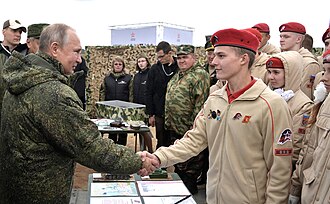
The Americas: United States and Venezuela
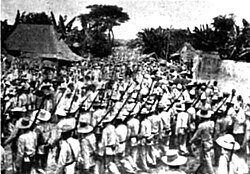
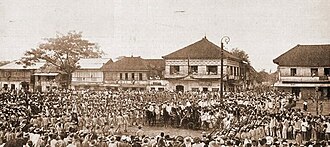
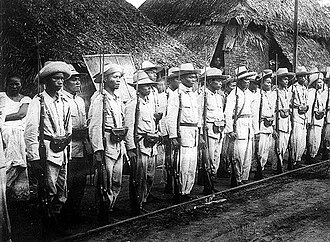
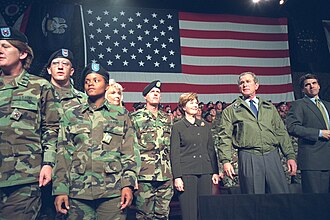
In the United States, military expansion was notably seen during the Spanish-American War to control new territories like the Philippines and Puerto Rico. Modern U.S. military spending remains among the highest in the world by total value.
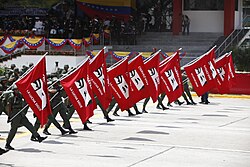
Venezuela's militarism is tied to the myth of Simón Bolívar and the history of caudillos (military leaders). This has created a "military ethos" where many civilians view military intervention in government as a positive force during crises.
Global Military Spending Comparison (2024)
The following tables illustrate the scale of modern militarism through economic data.
| Country | % GDP spent on military |
|---|---|
| Ukraine | 34.5 |
| Israel | 8.8 |
| Algeria | 8.0 |
| Saudi Arabia | 7.3 |
| Russia | 7.1 |
| United States | 3.4 |
| Country | $billions spent on military |
|---|---|
| United States | 997 |
| China | 567 |
| Russia | 401 |
| India | 308 |
| Ukraine | 183 |
| Germany | 99 |
Frequently Asked Questions
What is the difference between a strong defense and militarism?
While a strong defense focuses on protection, militarism involves the desire to use military capability aggressively to expand national interests and the glorification of military ideals in civilian life.
How did Prussian militarism affect its government?
The officer class provided most of the civil administration, meaning the interests of the army and the interests of the state became virtually identical.
What was 'gekokujō' in Imperial Japan?
Gekokujō refers to institutionalized disobedience by junior officers, which sometimes led to the assassination of seniors or attempted coups to force radical policy changes.
Why is Venezuela's relationship with the military unique?
Due to the legacy of caudillos and Simón Bolívar, many Venezuelans believe that military intervention in government can actually open democratic opportunities rather than block them.
How did Iraq's military spending compare to its social spending?
In 1981, Iraq's per capita military spending was 370 percent higher than its spending on education.