Micropropagation: The Science of Rapid Plant Tissue Culture
Micropropagation, commonly known as plant tissue culture, is a sophisticated biotechnological practice used to rapidly multiply plant stock. By utilizing modern laboratory methods, scientists and horticulturists can produce a vast number of progeny plants from a very small amount of starting material. This process is essential for multiplying genetically modified plants, preserving endangered species, and producing seedless varieties.
The foundations of this field were pioneered in the late 1950s and early 1960s by Frederick Campion Steward, a botanist at Cornell University. Today, it is a cornerstone of commercial horticulture and agricultural research.
Key Facts
- Purpose: Rapidly produces genetically identical clones of a parent plant.
- Versatility: Used for plants that are seedless, sterile, or difficult to propagate via traditional cuttings.
- Efficiency: Can produce thousands of plants from a single explant (a small piece of plant tissue).
- Sterility: Performed in controlled, sterile environments to ensure disease-free growth.
- Applications: Widely used for orchids, ornamental plants, and fruit trees.
The Four Stages of Micropropagation
The transition from a single cell to a full-grown plant involves a precise, four-stage sequence designed to mimic and enhance natural growth.
1. Selection of the Mother Plant
The process begins by selecting a healthy, virus-free mother plant. Tissues—known as explants—are removed under sterile conditions. These explants can include stem tips, petals, pollen, or anthers. To prevent contamination, the material undergoes surface sterilization using bleach and alcohol washes before being placed on a growth medium.
The growth medium typically consists of water, macro and micronutrients, sucrose for energy, and plant growth regulators (hormones). A gelling agent, such as agar, is often added to provide structural support. While most media use sugar, photoautotrophic tissue culture allows for growth without it.
2. Multiplication
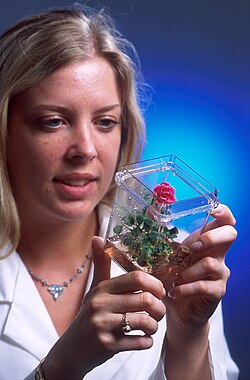
Once the tissue is established, it enters the multiplication phase. Through repeated cycles, a single explant can be scaled into thousands of plants. If the tissue grows as a callus (a mass of undifferentiated cells), it can be mechanically cut into smaller pieces and recultured. If it grows as plantlets (small plants), specific hormones are used to induce the growth of multiple offshoots.
3. Rooting and Acclimatization (Pretransplant)
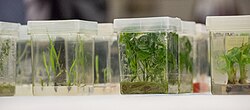
Before moving to soil, shoots are transferred to a rooting medium with a high auxin-to-cytokinin ratio to encourage root development. This stage occurs in vitro (in a sterile test tube environment).
A critical part of this phase is hardening. Because plants grown in vitro exist in high humidity and ideal conditions, they often fail to develop a functional cuticle (waxy outer layer) and stomata. Hardening involves slowly weaning the plantlets from high humidity and low light to prepare them for the harsher natural environment.
4. Transfer to Soil
In the final stage, the hardened plantlets are removed from the laboratory media and transferred into soil or potting compost for continued growth using conventional gardening methods.
Specialized Tissue Culture Methods
Depending on the goal—whether it is disease elimination or hybrid creation—different technical approaches are used:
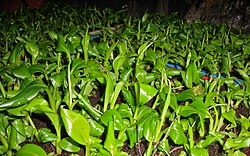
- Meristem Culture: Focuses on the meristem (the growth tip) and leaf primordia. This method is highly effective for producing disease-free plants and is used for coconut, strawberry, and sugarcane.
- Callus Culture: Involves creating a mass of undifferentiated parenchymatous cells. This callus is then manipulated with hormones to induce the growth of new organs and plantlets.
- Embryo Culture: The embryo is isolated and grown in an aseptic medium. This is vital for creating interspecific and intergeneric hybrids.
- Protoplast Culture: Plant cells are isolated using enzymes to remove the cell wall. These protoplasts are grown in liquid media (25-28°C) before being transferred to solid media to regenerate into full plants.
Comparison of Micropropagation vs. Traditional Methods
While micropropagation offers unprecedented speed and precision, it comes with specific trade-offs compared to seeds or cuttings.
| Feature | Micropropagation | Traditional (Seeds/Cuttings) |
|---|---|---|
| Production Rate | Extremely High (Thousands) | Low to Moderate |
| Genetic Consistency | Identical Clones | Variable (Seeds) / Clonal (Cuttings) |
| Health Status | Can be certified disease-free | Dependent on parent/seed quality |
| Initial Cost | High (Labor and Lab equipment) | Low |
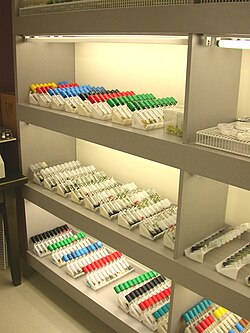
| Space Requirement | Very Low (Vertical/Lab storage) | High (Fields/Nurseries) |
Advantages and Limitations
Benefits
- High Fecundity: Produces far more propagules than conventional methods.
- Genetic Recovery: The only way to regenerate cells after protoplast fusion or genetic modification.
- Overcoming Sterility: Ideal for plants that produce few seeds or have recalcitrant seeds that cannot be stored.
- Robustness: Often results in faster-growing, more robust plants than those from seeds.
Drawbacks
- High Operating Costs: Labor typically accounts for 50–69% of expenses.
- Genetic Vulnerability: Since all plants are clones, a single disease could potentially wipe out an entire population.
- Technical Difficulty: Not all species respond well to tissue culture; some produce chemicals that kill the explant.
- Somaclonal Variation: Some cultivars may not "come true to type," meaning they deviate from the parent's characteristics.
Practical Applications
Micropropagation is widely used for germplasm storage and the protection of endangered species. In commercial horticulture, it ensures a steady supply of uniform, disease-free ornamental plants such as the Damask rose, chrysanthemum, and African violet (Saintpaulia ionantha). It is also applied to fruit trees, such as the pear (Pyrus communis), to optimize rootstock production.
Frequently Asked Questions
What is an explant in tissue culture?
An explant is a small piece of living plant tissue—such as a cell, a piece of a leaf, a stem tip, or an anther—that is removed from a mother plant and used to initiate a new culture.
Why is "hardening" necessary?
Plants grown in vitro are adapted to high humidity and low light, often lacking a protective waxy cuticle and functioning stomata. Hardening gradually exposes them to natural conditions so they don't dry out or succumb to disease when moved to soil.
Can any plant be grown via micropropagation?
No. Some plants are resistant to tissue culture because the correct growth medium is unknown, or the plant produces secondary metabolites that inhibit growth or kill the explant.
What is the difference between callus and meristem culture?
Meristem culture uses the organized growth tip of the plant to produce disease-free clones. Callus culture involves creating an unorganized mass of cells first, which are then induced to form new organs.
Is micropropagation more expensive than using seeds?
Generally, yes. Due to high labor costs and the need for sterile laboratory environments, it is more expensive than seed propagation. However, it is used when seeds are unavailable, sterile, or when rapid, large-scale cloning is required.