Plant Development and Organogenesis: Mechanisms of Growth and Differentiation
Unlike animals, which typically develop all their primary body parts during an embryonic stage, plants maintain a lifelong capacity for growth and renewal. This is made possible by meristems—specialized regions of embryonic tissues located at the tips of organs or between mature tissues. These meristems allow plants to continuously produce new buds, shoots, roots, leaves, and flowers throughout their entire existence.
Plant physiologist A. Carl Leopold described this organization as a set of emergent properties. In this view, the integrated multicellular organism possesses characteristics that are more than the sum of its individual parts, creating a complex system that cannot be predicted by examining separate tissues in isolation.
Key Facts
- Continuous Growth: Plants possess embryonic tissues (meristems) throughout their lives, unlike animals.
- Hormonal Control: The ratio of auxins to cytokinins primarily determines which organs develop during organogenesis.
- Environmental Influence: Light intensity, temperature, and pH significantly impact tissue culture and growth.
- Adventitious Structures: Roots, buds, and shoots can develop in unusual locations, such as suckers growing from roots.
- Genetic Regulation: Specific genes, such as ODO1, regulate the timing and intensity of floral scents.
Plant Organogenesis and Tissue Culture
Organogenesis is the process of developing organs from undifferentiated cells. In laboratory settings, this often involves an explant (a piece of plant tissue) placed in a culture medium containing gelling agents and plant growth regulators (PGRs).
The Role of Hormones
Research indicates that endogenous hormone concentrations—those naturally occurring within the plant—are the ultimate determinants of differentiation. Two primary groups of hormones drive this process:
- Cytokinins: Used for shoot induction. Among various types like zeatin and kinetin, BAP (Benzylaminopurine) is noted for its superior efficacy.
- Auxins: Crucial for root and callus induction. 2,4-D is frequently used for callus induction in cereals, while IAA or NAA are preferred for subsequent organogenesis.
Environmental and Chemical Factors
The success of organogenesis depends on several critical variables in the culture medium:
- pH Levels: Typically adjusted between 5.6 and 5.8. For instance, ammonium uptake occurs most stably at a pH of 5.5.
- Agar Concentration: While not essential, the quality and quantity of agar affect nutrient diffusion. Excessive agar can lead to unwanted callus formation or foliage senescence.
- Light: Standard protocols suggest 2,000-3,000 lux for 16 hours, though some species like Nicotiana tabacum (tobacco) require 10,000-15,000 lux for shoot bud formation.
- Temperature: Tropical species require higher temperatures; for example, Date palms thrive at 27 °C, while Monstera deliciosa peaks at 30 °C.
Mechanisms of Growth and Morphological Variation
Plant growth is a dynamic process involving dedifferentiation (where mature cells return to an embryonic state), induction, and differentiation (where cells become specialized).
Cell Elongation
Cell elongation occurs when the cell wall becomes flexible due to high proton concentration (increased acidity). This flexibility allows the cell to expand as water enters the plant vacuole.
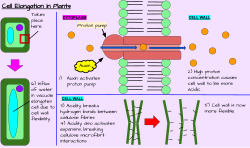
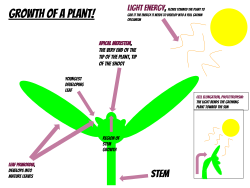
This process is central to phototropism, where plants bend toward a light source because cells on the shaded side elongate more than those on the lit side.
Adventitious Structures
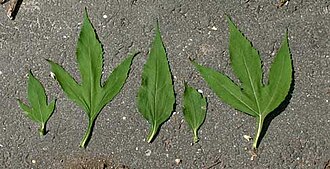
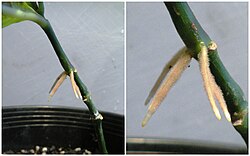
Structures that develop in unusual locations are termed adventitious. This includes roots forming above ground or buds developing on roots. Shoots arising from these root-based buds are called suckers. A notable example is the Pando quaking aspen, which expanded from one trunk to 47,000 trunks via a single root system's adventitious buds.
Specialized Development: Flowers and Fragrance
Flower development is a complex genetic process. In P. hybrida, the production of scent is regulated by a transcription factor called ODORANT1 (ODO1). Transcript levels of ODO1 peak at 2200 h and are lowest at 1000 h, directly corresponding to the emission of volatile benzenoids.
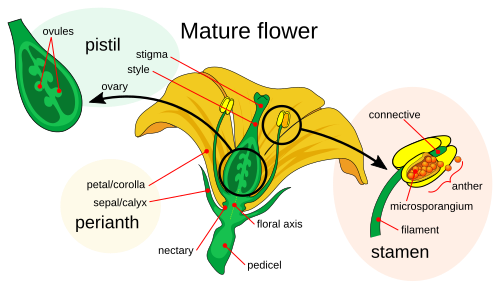
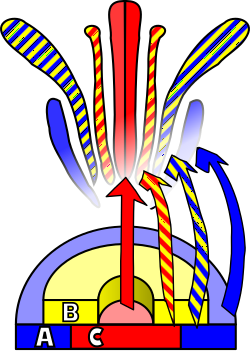
Other genes, such as OOMT1 and OOMT2, synthesize orcinol O-methyltransferases (OOMT) to create the scent compound 3,5-dimethoxytoluene (DMT). In some roses, like Rosa gallica and Rosa damascene, the OOMT genes exist but are not expressed in the flower tissues, resulting in a lack of DMT scent.
Summary of Growth Factors
| Factor | Key Influence/Requirement | Example/Detail |
|---|---|---|
| Auxin:Cytokinin Ratio | Organ Type Determination | BAP for shoots; IAA/NAA for roots |
| Medium pH | Nutrient Availability | Optimal range 5.6 - 5.8 |
| Light Intensity | Bud/Embryo Induction | Tobacco requires 10,000-15,000 lux |
| Temperature | Regenerative Performance | Monstera deliciosa peaks at 30 °C |
| ODO1 Gene | Floral Scent Timing | Peaks at 2200 h in P. hybrida |
Frequently Asked Questions
How do plants differ from animals in their development?
Plants maintain embryonic tissues called meristems throughout their lives, allowing them to grow new organs indefinitely. Animals generally develop all their body parts during the embryonic stage and only increase in size and maturity after birth or hatching.
What determines whether a plant develops a shoot or a root in tissue culture?
The development is largely determined by the ratio of auxins to cytokinins. High cytokinin levels (such as BAP) generally induce shoot formation, while specific auxin levels are required for root and callus induction.
What are adventitious structures?
Adventitious structures are roots, buds, or shoots that grow in unusual or unexpected locations, such as roots forming on a stem cutting or shoots (suckers) growing from a root system.
How is floral fragrance regulated genetically?
Fragrance is regulated by specific transcription factors and enzymes. For example, the ODO1 gene controls the timing of benzenoid emission in some flowers, while OOMT genes are required to synthesize the scent compound DMT in roses.
Why is pH important in plant culture media?
The pH affects the availability of nutrients. For instance, the uptake of ammonium in vitro is most stable when the medium is maintained at a pH of 5.5.