Metropolis: Defining the World's Great Urban Hubs
A metropolis is more than just a large city. It is a significant economic, political, and cultural center for a country or region, serving as a vital hub for international commerce, communications, and regional connections. While we often use the term to describe any sprawling city, a true metropolis typically fulfills a specific strategic function that extends far beyond its own borders.
In urban planning, a distinction is made between the core metropolis and the surrounding urban agglomeration (a continuous urban area formed by the merging of several cities). A large city that belongs to such an agglomeration but does not serve as its core is generally considered part of the metropolis rather than a metropolis itself.
For smaller urban areas that provide similar regional attraction but on a reduced scale, researchers in Germany introduced the term regiopolis (or "regio") in 2006 to describe these mid-sized hubs.
Key Facts
![New York has garnered the nickname Metropolis to describe the city in the daytime in popular culture, contrasting with Gotham, sometimes used to describe New York at night.[1]](/images/0e/94/0e94c22fdae557769719b431b7679c4f4d6e1bc8395a31dfffee7a2452bbc86e.jpg)
- Etymology: Derived from the Greek metropoleis, meaning "mother city," originally referring to the city that sent out settlers to colonies.
- Evolution: The term shifted from religious contexts (6th-century Canterbury) to secular descriptions of large cities (16th-century London).
- Modern Shift: Urban growth has led to "polycentric" regions, where multiple cities share economic dominance (e.g., the Tokyo–Osaka corridor).
- Global Diversity: Definitions vary by country, ranging from population thresholds of 50,000 in the U.S. to 1 million in India.
The Evolution of the Metropolitan Concept
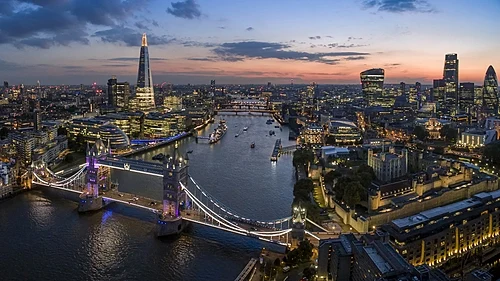
The concept of the "mother city" has deep roots in Ancient Greece and entered Middle English around the 14th century. Historically, it described the center of a colony. By the 16th century, London became the primary example of a secular metropolis, exerting such cultural influence that the term was rarely applied to other cities until the 19th century.
Today, the definition has expanded. We no longer see the metropolis as a single dominating point, but often as a network. In regions like Southern California or the Tokyo–Osaka corridor, the "metropolis" is a vast built-up area encompassing multiple cities that collectively drive the economy.
Global Definitions and Examples
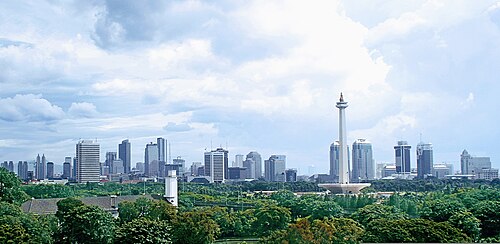
The Americas
In the United States, a de facto standard for a metropolis is a population of 50,000 or more, which triggers the requirement for a metropolitan planning organization. The U.S. Census Bureau uses this threshold for its Metropolitan Statistical Areas. New York stands as the largest in the country.
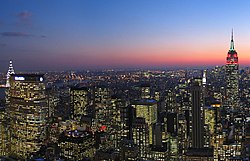
Canada defines a census metropolitan area as one or more adjacent municipalities around an urban core with at least 100,000 people. Major examples include Toronto, Montreal, and Vancouver. In Mexico, the criteria similarly require a city of at least 100,000 people with high socioeconomic integration with neighboring municipalities, with Mexico City being the primary hub.
Brazil uses the term Região Metropolitana. Greater São Paulo is the nation's principal metropolis, housing over 21 million people. Other significant hubs include Rio de Janeiro, Brasília, and Manaus.
Asia
China is home to 60 megacities, including Shanghai, Beijing, and Chongqing. Shanghai is noted as the most populous urban city in the country.
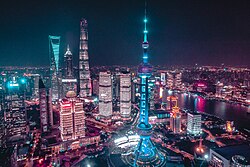
In Japan, the term to (都) is specifically designated for Tokyo, which is structured as a prefecture rather than a standard city.
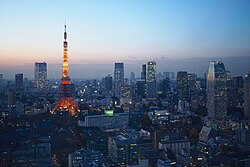
India defines a metropolitan area as having a population of 10 Lakh (1 million) or more. Major hubs include Delhi, Mumbai, and Kolkata. In the Philippines, the National Economic and Development Authority recognizes three metropolises: Manila, Cebu, and Davao.
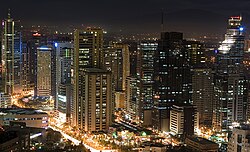
South Korea recognizes seven special and metropolitan cities, led by Seoul, Busan, and Incheon.
Europe
France utilizes the term métropole for administrative divisions, with Paris being the most populated urban area in both France and the European Union.
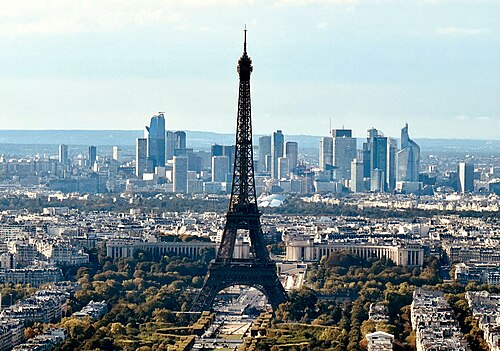
In Germany, Berlin is the largest city by administrative borders, but the Rhine-Ruhr region is the largest metropolitan area, exceeding 10 million people. Italy established 14 "metropolitan cities" in 2015, including Rome and Milan.
Poland has a Union of Polish Metropolises, with the Katowice metropolitan area being the largest by population, followed by Warsaw.
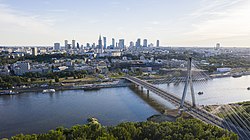
Turkey uses the term büyükşehir. Istanbul is the largest city in Turkey and Europe by population, with over 15 million residents and a massive influx of international tourism.

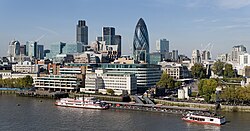
In the United Kingdom, "the Metropolis" historically referred exclusively to London and Westminster. This legacy continues in the naming of the Metropolitan Police.
Sweden similarly uses the term metropolis almost exclusively to refer to Stockholm.
Oceania
Australia defines a metropolitan area as any district with a population over 100,000. Sydney is the largest, while Bendigo is the smallest. Melbourne has experienced significant "Manhattanization," characterized by the growth of high-rise clusters.
Metropolitan Summary Table
| Country/Region | Defining Criteria | Primary Example(s) |
|---|---|---|
| United States | Population > 50,000 | New York City |
| Canada | Core population > 100,000 | Toronto |
| India | Population > 1 million | Mumbai, Delhi |
| Australia | Population > 100,000 | Sydney |
| Mexico | Core population > 100,000 | Mexico City |
| Japan | Special legal designation (to) | Tokyo |
Frequently Asked Questions
What is the difference between a city and a metropolis?
While a city is a general term for a large human settlement, a metropolis is specifically a city that serves as a significant economic, political, and cultural hub for a larger region or country, often acting as a center for international connections.
What does the term "mother city" mean in this context?
The term "mother city" comes from the Greek etymology of metropolis. In a colonial context, it referred to the original city that sent out settlers to establish new colonies.
What is a polycentric urban region?
A polycentric region is a modern urban area where economic and social functions are spread across multiple cities rather than being dominated by a single core. Examples include the Tokyo–Osaka corridor.
How is a metropolis defined in the United States?
In the U.S., the Census Bureau and planning organizations generally use a population threshold of 50,000 or more inhabitants to define a Metropolitan Statistical Area.
What is a regiopolis?
A regiopolis is a term introduced by German researchers in 2006 to describe urban areas that act as regional hubs on a smaller scale than a full metropolis.