Metaphor: The Art and Science of Figurative Comparison
A metaphor is a powerful figure of speech that refers to one thing by mentioning another, creating a literary effect that invites the audience to compare two normally unrelated entities. By identifying hidden similarities, metaphors provide clarity and create analogies that help us grasp complex ideas through familiar concepts.
In the broader landscape of figurative language, metaphors are grouped with tools like hyperbole (extreme exaggeration) and metonymy (replacing a concept with a related attribute). While they are often confused with similes, the distinction lies in the delivery: a simile makes a comparison explicit using words like "like" or "as," whereas a metaphor implies or assumes the comparison directly.
One of the most enduring examples in English literature is found in William Shakespeare's As You Like It, where he famously declares, "All the world's a stage, And all the men and women merely players." Here, life is not just like a play; it is a play.
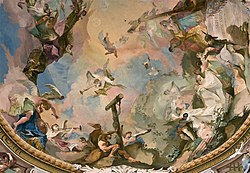
Key Facts
- Definition: A figure of speech that describes an object or action in a way that isn’t literally true but helps explain an idea or make a comparison.
- Distinction: Unlike similes, metaphors do not use "like" or "as" to make comparisons.
- Cognitive Role: Metaphors are not just literary devices; they are foundational to how humans process experience and cognition.
- Psychological Impact: The framing of a crisis through specific metaphors can significantly alter emotional responses and coping strategies.
- Biological Link: Research suggests some metaphorical understanding may be innate, with reduced capacity observed in individuals with psychopathy.
Types and Categories of Metaphor
Metaphors manifest in various forms, ranging from simple linguistic slips to complex cognitive frameworks.
Mixed Metaphors
A mixed metaphor occurs when a speaker leaps from one identification to a second that is inconsistent with the first. For example, saying "I smell a rat... but I'll nip him in the bud" combines two unrelated idioms. This is frequently used in writing and speech as a form of parody.
!["The Asherah is part of a jigsaw in weaving together the feminine threads of a religious history that could be an important new breakthrough for women, she says."[15] An example of mixed metaphor in print.](/images/ad/b5/adb509d834f6255affd5f487474d4f969ad987c14aee1647ab6520aabe631496.jpg)
Absolute Metaphors
An absolute metaphor is a direct identification where one thing is stated to be another without qualification, serving as a total substitution of the literal subject.
Conceptual Metaphors
Beyond poetry, conceptual metaphors serve as a foundation for our conceptual system. These are ingrained frameworks that allow us to understand abstract ideas through concrete experiences. Scholars like Wilhelm von Humboldt have explored how these metaphors vary across different linguistic communities and cultures, while others reference the Sapir-Whorf hypothesis to discuss how language shapes thought.
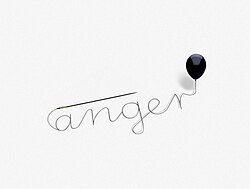
Nonlinguistic and Visual Metaphors
Metaphors are not limited to spoken or written words. They extend into visual arts and symbolic representations to convey deep emotional or philosophical meanings.
Visual metaphors use imagery to represent an abstract concept. For instance, a broken candle on a tombstone serves as a visual metaphor for the end of a human life, communicating loss and finality without the need for text.

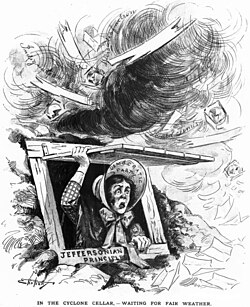
Similarly, political cartoons often employ metaphorical imagery to critique society. An 1894 illustration from Puck magazine depicted the Democratic Party as a woman sheltering from a tornado, using the storm as a metaphor for volatile political change.
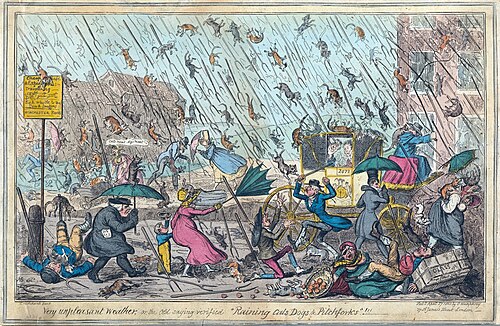
Even common idioms can be visualized for effect, such as the 1835 etching by George Cruikshank that literally depicted "raining cats, dogs and pitchforks" to illustrate extreme weather.
The Psychological Impact of Metaphorical Framing
Metaphors significantly influence how individuals experience and respond to crises. A 2024 study by Baranowski et al. examined healthcare literature during the COVID-19 pandemic and found that the choice of metaphor altered the emotional state of workers.
- War Metaphors: Phrases like "fighting the pandemic" were common. While they can mobilize action, they may also induce feelings of helplessness if the "battle" feels unwinnable.
- Transformational Metaphors: Framing the crisis as a "learning opportunity" or focusing on "lessons learned" tended to promote resilience and empowerment.
| Type | Mechanism | Example |
|---|---|---|
| Metaphor | Implied comparison (X is Y) | Time is a thief. |
| Simile | Explicit comparison (X is like Y) | Quiet as a mouse. |
| Metonymy | Association/Attribute substitution | The White House issued a statement. |
| Hyperbole | Intentional exaggeration | I've told you a million times. |
Frequently Asked Questions
What is the main difference between a metaphor and a simile?
The primary difference is that a simile uses explicit comparison words such as "like" or "as," while a metaphor makes an implicit or assumed comparison by stating one thing is another.
What is a mixed metaphor?
A mixed metaphor happens when two or more incompatible metaphors are combined in a single expression, often resulting in a nonsensical or humorous image, such as "nipping a rat in the bud."
Can metaphors exist outside of language?
Yes. Nonlinguistic or visual metaphors use images, symbols, and art to represent abstract ideas, such as using a broken candle to symbolize death.
How do metaphors affect our mental health during a crisis?
Metaphors frame our perception of reality. War-based metaphors can lead to stress or helplessness, whereas transformational metaphors that emphasize growth and learning can foster resilience and empowerment.
Are metaphors innate to humans?
Some neural biological research suggests that the ability to understand metaphors may be innate, as evidence shows a reduced capacity for metaphorical understanding in individuals with psychopathy.