Elocution: The Art and History of Formal Speaking
Elocution is the formal study of speaking, encompassing pronunciation, grammar, style, and tone. More than just the mechanics of speech, it is the practice of effective communication based on the belief that while communication is symbolic, the sounds we produce are final and compelling. By mastering elocution, a speaker can transform a simple message into a persuasive and impactful performance.
The discipline emerged prominently in England during the 18th and 19th centuries and gained significant traction in the United States throughout the 19th century. Its primary goals were to help individuals become more persuasive speakers and to standardize errors in both spoken and written English.
Key Facts
- Core Focus: Covers pronunciation, grammar, style, tone, and the physical delivery of speech.
- Historical Roots: Developed as a formal discipline in 18th-century England and 19th-century America.
- Key Figures: Thomas Sheridan and John Walker were instrumental in establishing early rules and systems.
- Social Impact: Used as a tool for social mobility, allowing individuals to appear more educated or higher-class.
- Gender Roles: Provided women with professional opportunities in education and performance, while sometimes reinforcing domestic roles.
The Evolution of Elocution
Classical Roots and Standardization
In Western classical rhetoric, elocution was one of five core disciplines focused on the art of delivering speeches. Training for orators extended beyond diction (the clarity and distinctness of speech) to include the proper use of stance, dress, and gestures. During the 18th century, a broader movement to standardize the English language saw elocution play a vital role, led by figures such as Sheridan and Walker.
The Pioneers: Sheridan and Walker
Thomas Sheridan, an actor, published Lectures on Elocution (1762) and Lectures on Reading (1775), which provided guidelines for reading literature aloud. Following him, John Walker published the two-volume Elements of Elocution in 1781. While Sheridan's work was foundational and sometimes vague, Walker sought to establish a rigorous system of rules for voice control, emphasis, and pronunciation.
These works became popular because they adopted a scientific, "how-to" approach during an era when manual-style books were in high demand. This trend was mirrored by a surge in the publication of grammar and dictionary books; after 1750, these publications increased fivefold. Because education became a marker of social status, these texts were embraced by both the upper class and those aspiring to climb the social ladder.
The Rise of Public Education and "Speakers"
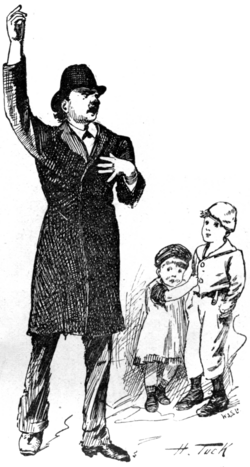
By the 19th century, the growth of the middle class and the expansion of public education integrated elocution into school curricula. In the United States, students used texts known as "Speakers." Popular examples included McGuffey's New Juvenile Speaker, the Manual of Elocution and Reading, the Star Speaker, and the Delsarte Speaker. Some of these manuals even used illustrations to demonstrate correct body movements.
The Scientific Movement
In the early to mid-1800s, the field transitioned into the "scientific movement of elocution." This era was defined by the works of James Rush (The Philosophy of the Human Voice, 1827) and Richard Whately (Elements of Rhetoric, 1828), and later by Alexander Melville Bell, who published A New Elucidation of Principles of Elocution (1849) and Visible Speech (1867).
Elocution and Gender
Women were integral to the elocution movement from its inception, finding new career paths as both educators and performers. For many, elocution was a means of expanding their societal roles. Some women compiled speech collections that celebrated womanhood and featured strong female characters to advance feminist ideals, while other materials reinforced traditional domestic roles.
Sarah Stickney Ellis, in her 1845 work Young Ladies Reader, promoted the concept of "The Artful Woman"—a lady capable of persuading others, particularly her husband, within the domestic sphere. While Ellis believed she was empowering women, some historians argue that by focusing on the "parlor," she may have delayed women's transition to the public "podium." More recently, scholar Marian Wilson Kimber (2017) has highlighted the female-dominated genre of elocution set to musical accompaniment.
Curriculum and Modern Application
Example Curriculum
To understand how elocution was taught, one can look at the 1857 McGuffey's New Sixth Eclectic Reader, which organized study into specific principles and exercises.
| Core Principles | Practical Exercises |
|---|---|
| Articulation | The Grotto of Antiparos, The Thunder Storm |
| Inflections | Industry Necessary for the Orator |
| Accent and Emphasis | The Old House Clock |
| The Voice & Gesture | Hymn to the Night-Wind, The Cataract of Lodore |
Elocution in the Digital Age
Modern perspectives, such as those from professor Jason Munsell, suggest that elocution now includes strategic movement and visual aids to compensate for the shift toward digital communication. Munsell also suggests that 19th-century elocution may have been a precursor to Literary Theory, as its function was to discover possible meanings in a text and determine how to express those meanings to achieve a specific purpose.
Frequently Asked Questions
What is the difference between elocution and elocutio?
While they sound similar, they are distinct. Elocution is the art of delivering a speech (pronunciation and delivery), whereas elocutio is a branch of rhetoric concerned specifically with the style of writing used in discourse.
Who were the most influential early elocutionists?
Thomas Sheridan and John Walker were pivotal figures in the 18th century. Sheridan provided directions for reading literature aloud, while Walker established a more systematic set of rules for voice control and gesture.
How did elocution affect women in the 19th century?
Elocution provided women with professional opportunities as teachers and performers. It allowed some to promote feminist ideas through speech selection, while others used it to gain influence within the domestic sphere.
What are "Speakers" in the context of elocution?
"Speakers" were popular textbooks used by American students in the 19th century to practice elocution. Examples include the Delsarte Speaker and McGuffey's New Juvenile Speaker.
Is elocution still relevant today?
Yes, though it has evolved. Modern interpretations include the use of visual aids and strategic movement to enhance communication, especially in digital environments.