Mendoza: Argentina's High-Altitude Hub of Wine and History
Nestled in the northern-central region of its namesake province, the City of Mendoza serves as a vibrant gateway to the Andes. Located in a landscape of high plains and foothills, this Argentine capital is renowned globally for its world-class viticulture, resilient urban design, and deep historical roots. As the heart of Greater Mendoza—the fourth largest metropolitan area in Argentina—it blends colonial heritage with modern infrastructure.
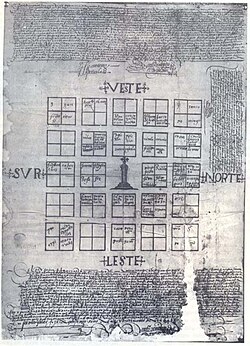
Key Facts
- Founded: March 2, 1561, by Pedro del Castillo.
- Geography: Situated on the eastern side of the Andes at an elevation of 746.5 meters.
- Economy: Driven by tourism, wine production, and commodities like oil and uranium.
- Climate: Arid (BWk) with hot summers and cold, dry winters.
- Population: Approximately 115,041 in the city, with a metro population exceeding 1 million.
A History of Resilience and Innovation
Mendoza was founded by Pedro del Castillo and named after García Hurtado de Mendoza, the 5th Marquis of Cañete. Long before Spanish arrival, the region was inhabited by the Huarpes and Puelches tribes. The Huarpes developed a sophisticated irrigation system that the Spanish later expanded, enabling the city to thrive in an otherwise arid environment.
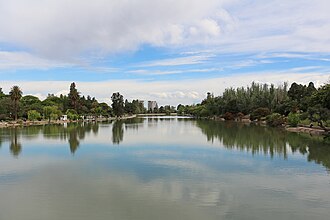
This legacy persists today through acequias—wide irrigation trenches that run along city streets to sustain approximately 100,000 trees, creating a lush urban canopy.
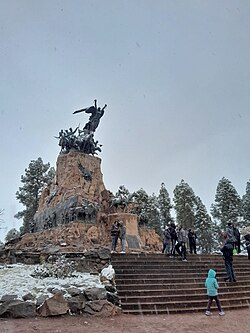
The city played a pivotal role in South American liberation. In 1813, the state of Cuyo was created with José de San Martín as governor. From Mendoza, San Martín organized the patriot army that eventually secured the independence of Chile and Peru.
Tragedy struck in 1861 when a severe earthquake killed at least 5,000 people. The subsequent reconstruction in 1863 introduced an innovative urban layout designed to withstand seismic activity. This resulted in the wide streets, expansive sidewalks, and a central main square surrounded by four smaller plazas that define the modern city's aesthetic.
Culture and Urban Life
Mendoza is a center for art and history, recognized by National Geographic in 2008 as one of the top 10 historic destinations worldwide. Visitors can explore the Museo Cornelio Moyano (natural history) or the Museo del Área Fundacional. For those interested in the region's liquid gold, the Museo Nacional del Vino in Maipú details the evolution of local winemaking.
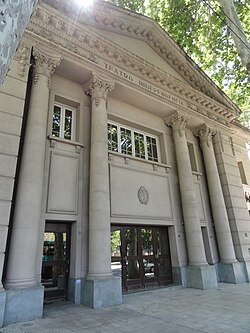
The city's urban structure is notably dispersed. While the city proper remains the administrative heart, suburbs such as Godoy Cruz, Guaymallén, Las Heras, and Luján de Cuyo have grown rapidly, now housing the vast majority of the metropolitan population.
Transportation and Connectivity
Mendoza is strategically positioned between two major capitals: 1,037 km from Buenos Aires and 380 km from Santiago, Chile. The Gov. Francisco Gabrielli International Airport provides rapid air links to both cities.
Within the city, the Metrotranvía Mendoza, a 17-kilometer light rail line opened in 2012, connects the central area with Las Heras, Godoy Cruz, and Maipú. Interestingly, the line utilizes red Siemens-Duewag U2 railcars originally purchased from the San Diego Metropolitan Transit System.
Historically, the Transandine Railway linked Argentina and Chile. This metre-gauge line required passengers to change trains at Mendoza and Santa Rosa de Los Andes due to differences in rail gauges.
The World-Famous Wine Industry
Mendoza is synonymous with Malbec. The high-altitude regions of Luján de Cuyo and the Uco Valley, situated between 2,800 and 5,000 feet, provide the ideal terroir for this grape. Vintner Nicolas Catena Zapata pioneered high-altitude growing in 1994, planting vineyards at 5,000 feet and elevating Argentine wines to global prestige.
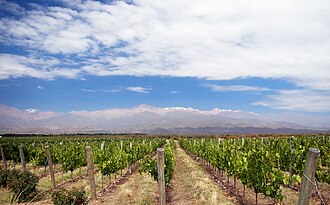
The region's dramatic scenery has also attracted Hollywood. The film Seven Years in Tibet was shot here, featuring a massive recreation of Lhasa in the Andes foothills and a replica of the Potala palace's Hall of Good Deeds built inside a former garlic warehouse.
Climate and Environment
Mendoza features an arid, continental climate. Precipitation is concentrated in the summer (November to March), while winters are cold and dry. Snowfall is rare, typically occurring only once per year. Because the annual rainfall is low (averaging 223.2 mm), the city's agriculture depends entirely on the irrigation systems mentioned previously.
| Metric | Summer (January) | Winter (July) | Annual Average |
|---|---|---|---|
| Mean Daily Max Temp | 32.8°C (91.0°F) | 15.3°C (59.5°F) | 24.4°C (75.9°F) |
| Mean Daily Min Temp | 19.3°C (66.7°F) | 2.0°C (35.6°F) | 11.1°C (52.0°F) |
| Average Precipitation | 47.2 mm (1.86 in) | 5.0 mm (0.20 in) | 238.0 mm (9.37 in) |
Frequently Asked Questions
Why are there trenches along the streets of Mendoza?
These are called acequias. They are part of an irrigation system originally devised by the indigenous Huarpes and later expanded by the Spanish to water the city's 100,000 trees in an arid climate.
What makes Mendoza's Malbec wine special?
The wines benefit from high-altitude growing in regions like the Uco Valley and Luján de Cuyo, where vineyards are situated between 2,800 and 5,000 feet in the Andes foothills.
How did the 1861 earthquake change the city?
The earthquake led to a complete urban redesign in 1863, resulting in wider streets, larger sidewalks, and expansive plazas to better withstand future seismic activity and provide open safety spaces.
What is the Metrotranvía Mendoza?
It is a 17-kilometer light rail system that opened in 2012, connecting the city center with the suburbs of Las Heras, Godoy Cruz, and Maipú using repurposed railcars from San Diego.
Which major sporting events has Mendoza hosted?
Mendoza hosted six matches during the 1978 FIFA World Cup at the Malvinas Argentinas Stadium, as well as the 1982 FIVB Men's Volleyball World Championship and the 1994 Padel World Championship.