Meiosis: The Biological Process of Gamete Production
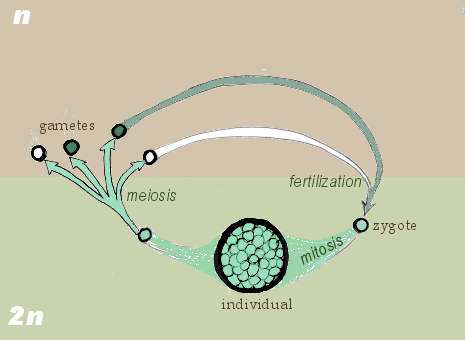
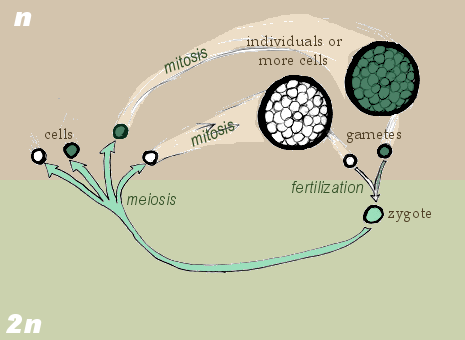
Meiosis is a specialized form of cell division occurring in the germ cells of sexually reproducing organisms. Its primary purpose is the production of gametes—the sperm and egg cells—which are essential for sexual reproduction. Unlike standard cell division, meiosis reduces the chromosome number by half, ensuring that when two gametes fuse during fertilization, the resulting zygote (the first cell of a new organism) possesses the correct diploid number of chromosomes.
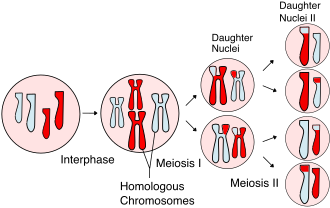
This complex process involves two successive rounds of division, resulting in four genetically unique haploid cells, meaning each cell contains only one copy of each chromosome. A defining feature of meiosis is the shuffling of genetic material, which creates diversity within a species.
Key Facts
- Outcome: Produces four non-identical haploid daughter cells from one diploid parent cell.
- Genetic Diversity: Achieved through chromosomal crossover during Prophase I.
- Biological Role: Essential for sexual reproduction and maintaining a constant chromosome number across generations.
- Clinical Significance: Errors in meiosis can lead to aneuploidy, a leading cause of miscarriage and developmental disabilities.
- Discovery: First described in sea urchin eggs by Oscar Hertwig in 1876.
The Mechanics of Meiosis
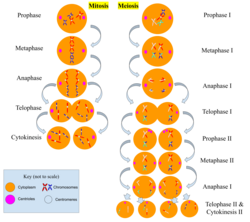
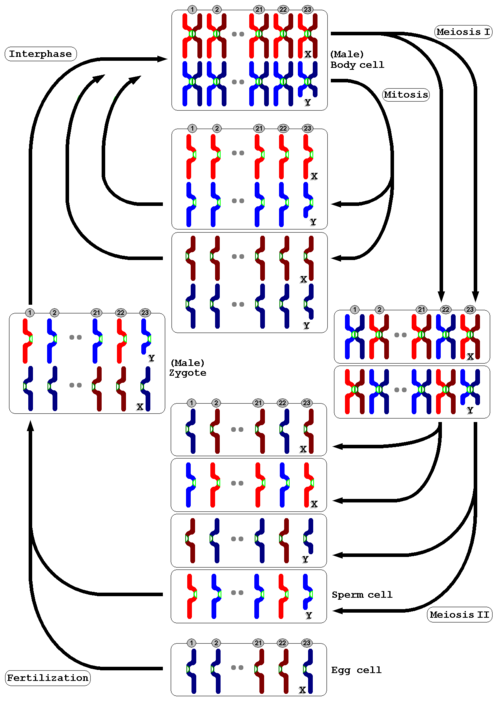
Meiosis is divided into two main stages: Meiosis I and Meiosis II. While Meiosis I separates homologous chromosomes (paired chromosomes of the same type, one from each parent), Meiosis II separates sister chromatids, similar to the process of mitosis.
Meiosis I and the Role of Recombination
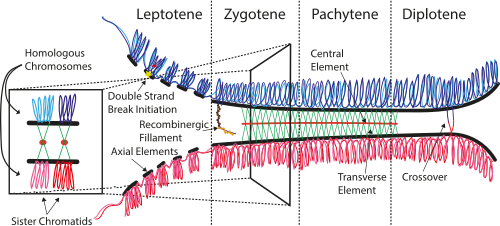
The most critical phase for genetic variation is Prophase I. During this stage, homologous chromosomes pair up and exchange segments of DNA in a process called chromosomal crossover. This ensures that the resulting gametes carry new combinations of maternal and paternal genetic code.
Prophase I is further divided into several highly regulated sub-stages:
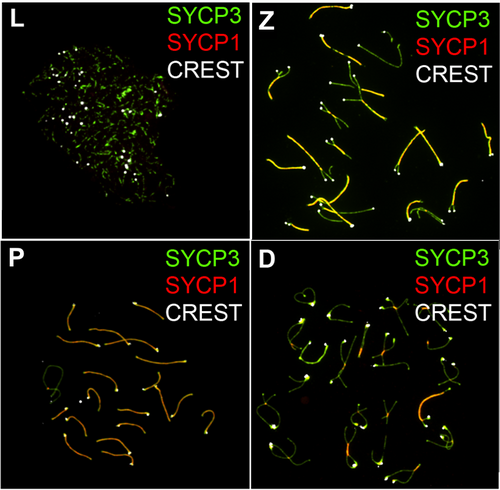
- Leptotene: Chromosomes become visible as thin threads and form linear loops. The enzyme SPO11 initiates recombination by creating programmed double-strand breaks.
- Zygotene: The synaptonemal complex (a protein structure that bridges homologous chromosomes) begins to form.
- Pachytene: The synaptonemal complex is fully installed, allowing for the completion of genetic crossover.
- Diplotene: The complex disassembles, revealing chiasmata (the points where crossover occurred).
- Diakinesis: The final stage of prophase before the cell enters metaphase.
Meiosis II and Final Division
Following the first division, the two resulting cells enter Meiosis II. In this phase, the sister chromatids are split apart, ultimately producing four haploid cells. In mammals, this process may only be completed upon fertilization.
Meiosis vs. Mitosis
Although they share similar names and some mechanical steps, mitosis and meiosis serve entirely different biological functions. Mitosis is used for growth, tissue repair, and asexual reproduction, creating identical clones of the parent cell. Meiosis is dedicated solely to the production of sex cells.
| Feature | Meiosis | Mitosis |
|---|---|---|
| End Result | Four genetically unique haploid cells | Two genetically identical diploid cells |
| Primary Function | Production of gametes | Growth, repair, asexual reproduction |
| Genetic Recombination | Yes (during Prophase I) | Very rare |
| Homologous Pairing | Yes | No |
| Number of Divisions | Two | One |
Genetic Implications and Disorders
The precision of meiosis is vital. When chromosomes fail to separate properly during division, a phenomenon known as nondisjunction occurs. This results in gametes with an abnormal number of chromosomes, known as aneuploidy.
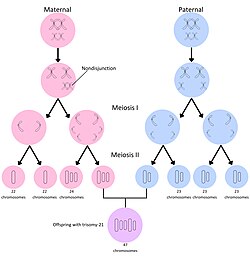
Common conditions resulting from meiotic nondisjunction include:
- Trisomy 21: Down syndrome (an extra copy of chromosome 21).
- Trisomy 18: Edwards syndrome.
- Trisomy 13: Patau syndrome.
- Turner Syndrome: A female lacking one X chromosome (X0).
- Triple X Syndrome: A female with an extra X chromosome.
Frequently Asked Questions
What is the main difference between a haploid and a diploid cell?
A diploid cell contains two complete sets of chromosomes (one from each parent), whereas a haploid cell contains only one set. Meiosis converts a diploid germ cell into haploid gametes.
Why is genetic recombination important?
Recombination, or crossover, shuffles the genetic material between maternal and paternal chromosomes. This creates genetic diversity in offspring, which is a key driver of evolution and adaptation.
What happens during nondisjunction?
Nondisjunction occurs when homologous chromosomes or sister chromatids fail to separate correctly during meiosis. This leads to daughter cells with too many or too few chromosomes, which can cause genetic disorders or miscarriage.
How does the synaptonemal complex function?
The synaptonemal complex is a protein structure that forms between two homologous chromosomes during Prophase I. It holds them together in tight alignment, facilitating the exchange of genetic material through crossover.
Does meiosis occur in all cells of the body?
No, meiosis occurs only in specialized germ cells located in the gonads. All other somatic (body) cells divide via mitosis.