Mehran Karimi Nasseri: The Man Who Lived in Charles de Gaulle Airport
For nearly two decades, one man became a living landmark within the sterile corridors of one of the world's busiest travel hubs. Mehran Karimi Nasseri, also known as Sir Alfred Mehran, spent 18 years residing in the departure lounge of Terminal 1 at Charles de Gaulle Airport in France. His extraordinary story of statelessness and bureaucratic limbo eventually captured the global imagination, inspiring books, operas, and a major Hollywood motion picture.
Key Facts
- Residency: Lived in Terminal 1 of Charles de Gaulle Airport from August 26, 1988, to July 2006.
- Legal Status: Became stateless in 1977.
- Cultural Impact: Inspired the 2004 film The Terminal and the autobiography The Terminal Man.
- Final Days: Returned to the airport in September 2022 and died there on November 12, 2022.
Early Life and the Path to Statelessness
Born in 1945 in Masjed Soleyman, Iran, Nasseri grew up in an affluent environment. His father, Abdelkarim, was a doctor for the Anglo-Persian Oil Company. While Nasseri later claimed to have a Scottish or Swedish mother, these claims remained unsubstantiated; it is most likely his mother was an Iranian homemaker.
In September 1973, at the age of 28, Nasseri moved to the United Kingdom to study Yugoslav studies at the University of Bradford. However, his life took a drastic turn in 1977. Nasseri alleged he was expelled from Iran due to protests against the Shah, leading to a period of statelessness—a condition where a person is not recognized as a citizen by any state under the operation of its law.
Life in Terminal 1
Nasseri's arrival at Charles de Gaulle Airport in 1988 was the result of a documentation crisis. While traveling between the UK and France, his briefcase containing his travel documents was allegedly stolen (though some reports suggest he mailed them to Brussels). Without a passport, British immigration officials returned him to France, where he was unable to prove his identity or refugee status. He was subsequently detained in the waiting area for travelers without papers.
Despite the efforts of human rights lawyer Christian Bourget, Nasseri remained in the terminal for 18 years. He was offered residency by both Belgium (in 1995) and France (in 1999), but he refused to sign the documents. His refusal stemmed from the fact that the papers listed him as Iranian rather than British and did not use his preferred name, "Sir, Alfred Mehran."
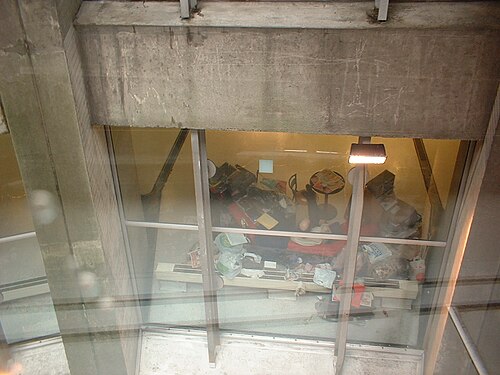
During his long stay, Nasseri established a routine. He spent his days and nights near the Paris Bye Bye bar, writing in his journal, listening to the radio, and smoking a gold pipe. He often ate at McDonald's, with meals provided by the kindness of strangers, and was frequently seen studying economics or sitting in a reflective trance on a red bench.
Cultural Legacy and Media Influence
Nasseri's unique existence attracted significant media attention. In 2004, he co-authored an autobiography titled The Terminal Man with British writer Andrew Donkin. His life also served as the catalyst for several artistic works, including the 1993 film Lost in Transit, the 2000 documentary Waiting for Godot at De Gaulle, and the 1998 opera Flight.
Most notably, his story is widely cited as the inspiration for Steven Spielberg's 2004 film The Terminal. Although the film's official materials do not explicitly credit Nasseri, reports indicate that DreamWorks paid him between US$250,000 and US$275,000 for the rights to his life story.
Final Years and Death
Nasseri's tenure at the airport ended in July 2006 when declining health led to his hospitalization. After leaving the hospital in early 2007, he spent several years in various Paris shelters and reception centers, including an Emmaus charity center. However, in September 2022, he returned to Charles de Gaulle Airport.
On November 12, 2022, Mehran Karimi Nasseri died of a heart attack at Terminal 2F. Despite resuscitation efforts by medical teams and police, he was pronounced dead at the scene. He was interred on December 8, 2023, at the Cimetière communal de Mauregard in France.
| Category | Details |
|---|---|
| Birth | 1945, Masjed Soleyman, Iran |
| Airport Residency | 1988 – 2006 (Terminal 1, CDG Airport) |
| Legal Status | Stateless (from 1977) |
| Key Publication | The Terminal Man (2004) |
| Death | November 12, 2022 (Terminal 2F, CDG Airport) |
Frequently Asked Questions
Why did Mehran Karimi Nasseri refuse residency in France and Belgium?
Nasseri refused to sign the residency papers because they identified him as an Iranian citizen rather than a British one, and they did not use his preferred name, "Sir, Alfred Mehran."
Did the movie The Terminal accurately portray his life?
While the film was inspired by his story and Spielberg's company paid for the rights to his life, the movie is a fictionalized account. The film's official publicity and features do not explicitly mention Nasseri.
How did Nasseri survive for 18 years in the airport?
He lived in the departure lounge of Terminal 1, where he spent his time writing and studying. His meals, often from McDonald's, were typically purchased for him by strangers.
Where did Nasseri live after leaving the airport in 2006?
After being hospitalized in 2006, he stayed in a hotel via the French Red Cross and later lived in various shelters in Paris, including an Emmaus charity reception center, before returning to the airport in 2022.
What was the cause of Mehran Karimi Nasseri's death?
Nasseri died of a heart attack on November 12, 2022, at Terminal 2F of Charles de Gaulle Airport.