Munich Airport: A Global Aviation Hub in Bavaria
Located in the municipalities of Erding and Freising in Bavaria, Germany, Munich Airport (IATA: MUC, ICAO: EDDM) serves as a critical gateway for the Munich Metropolitan Region, Upper Bavaria, and parts of Austria. Since opening its doors on May 17, 1992, the airport has evolved into one of Europe's most efficient and modern aviation centers, balancing high-capacity transit with a commitment to environmental management.
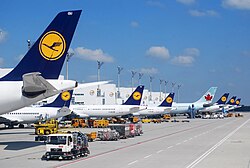
The airport is owned and operated by Flughafen München GmbH and serves as a primary hub for Lufthansa, including its subsidiaries Lufthansa CityLine and Lufthansa City Airlines. It also provides an operating base for several other carriers, including Condor, Discover Airlines, Eurowings, Air Dolomiti, and TUI fly Deutschland.
Key Facts
- Opened: May 17, 1992.
- Primary Hub: Lufthansa and its affiliates.
- Runways: Two concrete runways, each 4,000 meters (13,123 ft) long.
- 2025 Traffic: Approximately 43.4 million passengers and 337,438 aircraft movements.
- Elevation: 453 meters (1,486 ft) above mean sea level (AMSL).
- Cargo Volume: 339,671 metric tons (2025 statistics).
Airport Infrastructure and Facilities
Terminals and Passenger Experience
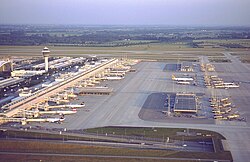
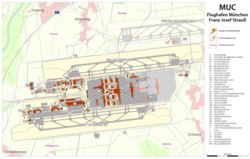
Munich Airport is designed for streamlined passenger flow across its distinct terminal areas. Terminal 1 serves a wide array of international and domestic carriers, featuring specialized check-in and boarding areas.
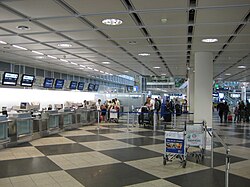
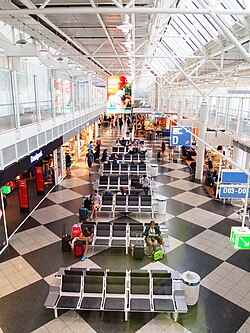
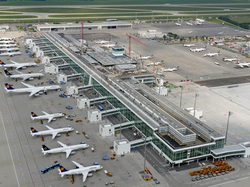
Terminal 2 is primarily dedicated to Lufthansa and its Star Alliance partners, offering a modern architectural approach to air travel. This terminal is complemented by the Terminal 2 Satellite, which expanded the airport's capacity to handle increasing passenger volumes.
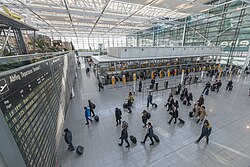
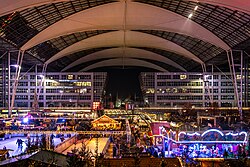
Connecting these facilities is the Munich Airport Center (MAC), a central hub for shopping, dining, and seasonal events, such as the annual Christmas market.
Airside Operations and Maintenance
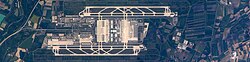
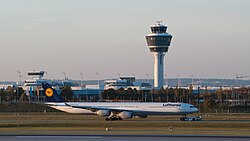
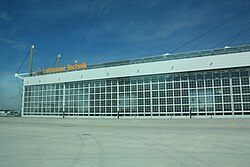
The airport operates two parallel concrete runways (08R/26L and 08L/26R), both measuring 4,000 meters. These allow for high-frequency take-offs and landings. Supporting these operations is a sophisticated control tower and extensive maintenance facilities, including the Lufthansa Technik hangar.
Ground Transportation and Access
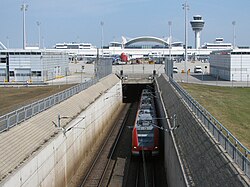
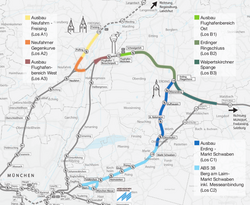
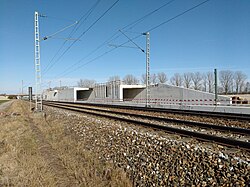
Accessibility is a cornerstone of the airport's design. Passengers can utilize the S-Bahn (suburban railway) which runs through a tunnel beneath the Terminal 1 apron, as well as regional railway services and buses. Road access is facilitated by the Erdinger Ring, with ongoing infrastructure projects like the Neufahrn Link to improve connectivity.
Passenger Traffic and Global Connectivity
Munich Airport maintains a vast network of destinations. Its busiest domestic routes connect to Hamburg, Berlin, and Düsseldorf, while international traffic is dominated by hubs like London-Heathrow, Amsterdam, and Paris-Charles de Gaulle. Long-haul connectivity is strong, with frequent flights to Dubai, Doha, Bangkok, and various North American cities including Newark and San Francisco.
The airport's growth has been steady, though it experienced a significant dip during 2020-2021 due to global travel restrictions, before rebounding strongly in 2022 and beyond.
| Year | Passengers | % Change |
|---|---|---|
| 2019 | 47,959,885 | +3.7% |
| 2020 | 11,120,224 | -76.8% |
| 2022 | 31,642,738 | +153.2% |
| 2024 | 41,568,000 | +12.2% |
| 2025 | 43,394,442 | +4.4% |
Safety, Environment, and Public Services
The airport employs a comprehensive emergency response system, including a dedicated fire department and police presence. The fire department handles thousands of missions annually, ranging from technical assistance to fire suppression.
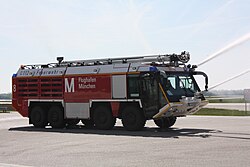
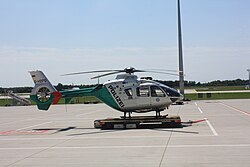
Environmental stewardship is integrated into the airport's operations through noise control measures, water management, and the maintenance of a bird sanctuary to promote biodiversity.
Visitor Amenities
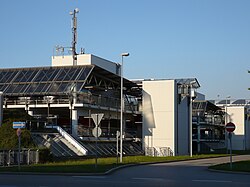
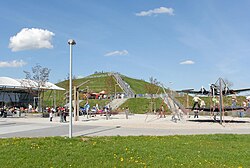
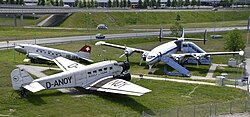
Beyond travel, the airport offers the Visitors Park, where aviation enthusiasts can view historic aircraft and observe airport operations. Parking is managed through several facilities, including the large parking garage in front of Terminal 1 and the dedicated Visitors Park lot.
Frequently Asked Questions
Which airlines use Munich Airport as a primary hub?
Lufthansa, along with Lufthansa CityLine and Lufthansa City Airlines, uses Munich Airport as a major hub.
How many runways does Munich Airport have?
The airport has two parallel concrete runways, both 4,000 meters (13,123 ft) in length.
What are the main transport options to the city?
The primary options include the S-Bahn (suburban railway), regional trains, and various bus services.
What is the Terminal 2 Satellite?
The Terminal 2 Satellite is an expansion facility designed to increase the capacity and efficiency of Terminal 2, primarily serving Star Alliance carriers.
Does the airport have facilities for aviation enthusiasts?
Yes, the Visitors Park allows the public to view historic aircraft and observe the airport's daily operations.