McCall's Magazine: From Sewing Patterns to a Global Fashion Icon
The story of McCall's is a fascinating journey through the evolution of American publishing, beginning not as a glossy magazine, but as a practical tool for home dressmaking. What started as a promotional vehicle for sewing patterns eventually transformed into one of the most influential women's publications in the United States, reflecting the changing roles and interests of women over more than a century.
The Origins: Sewing Patterns and The Queen of Fashion
In 1870, a Scottish immigrant named James McCall began designing and printing his own line of sewing patterns. To market these products, he launched a four-page fashion journal titled The Queen: Illustrating McCall's Bazaar Glove-Fitting Patterns. This early publication served primarily as an advertising tool for his business.
Following James McCall's death in 1884, his widow took over as president of the McCall Company and appointed Mrs. George Bladsworth as editor. Under Bladsworth's leadership until 1891, the journal expanded its scope to include handiwork and homemaking information, growing to 12 pages by 1890.
The publication underwent several name changes as its content evolved. In 1891, it became The Queen of Fashion, with annual subscriptions costing 30 cents. By 1893, under the leadership of James Henry Ottley, the subscription price rose to 50 cents, and the content expanded to include health, beauty, children's issues, and foreign travel. To reflect this diversity, the title was changed to McCall's Magazine—The Queen of Fashion in 1897, eventually being shortened simply to McCall's.
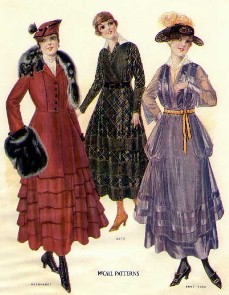
Despite these shifts toward general interest, the magazine maintained its roots; for many years, sewing pattern information occupied roughly 20 percent of its pages.
The Era of Growth and Editorial Innovation
In 1913, the banking firm White Weld & Co. purchased the magazine and established the McCall Corporation, led by president Edward Alfred Simmons. The publication continued to grow, with the price increasing to 10 cents per issue in 1917.
The magazine saw a series of influential editors who shaped its identity. Bessie Beatty, who had covered the Russian revolution, took the helm in 1918. She was followed in 1922 by Harry Payne Burton, who elevated the magazine's literary status by publishing renowned fiction writers such as Zane Grey, Kathleen Norris, Booth Tarkington, and Harold Bell Wright.
In 1928, 23-year-old Otis Wiese became editor. Wiese was a disruptor who pushed for more sophisticated fiction, leading to several clashes with management. In 1932, he introduced the "Three Magazines in One" format, dividing the publication into three distinct sections: News and Fiction, Homemaking, and Style and Beauty. This innovative structure allowed for tailored advertising in each section. In 1937, McCall's made history as the first women's magazine to print a complete novel in a single issue.

Patriotism and Post-War Transition
The attack on Pearl Harbor on December 7, 1941, prompted an immediate shift in the magazine's tone. Otis Wiese replaced a romantic February 1942 cover with an image of a woman wearing an "I've Enlisted" consumer pledge button. This pledge encouraged readers to buy carefully and waste nothing to support the defense of democracy. Within three weeks, 150,000 readers signed the pledge. McCall's was praised for being the first women's magazine to adopt a patriotic slant, later introducing a "Washington Newsletter" to provide guidance on conservation and rationing.
After the war, reader preferences shifted from fiction toward nonfiction and visual spreads. Wiese hired former Look magazine editors Daniel Danforth Mich and Henry Ehrlich to modernize the content. In 1954, the magazine adopted a "Togetherness" slogan, rebranding itself as a publication for the entire family rather than just women. During this period, paid circulation reached 4.5 million per issue.
Corporate Shifts and Peak Popularity
The mid-century was marked by corporate instability. Financier Norton Simon gained control of the McCall Corporation by 1956. In 1958, the appointment of Arthur B. Langlie as president led to the resignation of Otis Wiese and several staff members. Herbert Mayes subsequently took over, abandoning the "Togetherness" theme in favor of the slogan "First Magazine For Women," which reintroduced more fiction and color pages.
The magazine reached its zenith under editor John Mack Carter (1962–1965), when circulation climbed to 8.4 million, making it the second most popular magazine in the U.S., trailing only Reader's Digest. Later, from 1972 to 1986, editor Robert Stein steered the publication toward a new identity as "The Magazine for Suburban Women."
Ownership Changes and the Transition to Rosie
The ownership of the magazine changed frequently over the following decades. Norton Simon sold the magazine to the Pritzker family in 1973, though he retained the separate McCall pattern business. Subsequent owners included Time Inc. and Lang Communications (1986), The New York Times Company (1989), and the German firm Gruner + Jahr (1994).
In 2000, entertainer Rosie O'Donnell became editorial director, and in 2001, the magazine was rebranded as Rosie. O'Donnell envisioned a publication that celebrated "real women" beyond fashion and beauty. However, the magazine ceased publication at the end of 2002 following a disagreement between O'Donnell and the publisher regarding the magazine's editorial direction. This resulted in a legal battle in 2003, which was eventually dismissed by a judge.
The Final Years and Bankruptcy
Gruner + Jahr exited the U.S. market in 2005, selling its portfolio to the Meredith Corporation. Meanwhile, the McCall pattern business—which had remained separate from the magazine for decades—was eventually owned by CSS Industries. In 2020, CSS Industries was sold to IG Design Group Americas, Inc.
The legacy of the brand faced a final crisis in 2025. On June 5, 2025, IG Design Group Americas, Inc. was sold to Hilco Global for $1, with Hilco Global receiving 75% of all brand sales. Citing rising U.S. tariffs, IG Design Group Americas, Inc. filed for Chapter 11 bankruptcy protection on July 3, 2025, with plans to sell its assets and wind down operations.
Key Facts
- Founded: 1870 by James McCall as a sewing pattern promotional journal.
- Peak Circulation: 8.4 million under editor John Mack Carter (1962–1965).
- Innovation: First women's magazine to print a complete novel in one issue (1937).
- War Effort: First women's magazine to pivot to patriotic content after Pearl Harbor (1942).
- Rebranding: Renamed Rosie in 2001 under Rosie O'Donnell.
- Final Status: Parent company IG Design Group Americas, Inc. filed for Chapter 11 bankruptcy in July 2025.
| Year | Publication Title | Primary Focus |
|---|---|---|
| 1870 | The Queen: Illustrating McCall's Bazaar Glove-Fitting Patterns | Sewing pattern advertising |
| 1891 | The Queen of Fashion | Fashion and homemaking |
| 1897 | McCall's Magazine—The Queen of Fashion | General interest (Health, Beauty, Travel) |
| Later | McCall's | Women's and family interest |
| 2001 | Rosie | Celebrating "real women" |
Frequently Asked Questions
How did McCall's Magazine start?
It began in 1870 as a four-page journal created by James McCall to advertise his line of sewing patterns.
What was the "Three Magazines in One" format?
Introduced by editor Otis Wiese in 1932, this format divided the magazine into three sections—News and Fiction, Homemaking, and Style and Beauty—each with its own cover and targeted advertisements.
Did the sewing pattern business stay with the magazine?
No. While they started together, the McCall pattern business eventually became a separate entity and remained under different ownership than the magazine during its various sales.
Why was the magazine renamed Rosie?
In 2001, under the direction of Rosie O'Donnell, the magazine was rebranded to focus on the lives and values of "real women" rather than just fashion and beauty trends.
What led to the 2025 bankruptcy?
IG Design Group Americas, Inc., the parent company, cited rising U.S. tariffs as a contributing factor before filing for Chapter 11 bankruptcy protection on July 3, 2025.