Fashion Modelling: The Evolution of an Industry
Fashion modelling has evolved from a niche, anonymous profession into a global powerhouse of celebrity and commerce. Once limited to a few faces in couture houses, the industry now encompasses a wide array of specializations, from the high-pressure environment of the runway to the diverse requirements of commercial and parts modelling. This journey reflects not only changes in aesthetic preferences but also broader societal shifts regarding beauty, race, and health.
The profession first expanded with the rise of fashion photography. Until the late 1940s, models were largely unknown and underpaid. This changed with the emergence of the first supermodels—Barbara Goalen, Bettina Graziani, and Lisa Fonssagrives—who began commanding significant fees. Fonssagrives, in particular, appeared on over 200 Vogue covers, cementing the magazine's role in shaping model careers.
The Rise of the Modern Agency
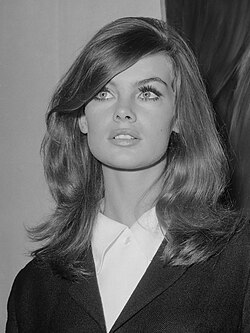
The infrastructure of the industry began to solidify in 1946 with the founding of Ford Models in New York. By the 1960s, the center of innovation shifted toward London. This era saw models become household names, led by figures like Twiggy, who became "The Face of '66" at age 16. Twiggy challenged existing ideals with her 5'6" height and boyish haircut, earning £80 per hour at a time when the average weekly wage was just £15.
Professionalization accelerated in 1967 with the formation of the Association of London Model Agents. This period saw the birth of influential agencies like Wilhelmina Models, FM Agency, and Models 1. Ford Models further innovated by providing financial advances and housing for teenage models, creating a precursor to modern model housing.
Global Expansion and the Golden Era
The 1970s and 1980s transformed modelling into a global business. Agencies began investing in publicity and scouting. Ford Models pioneered international scouting in Scandinavia and Brazil, eventually leading to the Supermodel of the World competition in 1980. Simultaneously, the Sports Illustrated Swimsuit Issue began promoting a "bigger and healthier" California look, turning models into celebrities by printing their names alongside their photos.
This era also marked critical milestones for diversity. In 1974, Beverly Johnson became the first black woman to cover U.S. Vogue. Other trailblazers like Iman, Grace Jones, and Naomi Sims paved the way for black women in a predominantly white industry.

The 1980s "Model Wars"
By the 1980s, modelling was a lucrative full-time career. Top earners like Patti Hansen could make an estimated $300,000 a year (approximately $955,917 in 2024). The decade was characterized by "model wars" in New York, where agencies like Ford and Elite fought aggressively over talent. Aesthetic trends swung from an androgynous, boyish look in New York to a more feminine style in Europe, before the hourglass figure returned to popularity in the mid-80s.

The Supermodel Phenomenon and the 1990s
The early 1990s saw the peak of the "supermodel" era. Linda Evangelista, Naomi Campbell, Cindy Crawford, Christy Turlington, Tatjana Patitz, Stephanie Seymour, and Yasmeen Ghauri became global icons. The wealth associated with the profession reached new heights; Evangelista famously claimed she wouldn't wake up for less than $10,000 a day, and Turlington signed a Maybelline contract worth $800,000 for just twelve days of work per year.
Modern Trends and Health Controversies
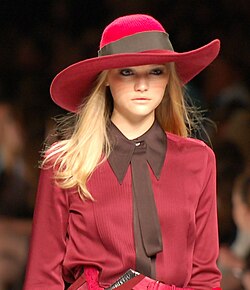
The 2000s shifted toward a "china-doll" or alien aesthetic, popularized by models like Gemma Ward and Lily Cole. However, this era was also marred by severe health crises. High-profile deaths resulting from eating disorders and drug abuse led to industry-wide reforms.
In response, the British Fashion Council and Vogue banned models under 16. Countries including Spain, Italy, Israel, and France implemented minimum Body Mass Index (BMI) requirements. France further mandated that digitally altered images be clearly labeled. In 2013, New York passed Senate Bill No. 5486, granting underage models labor protections similar to child actors, including restricted working hours and mandatory trust funds for earnings.

Runway and Specialization Standards
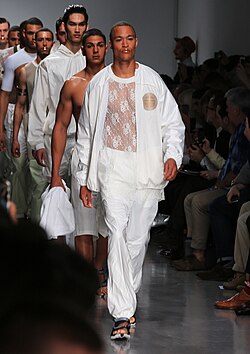
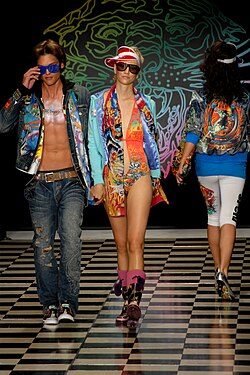
Runway modelling remains the most prestigious sector, centered in New York, London, Paris, and Milan. The British Association of Model Agents (AMA) suggests female runway models be between 5'8" and 5'11" with measurements around 34"-24"-34". Male models typically range from 5'11" to 6'2" with a chest of 39-40".
Diverse Modelling Categories
- Plus-size: Models who do not meet the slender runway requirements.
- Normal-size (Middle Models): Models typically size 4/6 who fall between catalogue size (0-2) and plus-size (10+). These models often face difficulty as brands prefer the extremes of the spectrum.
- Petite: Models shorter than the standard 5'9" (women) or 6'1" (men).


The Struggle for Representation
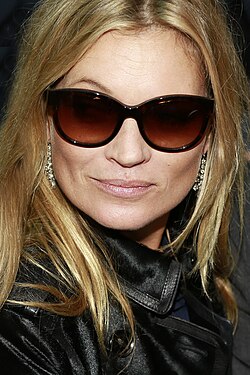
The "Black is Beautiful" movement of the 1970s brought significant visibility to black models, viewed as a vehicle for social change. However, this presence declined in the mid-1990s as designers favored a consistent, skinnier white aesthetic, exemplified by Kate Moss. This led to the formation of the "Diversity Coalition" by Naomi Campbell, Iman, and Bethann Hardison to combat the "whitewashing" of the runway.
Despite these challenges, figures like Tyra Banks broke barriers, becoming the first black model to cover Sports Illustrated and later expanding her influence through television. Today, models like Winnie Harlow and Slick Woods continue to push for inclusive representation.

Key Facts
- First Supermodels: Barbara Goalen, Bettina Graziani, and Lisa Fonssagrives.
- Industry Pioneers: Ford Models (est. 1946) is one of the world's oldest agencies.
- Diversity Milestone: Beverly Johnson was the first black woman on the cover of U.S. Vogue (1974).
- Health Regulations: France and other nations now require medical health declarations and BMI minimums for runway models.
- US Earnings: As of 2021, the median annual earning for a US model is $34,000.
| Category | Typical Height (Female) | Typical Height (Male) | Key Characteristics |
|---|---|---|---|
| Runway | 5'8" - 5'11" | 5'11" - 6'2" | Very slender, specific measurements |
| Petite | Under 5'9" | Under 6'1" | Commercial or petite focus |
| Normal-size | Varies | Varies | Size 4/6; "In-between" size |
| Plus-size | Varies | Varies | Size 10 and above |
Frequently Asked Questions
What are the standard measurements for a female runway model?
According to the British Association of Model Agents, female runway models should ideally be between 5'8" and 5'11" tall with measurements around 34"-24"-34".
How has the industry addressed model health concerns?
Many countries, including France, Italy, and Spain, have enacted minimum BMI requirements. Additionally, Vogue and the British Fashion Council have banned models under the age of 16 to protect young workers.
What is a "middle model"?
A middle or normal-size model is someone who is neither catalogue size (0-2) nor plus-size (10+), typically falling around a size 4/6. They are often overlooked by brands that prefer extreme ends of the size spectrum.
Who were the original supermodels of the 1990s?
The most recognizable supermodels of that era included Naomi Campbell, Linda Evangelista, Cindy Crawford, Christy Turlington, Tatjana Patitz, Stephanie Seymour, and Yasmeen Ghauri.
What protections exist for underage models in New York?
New York Senate Bill No. 5486 provides child labor protections, including restricted working hours on school nights, the requirement of an adult chaperone for those under 16, and the mandatory creation of a trust fund for at least 15% of gross earnings.