Mantle and Mantelet: A History of the Cloak-Like Garment
The mantle is a timeless piece of attire that has evolved from a functional outer layer to a symbol of authority. Derived from the Old French mantel and the Latin mantellum, meaning cloak, the mantle is essentially a loose garment worn over indoor clothing to provide the same utility as a modern overcoat.
The Evolution of the Mantle
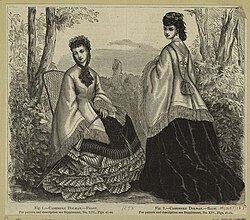
From the 12th to the 16th century, the mantle was technically defined as a long, loose, cape-like cloak worn by both men and women. As fashion shifted over the centuries, the definition expanded. By the 19th century, the term was used more broadly to describe any loose-fitting, shaped outer garment that resembled a cape.
One notable example from the 19th century is the dolman, a woman's cape-like garment featuring partial sleeves, which is frequently categorized as a type of mantle.
The Mantelet: A Shorter Variation
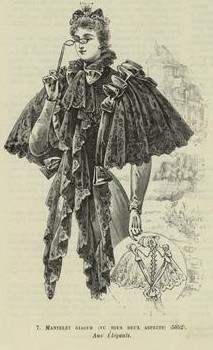
A common variation of the mantle is the mantelet (also spelled mantelot or mantlet), which is typically a shorter version of the garment. This term has been present in English literature as early as 1386, appearing in Geoffrey Chaucer's "The Knight's Tale."
The style of the mantelet changed significantly across different eras:
- 18th Century: It served as a short cloak for women.
- Early 19th Century: It evolved into an ornamental scarf, often crafted from lace or fur, which crossed the chest and tied in the back.
- Late 19th Century: It became a shoulder cape for women with elongated front ends, occasionally secured at the waist with a belt.
Key Facts
- Etymology: Derived from the Latin mantellum (cloak).
- Historical Range: Long capes were prominent from the 12th to 16th centuries.
- Dolman: A 19th-century version of the mantle with partial sleeves.
- Mantelet: A shorter version of the mantle, appearing in literature as early as 1386.
- Symbolism: The garment is the origin of the idiom "to take up the mantle," meaning to assume leadership.
| Garment Type | Typical Length | Key Characteristics | Notable Era |
|---|---|---|---|
| Mantle | Long | Loose, cape-like cloak | 12th–16th Century |
| Dolman | Variable | Partial sleeves, cape-like | 19th Century |
| Mantelet | Short | Shoulder cape or ornamental scarf | 18th–19th Century |
Cultural and Linguistic Significance
Beyond fashion, the mantle holds deep symbolic meaning in the English language. The idiom "to take up/pick up/assume the mantle" refers to taking a position of authority, responsibility, or leadership, particularly when succeeding a previous figure.
This expression originates from the Bible, most notably in 2 Kings 2:13, where Elisha takes up the mantle (Hebrew: אדרת ’addereṯ) of the prophet Elijah.
Frequently Asked Questions
What is the difference between a mantle and a mantelet?
A mantle is generally a long, loose, cape-like cloak, while a mantelet is a shorter version of the same garment.
What does it mean to "take up the mantle"?
It is a biblical idiom meaning to assume a role of leadership or responsibility, often continuing the work of a predecessor.
What is a dolman in the context of mantles?
A dolman is a 19th-century woman's garment that is cape-like in appearance but includes partial sleeves.
When did the term mantelet first appear in English literature?
The term appears as early as 1386 in Geoffrey Chaucer's "The Knight's Tale."
What materials were used for 19th-century mantelets?
In the early 19th century, ornamental mantelets were commonly made from fur or lace.