Max Planck Society: A Global Powerhouse of Basic Research
The Max Planck Society (Max-Planck-Gesellschaft, abbreviated as MPG) is one of the world's most prestigious non-profit research organizations. Dedicated to the advancement of science, the MPG provides the infrastructure and funding necessary for researchers to pursue basic research—investigations driven by curiosity and the desire to expand human knowledge without immediate commercial application.
Based in Munich, Germany, the society operates as an Eingetragener Verein (e. V.), a registered association under German law. With a massive annual budget of €2.1 billion as of 2023 and a workforce of 25,740 staff members in 2024, it stands as a cornerstone of the global scientific community.

Key Facts
- Founded: 1911 (originally as the Kaiser Wilhelm Society).
- Headquarters: Munich, Germany.
- Legal Status: Non-profit registered association (e. V.).
- Budget: €2.1 billion (2023).
- Staff: 25,740 employees (2024).
- Current President: Patrick Cramer.
- Governing Body: The Senate.

History and Evolution
The society was established in 1911 as the Kaiser Wilhelm Society (KWG). Over more than a century, it has evolved through various leadership eras, transitioning into the Max Planck Society in 1948. The organization is named after Max Planck, the physicist who served as president from 1930 to 1937 and again briefly in 1945–1946.
The leadership of the MPG has been marked by a succession of distinguished scientists and administrators, from the founding era of Adolf von Harnack to the current presidency of Patrick Cramer, who took office in 2023.
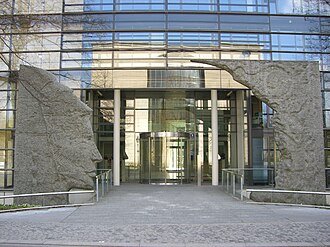
Organizational Structure
The Max Planck Society operates through a decentralized network of specialized entities designed to foster high-level research and education.
Max Planck Institutes (MPI)
The core of the society consists of numerous Max Planck Institutes located across Germany and internationally. These include specialized centers such as the Max Planck Florida Institute for Neuroscience, the Max Planck Institute for Evolutionary Anthropology in Leipzig, and the Kunsthistorische Institut in Florence, Italy.
International Max Planck Research Schools (IMPRS)
To cultivate the next generation of scientists, the MPG establishes IMPRS in collaboration with universities. These schools cover a vast array of disciplines, including:
- Life Sciences: Biology of Ageing (Cologne), Molecular Cell Biology and Genetics (Dresden).
- Physical Sciences: Astronomy and Cosmic Physics (Heidelberg), Elementary Particle Physics (Munich).
- Computational Sciences: Informatics (Saarbrücken), Intelligent Systems (Tübingen and Stuttgart).
- Social Sciences: Study of Societies (Cologne).
Specialized Centers and Schools
Beyond institutes, the society manages the Max Planck Schools (focusing on Cognition, Photonics, and Matter to Life) and specialized centers like the Max Planck Centre for Attosecond Science in Pohang, South Korea.
Scientific Excellence and Recognition
The MPG is renowned for its extraordinary track record of scientific achievement, evidenced by the high number of Nobel Laureates associated with its predecessor and current form.
| Era | Notable Laureates | Fields of Study |
|---|---|---|
| Kaiser Wilhelm Society (1914–1948) | Albert Einstein, Max Planck, Otto Hahn, Werner Heisenberg | Physics, Chemistry |
| Max Planck Society (1948–Present) | Reinhard Genzel, Emmanuelle Charpentier, Svante Pääbo, Ferenc Krausz | Physics, Chemistry, Medicine |
Prestigious Awards
The society grants several high-profile awards to recognize outstanding research:
- Max Planck-Humboldt Research Award: Given to top international researchers, such as Geordie Williamson (Mathematics, 2024) and Rotem Sorek (Bacterial defense mechanisms, 2023).
- Max Planck-Humboldt Medal: Awarded to distinguished scientists, including Torsten Hoefler (AI and Climate Sciences, 2024) and Laura Waller (Computational microscopy, 2024).
- Max Planck Research Award: A prize for groundbreaking work, previously awarded to figures like Bonnie Bassler (Sensory perception, 2016) and Robert S. Langer (Biomaterials, 2008).
Frequently Asked Questions
What is the primary mission of the Max Planck Society?
The primary mission of the Max Planck Society is to promote and conduct basic research in the natural sciences, life sciences, social sciences, and the humanities.
How does the MPG differ from a university?
While it collaborates closely with universities through International Max Planck Research Schools (IMPRS), the MPG is a non-profit research organization focused on providing researchers with the freedom and resources to conduct high-level basic research.
Who is the current president of the Max Planck Society?
The current president is Patrick Cramer, who assumed the role in 2023.
What was the predecessor of the Max Planck Society?
The predecessor was the Kaiser Wilhelm Society, which was founded in 1911 and operated until 1948.
Where is the Max Planck Society headquartered?
The administrative headquarters of the Max Planck Society are located in Munich, Germany.