Matura Exams: The European Standard for Secondary School Graduation
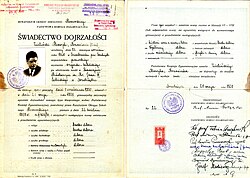
Across much of Europe, the transition from secondary education to higher learning is marked by a rigorous milestone known as the Matura. Derived from the Latin word for "maturity," the Matura (and its regional variations such as maturita, maturità, or érettségi) serves as a secondary school exit examination. This "maturity diploma" is a critical credential for young adults, typically aged 17 to 20, as it is generally a prerequisite for applying to universities and other institutions of higher education.
The Matura is a form of matriculation examination, functioning similarly to the A-Levels in the United Kingdom, the Abitur in Germany, the Baccalauréat in France, or the Bagrut certificate in Israel. It is utilized in a wide array of countries, including Albania, Austria, Bosnia and Herzegovina, Bulgaria, Croatia, the Czech Republic, Hungary, Italy, Kosovo, Liechtenstein, Montenegro, North Macedonia, Poland, Serbia, Slovakia, Slovenia, Switzerland, and Ukraine.
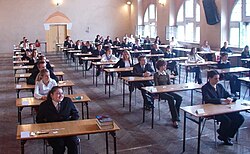
Key Facts
- Purpose: Acts as a final exit exam for secondary school and a gateway to university enrollment.
- Demographics: Typically taken by students between the ages of 17 and 20.
- Regional Scope: Widely implemented across Central and Eastern Europe, as well as parts of Southern Europe.
- Format: Varies by country but often includes a combination of written tests, oral examinations, and sometimes a research paper.
National Implementations and Variations
While the concept of the Matura is shared, each country tailors the examination to its own academic standards and goals.
Bulgaria
Bulgarian students face a diverse range of subjects, including Mathematics, Physics and Astronomy, Biology and Health Education, Chemistry and Environmental Science, History and Civilization, Geography and Economics, Information Technology, and a cycle of Philosophy. Students must also take a foreign language (English, French, German, Spanish, Italian, or Russian). While most students take the core exams, some opt for a third voluntary subject; though challenging, passing this third exam provides a significant advantage during university admissions.
Croatia
Croatia utilizes the Državna matura (State Matura Exam) for gymnasium and four-year high school students. Introduced in the 2009/2010 school year, it is managed by the National Center for External Evaluation of Education (NCVVO). Exams are offered in summer (June) and autumn (August) terms, though summer results are more critical as many university quotas are filled quickly. Additionally, the Nacionalni ispiti (National Exam) is administered to primary school pupils in the 4th and 8th grades, though as of 2026, these are used primarily for analytics rather than high school enrollment.
Czech Republic
The maturita in the Czech Republic is notable for its structured oral component. Students enter a classroom with a commission consisting of their class teacher, a commissioner, and a principal or representative. The process involves a 15-minute preparation period (known as potítko or "sweat lodge") followed by a 15-minute oral examination. Subjects include Biology, Chemistry, Foreign Language, Geography, History, Information Technologies, Mathematics, and Physics.
Hungary
Hungary employs a tiered grading system for its exams, distinguishing between standard and higher levels. Grades range from 1 (failed) to 5 (excellent), with specific percentage thresholds determining the grade assigned to the student.
Italy
The Italian scoring system has evolved significantly since 1969. Currently, the final score is a composite of three elements: school credits (up to 40 points), written exams (up to 40 points), and an oral exam (up to 20 points), with a passing mark of 60 and a maximum of 100 cum laude.
Kosovo and North Macedonia
In Kosovo, the Matura is held in June and consists of two tests. Recent reforms (2020–2022) introduced a 100-question format covering Albanian, Mathematics, English, and a self-chosen subject. There is also a mandatory State Semi-Matura Exam for primary school pupils. North Macedonia recently reformed its system in 2025 to offer three distinct paths: the State Matura for Gymnasium students, the State Vocational Matura, and the State Art Matura.
Poland and Slovakia
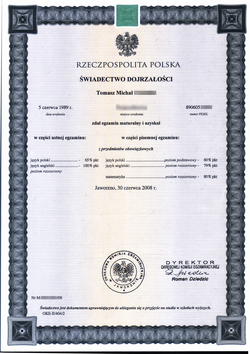
Poland requires a written exam in Polish at the "basic level" along with an oral component. Slovakia's system is highly detailed, requiring a mix of native language, foreign language, and elective subjects. A unique feature of the Slovakian internal section is the "long answer" essay, where the required length is determined by the student's CEFR proficiency level (ranging from 160 words for B1 to 3 A4 pages for native speakers).
Switzerland
Switzerland offers several types of Matura, including the Gymnasiale Matura (academic), Fachmatura (specialized), and Berufsmatura (vocational). The Gymnasiale Matura requires a scientific paper of approximately 25 pages, basic subjects (languages, math, sciences, and arts), a major subject, and an additional subject. The final grade is a balanced average of the last school year's grades, the Matura exams, and the research paper.
Comparative Summary of Matura Systems
| Country | Key Exam Components | Unique Feature |
|---|---|---|
| Czech Republic | Written & Oral | The "potítko" preparation period |
| Italy | Credits, Written, Oral | Composite scoring (max 100 cum laude) |
| Slovakia | Written & Internal Essay | Essay length based on CEFR levels |
| Switzerland | Exams, Grades, Research Paper | 25-page scientific Matura paper |
| Croatia | State Matura (Državna matura) | Summer and Autumn exam terms |
Frequently Asked Questions
What is the primary purpose of the Matura exam?
The Matura serves as the final exit examination for secondary school students in various European countries. Passing the exam typically grants the student a "maturity diploma," which is required to apply for admission to universities or other higher education institutions.
At what age do students typically take the Matura?
Students generally take these examinations at the end of their secondary education, usually between the ages of 17 and 20.
How does the Swiss Matura differ from others?
The Swiss system is highly diversified, offering academic (Gymnasiale), specialized (Fachmatura), and vocational (Berufsmatura) paths. Additionally, the academic path requires the completion of a substantial scientific research paper of about 25 pages.
Is the Matura only a written test?
No. While written tests are common, many countries include oral examinations (such as in the Czech Republic and Italy) or project-based tasks and research papers (such as in Switzerland and North Macedonia).
What happens if a student fails a subject in Slovenia?
In Slovenia, it is possible to pass the overall examination with a score of 1 in a single subject, provided the candidate has achieved at least a score of 2 in all other subjects.