Gymnasium Schools: The European Tradition of Academic Secondary Education
In many European languages, the term gymnasium refers to a prestigious type of secondary school designed specifically to prepare students for higher education at a university. While English speakers typically associate the word "gym" with physical exercise, in the context of European academia, it represents a rigorous academic track comparable to the British grammar school or the American college-preparatory high school.
The system was a defining feature of educational structures across Europe before the 20th century, particularly within the German, Austro-Hungarian, and Russian Empires. Today, it remains a cornerstone of academic achievement in numerous countries, blending classical traditions with modern scientific and linguistic requirements.
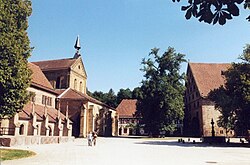
![Gymnasium Paulinum in Münster, Germany, considered the oldest school in Germany, founded in AD 797[1]](/images/83/20/832044705a62352e130dd16285f8644f861134ff94005d06db4e6fd7bddd539d.jpg)
Key Facts
- Purpose: Primary goal is to qualify students for university entrance.
- Etymology: Derived from the Greek gumnásion, originally meaning a place for both physical and intellectual training.
- Core Tracks: Traditionally divided into humanities (classical languages), modern languages, and mathematics/physical sciences.
- Certification: Often culminates in a final exam known as the Matura or Abitur.
- Global Reach: While centered in Europe, the model has influenced schools as far as South Africa.
Etymology and Evolution
The word originates from the Greek gumnós (naked), referring to the ancient Greek practice of exercising without clothes. In Ancient Greece, the gumnásion was a center for the holistic development of young men, combining physical fitness with intellectual growth. Over time, European languages diverged in how they used the term: English and Spanish retained the physical education meaning, while languages such as German, Russian, and the Scandinavian tongues adopted it to describe a place of intellectual learning.
The modern academic gymnasium was revived during the Italian Renaissance and spread to the Netherlands and Germany in the 15th century. A pivotal moment occurred in 1538 when Johannes Sturm founded a school in Strasbourg that served as the blueprint for the modern German system. By 1812, Prussian regulations mandated that any school authorized to send students to university must be called a Gymnasium.
Regional Variations and Structures
Central Europe: Germany, Austria, and Switzerland
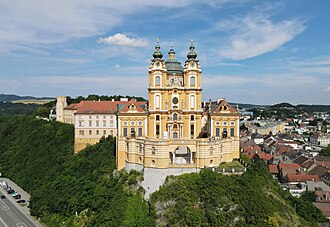
In Germany, the gymnasium is one of several secondary options, alongside the Realschule and Hauptschule. It typically begins in the 5th grade (age 11) and ends with the Abitur in the 12th or 13th grade. Austria follows a similar path, offering specialized tracks such as the Humanistisches Gymnasium (Greek and Latin), the Neusprachliches Gymnasium (modern languages), and the Realgymnasium (sciences), concluding with the Matura.

Southern Europe: Italy and the Balkans
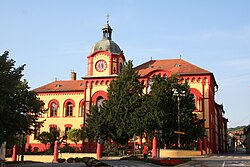
In Italy, the ginnasio represents the first two years of the Liceo Classico. Students focus heavily on Greek and Latin grammar to build a foundation for the subsequent three years of the Lyceum, where they study literature and philosophy. In Serbia, gymnasiums are categorized into general, natural sciences, and social studies tracks, with highly specialized schools for mathematics, sports, and military studies.
Nordic and Baltic Countries
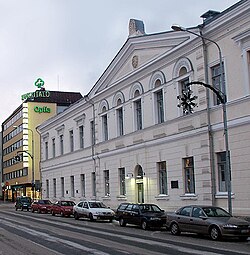
In countries like Denmark, Finland, Norway, and Sweden, the gymnasium typically lasts three years, starting around age 16. In Finland, the school is known as lukio (in Finnish) or gymnasium (in Swedish). Lithuania's system is more varied, with some gymnasiums lasting four years and others extending up to twelve years in specialized art or music institutions.
Other Notable Systems
- France: The lycée serves as the equivalent, ending with the baccalauréat.
- United Kingdom: Historically, grammar schools fulfilled this role, though most were phased out after 1965, except in specific regions like Northern Ireland.
- South Africa: The Paul Roos Gymnasium in Stellenbosch reflects the German model, emphasizing a classical academic approach.
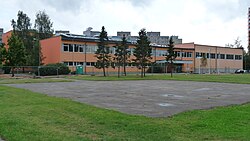
Comparison of Gymnasium Systems
| Country | Typical Duration | Starting Age | Final Qualification |
|---|---|---|---|
| Germany | 8-9 years | 11 | Abitur |
| Austria | 7 years | 11 | Matura |
| Finland | 3 years (avg) | 16 | Matriculation Exam |
| Serbia | 4 years | 14/15 | Matura |
| Italy (Liceo) | 5 years | 14 | Diploma di Maturità |
| France (Lycée) | 3 years | 15 | Baccalauréat |
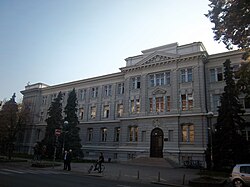
Frequently Asked Questions
How does a gymnasium differ from a regular high school?
Unlike general high schools, a gymnasium is specifically designed as a preparatory institution for university. It typically features a more rigorous academic curriculum with a strong emphasis on classical languages, advanced sciences, and humanities.
What is the Matura or Abitur?
These are standardized school-leaving examinations. Passing these exams is generally a prerequisite for enrollment in a university in the respective countries (e.g., Abitur in Germany, Matura in Austria and Serbia).
Is the gymnasium system still common today?
Yes, although many countries have reformed their systems to allow more flexibility. Some have integrated the gymnasium into a broader secondary system, while others maintain it as a distinct, competitive academic track.
Why is the term "gymnasium" used for both sports and schools?
This is due to the original Greek meaning of gumnásion, which encompassed both physical and intellectual training. English adopted the physical meaning, while many European languages adopted the intellectual meaning.
Can students move from vocational schools to a gymnasium?
In some systems, such as Germany's, it is possible. Students graduating from a Realschule or vocational school can sometimes enter the Oberstufe (upper level) of a gymnasium to earn their Abitur through additional study.