Mary Emily Eaton: The Master of Botanical Illustration
In the world of scientific art, few names command as much respect for precision and beauty as Mary Emily Eaton. A prolific English botanical artist, Eaton dedicated her life to capturing the intricate details of the natural world, bridging the gap between fine art and scientific documentation. Her work remains a cornerstone of botanical history, particularly through her monumental contributions to cactus studies.
A Life Dedicated to Art and Nature
Born on 27 November 1873, in Coleford, Gloucestershire, Eaton’s journey into the arts began with formal training in London. She refined her skills at the Taunton School of Art and attended prestigious institutions including the Royal College of Art in South Kensington and the Chelsea Polytechnic. Her early professional career saw her working as a painter of Worcester porcelain, a role that required immense delicacy and attention to detail.
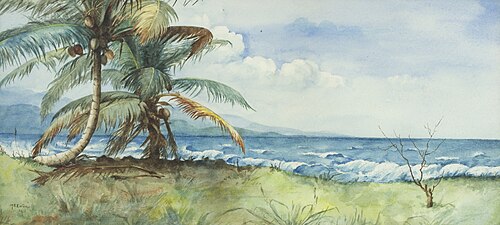
In 1909, a visit to her siblings in Jamaica marked a significant shift in her artistic focus. During her two-year stay, she began producing highly detailed studies of butterflies and moths, honing the observational skills that would later define her botanical career.
The New York Years and Scientific Legacy
In June 1911, Eaton moved to New York City, a move that would lead to her most significant professional achievements. She secured a position at The New York Botanical Garden, where she became a vital figure in scientific publishing. As the principal illustrator for the journal Addisonia, she was responsible for painting over three-quarters of its 800 plates.
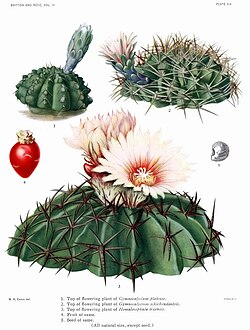
Perhaps her most enduring legacy is her work on Britton & Rose's seminal publication, The Cactaceae, published between 1919 and 1923. Her ability to render the complex structures of cacti with scientific accuracy earned her high praise from contemporary authorities. One critic even referred to her as "the greatest of living wildflower painters," noting that the true depth of her talent often surpassed what could be captured in printed reproductions.
Recognition and Honors
Eaton's excellence was recognized by the highest horticultural bodies. She was a two-time recipient of the Grenfell Medal from the Royal Horticultural Society, receiving the silver-gilt award in both 1922 and 1950.
Later Life and Permanent Collections
The economic hardships of the Great Depression led to the loss of her position at the New York Botanical Garden in 1932, making it difficult for her to find consistent work in the United States. In 1947, she returned to her native England, eventually passing away on 4 August 1961 in Cossington, Somerset.
Today, Eaton's legacy is preserved in some of the world's most prestigious institutions. Her watercolours and illustrations are held in the permanent collections of the Smithsonian Institution, the National Geographic Society, and The New York Botanical Garden. Other significant works are housed at the British Museum of Natural History and the Hunt Institute for Botanical Documentation.
Key Facts
- Full Name: Mary Emily Eaton
- Lifespan: 27 November 1873 – 4 August 1961
- Primary Field: Botanical illustration
- Major Work: Illustrator for Britton & Rose's The Cactaceae
- Key Awards: Two-time Grenfell Medal winner (Royal Horticultural Society)
- Major Institutions: The New York Botanical Garden, Smithsonian Institution
| Category | Details |
|---|---|
| Birthplace | Coleford, Gloucestershire, U.K. |
| Education | Taunton School of Art, Royal College of Art, Chelsea Polytechnic |
| Notable Employer | The New York Botanical Garden |
| Key Publication | Addisonia and The Cactaceae |
| Major Awards | Grenfell Medal (1922, 1950) |
Frequently Asked Questions
What was Mary Emily Eaton's most famous work?
She is best known for her illustrations in Britton & Rose's The Cactaceae, a monumental scientific work published between 1919 and 1923.
Where can her artwork be viewed today?
Her works are held in several major collections, including the Smithsonian Institution, the National Geographic Society, The New York Botanical Garden, and the British Museum of Natural History.
What awards did she receive for her work?
She was awarded the silver-gilt Grenfell Medal by the Royal Horticultural Society on two separate occasions: once in 1922 and again in 1950.
Did she work with anything other than plants?
Yes, early in her career she painted Worcester porcelain, and during a stay in Jamaica, she produced detailed studies of butterflies and moths.
Why did she leave New York?
Following the Great Depression, she lost her position at the New York Botanical Garden and struggled to find sufficient work in America, leading to her return to England in 1947.