Mariano Cabal: The Architect of Santa Fe's Modernization
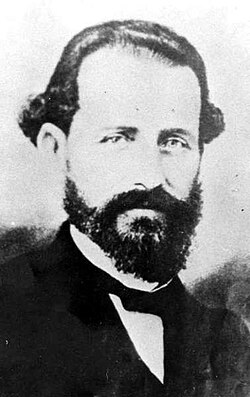
Mariano Cabal (1830–1885) was a pivotal political figure in 19th-century Argentina, serving as the governor of the province of Santa Fe from April 9, 1866, to April 7, 1871. His administration was characterized by a relentless drive toward infrastructure development, territorial expansion, and the institutionalization of higher education.
Cabal's leadership occurred during a transformative era for Argentina, focusing on integrating the interior provinces with the capital and fostering economic growth through immigration and technology.
Key Facts
- Governorship: Led Santa Fe Province from 1866 to 1871.
- Infrastructure: Established the first telegraph line between Rosario and Buenos Aires.
- Transport: Facilitated the 1870 railway link between Rosario and Córdoba via the Ferrocarril Central Argentino.
- Territory: Expanded the province to 57,000 km².
- Education: Laid the foundation for the Faculty of Social and Juridical Sciences of the National University of the Littoral.
- Urbanization: Founded the city of San Justo and the town of Emilia.
Infrastructure and Technological Advancement
One of the hallmarks of Cabal's administration was the modernization of communications and transport. In 1870, his government oversaw the creation of the railway link between Rosario and Córdoba through the Ferrocarril Central Argentino (Central Argentine Railway), which significantly boosted trade and mobility.
Simultaneously, Cabal prioritized rapid communication by opening the first telegraph line connecting Rosario and Buenos Aires, bridging the gap between the province's commercial hub and the national capital.
Territorial Expansion and Colonization
Cabal aggressively expanded the colonized frontiers of Santa Fe. He pushed the provincial boundaries southward to the current locations of Venado Tuerto and Teodelina (34° S), and northward to the latitude of Morteros, Córdoba (approximately 30° 40’ S). These efforts increased the total area of the province to 57,000 km².
To populate these new lands, the provincial government sponsored the establishment of agricultural colonies for European immigrants. This policy not only grew the population but also solidified the region's agricultural productivity. Cabal is recognized as the official founder of San Justo, as well as smaller settlements such as Saladero Cabal and Emilia, the latter named in honor of his wife.
Educational Legacy and Political Career
Cabal's influence extended into the academic realm. In 1869, he issued a decree authorizing the teaching of Civil, Canonical, and Natural Law at the Law School of the Jesuit-run College of the Immaculate Conception in Santa Fe City. This initiative served as the origin of what is now the Faculty of Social and Juridical Sciences of the National University of the Littoral.
Politically, Cabal remained active after his governorship. He served as a deputy for the capital district of Santa Fe (1871–1872) and later as a senator (1872–1876). He also played a key role in the reform of the provincial constitution in 1873. During his final year as governor, he collaborated with President Domingo Faustino Sarmiento to suppress the uprising led by Ricardo López Jordán in the neighboring Entre Ríos Province.
Cabal was succeeded in office by his minister and personal friend, Simón de Iriondo. He passed away in Buenos Aires at the age of 55.
Summary of Mariano Cabal's Administration
| Category | Achievement/Detail |
|---|---|
| Term of Office | April 9, 1866 – April 7, 1871 |
| Key Infrastructure | Rosario-Buenos Aires telegraph; Rosario-Córdoba railway |
| Provincial Area | Expanded to 57,000 km² |
| Founded Cities | San Justo, Emilia, Saladero Cabal |
| Academic Contribution | Founded the precursor to the Faculty of Social and Juridical Sciences |
| Predecessor/Successor | Nicasio Oroño / Simón de Iriondo |
Frequently Asked Questions
When did Mariano Cabal serve as governor of Santa Fe?
Mariano Cabal served as the governor of Santa Fe from April 9, 1866, until April 7, 1871.
What were the most significant infrastructure projects under his rule?
The most significant projects included the opening of the first telegraph line between Rosario and Buenos Aires and the establishment of the railway link between Rosario and Córdoba via the Ferrocarril Central Argentino in 1870.
How did Cabal contribute to the education system in Santa Fe?
Through a 1869 decree, he authorized the teaching of Civil, Canonical, and Natural Law at the College of the Immaculate Conception, which eventually became the Faculty of Social and Juridical Sciences of the National University of the Littoral.
Which cities is Mariano Cabal credited with founding?
He is acknowledged as the official founder of the city of San Justo and smaller towns including Emilia and Saladero Cabal.
What role did he play after his governorship?
After leaving the governorship, he served as a deputy (1871–1872), a senator (1872–1876), and collaborated on the reform of the provincial constitution in 1873.