Marian Anderson: The Voice That Shattered Racial Barriers
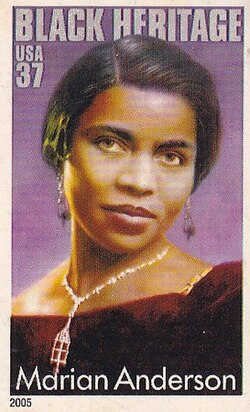
Marian Anderson was more than a world-class musician; she was a symbol of resilience and equality. As an American contralto—a deep female singing voice—Anderson possessed a rare talent that allowed her to traverse the boundaries of opera, spirituals, and classical recitals. Between 1925 and 1965, her voice resonated in the most prestigious concert halls across the United States and Europe, challenging the racial prejudices of her era through the sheer power of her art.
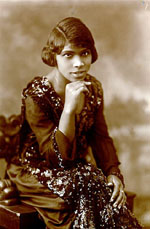
Key Facts
- Vocal Range: Operatic contralto.
- Historic Milestone: Performed a landmark concert at the Lincoln Memorial on April 9, 1939.
- Major Honors: Recipient of the Presidential Medal of Freedom (1963) and the Congressional Gold Medal (1977).
- Philanthropy: Established the Marian Anderson Award in 1943 to support young singers.
- Lifespan: February 27, 1897 – April 8, 1993 (aged 96).
The Path to Global Recognition
Anderson's early career was marked by a relentless pursuit of excellence despite the systemic barriers facing African American artists in the early 20th century. Her versatility became her trademark, as she mastered a wide range of musical styles. This flexibility helped her secure performances with renowned orchestras and established her as a premier recitalist on both sides of the Atlantic.
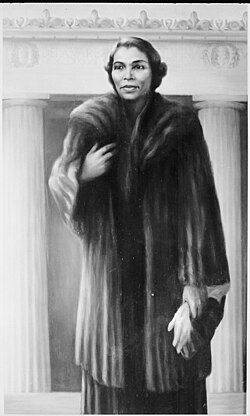
The 1939 Lincoln Memorial Concert
One of the most pivotal moments in American cultural history occurred in 1939. After being denied the use of Constitution Hall by the Daughters of the American Revolution (DAR), Anderson was supported by First Lady Eleanor Roosevelt. On April 9, 1939, Anderson performed a historic concert at the Lincoln Memorial, an event that stirred the national conscience and became a beacon for the civil rights movement.
The DAR eventually apologized for the incident. In a testament to her grace and the shifting social tide, Anderson returned to perform at Constitution Hall multiple times between 1943 and 1964, with First Lady Roosevelt attending the first of these return performances on January 7, 1943.
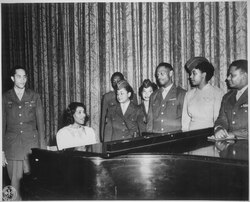
Mid-Career and Artistic Triumphs
Following her historic 1939 performance, Anderson's career reached new heights. She became a fixture at major events, including presidential inaugurations and goodwill ambassador tours. Her artistry eventually led her to the Metropolitan Opera, breaking further barriers for Black performers in the world of opera.
Beyond the stage, Anderson was recognized for her contributions to humanity and the arts. She received numerous honorary doctorates from institutions such as Howard University, Temple University, and Smith College.
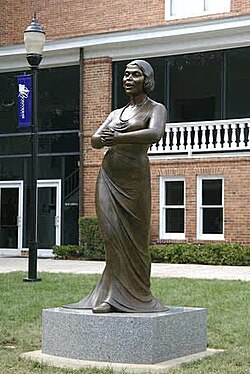
Later Life and Lasting Legacy
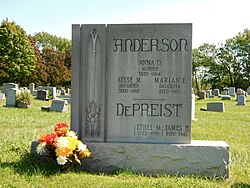
In 1943, Anderson settled at Marianna Farm in Danbury, Connecticut. Here, she built a three-bedroom ranch house and a separate one-room studio. Her commitment to her community and art remained steadfast until her final years. In 1992, she moved to Portland, Oregon, to live with her nephew, conductor James DePreist. She passed away on April 8, 1993, due to congestive heart failure at the age of 96.
The Marian Anderson Award
Anderson's generosity was exemplified by the Marian Anderson Award. After receiving the Philadelphia Award in 1940, which included $25,000 in prize money (approximately $574,525 in 2025), she used the funds to create a singing competition for young artists. Although the original fund was exhausted by 1976, the award was re-established in 1990 and continued until 2019.
Summary of Achievements
| Category | Details |
|---|---|
| Primary Occupation | Operatic Contralto |
| Active Performance Years | 1925–1965 |
| Key Civil Rights Event | 1939 Lincoln Memorial Concert |
| Major Awards | Presidential Medal of Freedom, Congressional Gold Medal, Grammy Lifetime Achievement Award |
| Final Resting Place | Eden Cemetery, Collingdale, Pennsylvania |
Frequently Asked Questions
Why was the 1939 Lincoln Memorial concert so significant?
The concert was a response to the DAR's refusal to let Anderson perform at Constitution Hall due to her race. By performing at the Lincoln Memorial instead, Anderson turned a moment of exclusion into a powerful statement for racial equality and civil rights.
What is a contralto?
A contralto is the lowest female singing voice, characterized by a deep, rich tone. Marian Anderson was celebrated for her mastery of this specific vocal range.
How did Marian Anderson support other musicians?
She established the Marian Anderson Award in 1943 using prize money from the Philadelphia Award. This competition provided financial support and opportunities for young singers to develop their careers.
Where can visitors find remnants of her life today?
Her studio in Danbury, Connecticut, was moved to downtown Danbury and is preserved as the Marian Anderson studio. Additionally, the Union Baptist Church in Philadelphia is listed on the Philadelphia Register of Historic Places due to its association with her.
Which major awards did she receive during her lifetime?
Anderson received a vast array of honors, including the NAACP Spingarn Medal (1939), the Presidential Medal of Freedom (1963), the Congressional Gold Medal (1977), and a Grammy Lifetime Achievement Award (1991).