Māori Bible Translation: A History of 19th Century Scripture in New Zealand
The translation of the Bible into the Māori language during the 19th century represents a monumental linguistic and religious effort. Sponsored by the Church Missionary Society (CMS), this project involved decades of collaboration between missionaries and linguists to bring Christian scriptures to the indigenous people of New Zealand.
The Early Efforts of Translation
The formal process began in 1826 when the Rev. William Williams started translating the Bible into Māori. He focused primarily on the New Testament, while the Rev. Robert Maunsell dedicated his efforts to the Old Testament. This partnership saw the publication of various Old Testament portions in 1827, 1833, and 1840, eventually leading to a full translation by 1857.
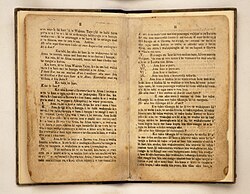
In July 1827, William Colenso achieved a significant milestone by printing the first Māori Bible materials. This collection included three chapters of Genesis, the 20th chapter of Exodus, the first chapter of the Gospel of St John, 30 verses from the fifth chapter of the Gospel of St Matthew, the Lord's Prayer, and several hymns. This publication holds the distinction of being the first book ever printed in New Zealand.
By 1837, Colenso published the Māori New Testament, marking the first indigenous language translation of the Bible published in the southern hemisphere.
Expanding the Written Word
The reach of these texts expanded through international printing efforts. In 1830, while staying in Sydney, New South Wales, the Rev. William Yate supervised the printing of 550 copies of a translation that included:
- The first three chapters of Genesis
- The first eight chapters of the Gospel of Matthew
- The first four chapters of the Gospel of John
- The first six chapters of the Epistle of St. Paul to the Corinthians
- Portions of the Liturgy and the third catechism, Ko te katekihama III
Further collaboration occurred between William Williams and William Gilbert Puckey, who worked together on the New Testament published in 1837 and its subsequent revision in 1844.
The Book of Common Prayer and Formal Revisions
Beyond the Bible, the Book of Common Prayer (a book containing the standard services of the Church of England) was completed by November 1841. The translation was a joint effort: Rev. William Williams translated most of the Collects; William Puckey handled the Sacramental and Matrimonial Services; and William Colenso translated the remaining Collects, Old Testament Epistles, Thanksgivings, Prayers, and various other liturgical rubrics and articles of religion.
Between May and September 1844, a committee comprising Archdeacon William Williams, Rev. Robert Maunsell, James Hamlin, and William Puckey revised the Common-Prayer Book. The British and Foreign Bible Society funded the first complete editions and revisions of the New Testament.
Mass Distribution and Finalization
To ensure wide availability, Rev. William Williams and Rev. T. W. Meller, the Editorial Superintendent of the British and Foreign Bible Society, revised the New Testament. In 1853 alone, 15,000 copies were printed in England. Combined with other efforts, the CMS and Wesleyan Missionary Society distributed a total of 106,221 copies of the New Testament in the Māori language across New Zealand.
In the early 1860s, Elizabeth Fairburn Colenso contributed to the project by preparing the revised Old and New Testaments for the press, correcting printed copies and suggesting alternative translations.
Timeline of Full Bible Publications
The first complete edition of the Māori Bible was finally published in 1868. Following this, the text underwent four revisions at intervals of 21, 36, and 27 years, culminating in the 1952 edition. Today, the New Zealand Bible Society aims to produce a new translation using modern colloquial Māori.
| Year | Milestone | Key Figures |
|---|---|---|
| 1826 | Translation work begins | William Williams |
| 1827 | First book printed in NZ | William Colenso |
| 1837 | First indigenous Bible translation in Southern Hemisphere | William Colenso |
| 1841 | Book of Common Prayer completed | Williams, Puckey, Colenso |
| 1857 | Full Old Testament translation completed | Robert Maunsell |
| 1868 | First full Māori Bible published | Various |
| 1952 | Final major revision published | New Zealand Bible Society |
Key Facts
- First Print: William Colenso printed the first Māori religious texts in 1827, the first book printed in New Zealand.
- Southern Hemisphere First: The 1837 Māori New Testament was the first indigenous language Bible translation published in the southern hemisphere.
- Distribution: Over 106,000 copies of the New Testament were distributed by the CMS and Wesleyan Missionary Society.
- Collaborative Effort: Key figures included William Williams (New Testament), Robert Maunsell (Old Testament), and William Colenso (printing and liturgy).
- Full Bible: The first complete Māori Bible was published in 1868.
Frequently Asked Questions
Who were the primary translators of the Māori Bible?
The primary translators were the Rev. William Williams, who focused on the New Testament, and the Rev. Robert Maunsell, who worked on the Old Testament. They were supported by collaborators such as William Gilbert Puckey and William Colenso.
What was the first book ever printed in New Zealand?
The first book printed in New Zealand was a collection of Māori Bible excerpts printed by William Colenso in July 1827, which included parts of Genesis, Exodus, the Gospels of John and Matthew, the Lord's Prayer, and hymns.
How many copies of the New Testament were distributed?
A total of 106,221 copies of the New Testament in the Māori language were printed and distributed by the Church Missionary Society (CMS) and the Wesleyan Missionary Society.
When was the first complete Māori Bible published?
The first full edition of the Māori Bible was published in 1868, following decades of work on individual sections of the Old and New Testaments.
What is the current status of the Māori Bible translation?
Following the 1952 edition, the New Zealand Bible Society has expressed a vision to create a new translation that utilizes modern colloquial Māori.