Manumission: The History and Legal Process of Freeing Enslaved People
Manumission, also known as enfranchisement, is the formal act of an owner granting freedom to an enslaved person. Throughout history, the methods and motivations behind this process varied significantly depending on the society, the legal framework of the time, and the relationship between the enslaver and the enslaved. Historian Verene Shepherd describes the most common form as gratuitous manumission, which occurs when freedom is conferred before the overall slave system is abolished.
The reasons for manumission were often complex. In some cases, it was a benevolent or sentimental gesture, such as a master freeing a devoted servant in a will after decades of service. In other instances, it was a pragmatic tool used to incentivize industriousness and compliance among the enslaved. While trusted bailiffs or older slaves were more likely to be manumitted, those performing grueling agricultural labor rarely received such opportunities.
Key Facts
- Definition: The act of an owner freeing an enslaved person.
- Motivations: Ranged from sentimental gratitude and benevolence to pragmatic incentives for hard work.
- Roman Symbolism: The pileus (a felt cap) served as a universal symbol of a freed slave's liberty.
- Greek Status: Freed slaves in Greece typically became metics (resident aliens) rather than full citizens.
- US Trends: Manumissions increased in the Upper South during the late 18th century but plummeted after the invention of the cotton gin in 1793.
- Ottoman Reforms: The empire signed the 1890 Brussels Conference Act to suppress the slave trade, though illegal practices persisted into the 20th century.
Manumission in Ancient Greece
In Ancient Greece, affranchisement took several forms. Most commonly, a master would specify the desire to free a slave within their last will and testament. In rarer instances, slaves known as choris oikointes were able to purchase their own freedom using money earned through their own labor. Notable examples include the 4th-century bankers Pasion and Phormion, both of whom were formerly enslaved.
Other methods included fictitious sales to sanctuaries, where a deity would then enfranchise the individual, or rare state-led liberations. For example, Athens freed all enslaved people present at the Battle of Arginusae in 406 BC.
However, freedom did not equate to full citizenship. Freed slaves became metics, and their former masters often served as their prostatès (guarantor or guardian). Some remained bound by paramone, a requirement to continue living near or serving the former master.
The Roman System of Liberty
Under Roman law, enslaved people were viewed primarily as property. Once manumitted, a person became a libertus (male) or liberta (female) and was granted citizenship, though the state imposed a tax on these transactions.
The process was highly ritualized. The master brought the slave before a magistratus (magistrate), and a lictor would touch the slave's head with a rod (festuca) while declaring them free. The master would then pronounce the words "hunc hominem liberum volo" (I want this man to be free) and release them.
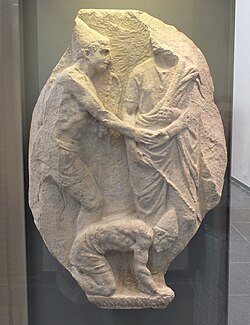
The most iconic symbol of this transition was the pileus, a soft felt hat. Upon gaining freedom, a slave's head was shaved and replaced with this undyed cap. This symbol was so potent that the phrase servos ad pileum vocare (calling slaves to the cap) was used to summon enslaved people to take up arms in exchange for liberty.
Manumission in the Americas and Caribbean
The Caribbean and Haiti
Laws in the Caribbean varied by colony. Barbados maintained strict regulations, requiring owners to pay significant fees (£200 for males, £300 for females) and provide justification to authorities. In Jamaica, manumission was largely unregulated until the 1770s, when bonds were required to prevent freed people from becoming wards of the parish. In Haiti, the struggle for freedom often involved complex legal battles over manumission papers, as seen in the case of Rosalie of the Poulard Nation.
The United States
In the North American colonies, some enslaved people purchased their own freedom. In 1661, Reytory Angola became the first Black person to petition a legislature for the manumission of her adopted son in New Amsterdam.
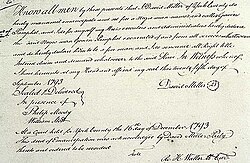
Legislation in Virginia shifted over time. In 1692, owners had to pay for the freed person's transport out of the colony. By 1782, laws were repealed to allow masters to free slaves of their own accord, and those who fought in the American Revolutionary War were granted freedom. In the late 18th century, a shift from tobacco to mixed-crop farming in the Upper South led to an increase in manumissions; for instance, Robert Carter III emancipated nearly 500 people.
This trend reversed after 1793 with the invention of the cotton gin, which spiked the demand for labor. Fear of revolts, such as Nat Turner's 1831 rebellion, led Southern states to make manumission nearly impossible until the 13th Amendment abolished slavery in 1865.
France and the Ottoman Empire
France took a distinct legal path. In 1315, King Louis X declared that everyone must be born free, effectively abolishing serfdom in the royal domain. This led to the legal maxim that the soil of France frees any slave who touches it. Later, in 1794, the French First Republic abolished slavery across its colonial empire.
In the Ottoman Empire, slavery's role diminished gradually. Under European pressure, the empire introduced reforms via firmans (decrees) in 1830 and 1854. While the 1890 Brussels Conference Act aimed to suppress the slave trade, clandestine slavery persisted. This included the forced enslavement of Armenian girls during the 1915 genocide. Turkey finally ratified the League of Nations convention on slavery in 1933, and explicit prohibition laws were adopted in 1964.
Summary of Manumission Practices
| Society | Primary Method/Symbol | Legal Status After Freedom | Key Constraint/Requirement |
|---|---|---|---|
| Ancient Greece | Wills or self-purchase | Metic (Resident Alien) | Often required to live near former master |
| Ancient Rome | Pileus hat / Magistrate ritual | Citizen (Libertus) | Subject to state tax |
| Colonial US | Deeds, wills, or self-purchase | Free person of color | Often required to leave the state |
| Ottoman Empire | Legal reforms and decrees | Free person | Persistence of clandestine trade |
Frequently Asked Questions
What is the difference between manumission and emancipation?
Manumission refers to the act of an individual owner freeing their specific enslaved persons, whereas emancipation typically refers to a larger-scale legal or political act that frees an entire class of enslaved people.
Could enslaved people buy their own freedom?
Yes, in several societies this was possible. In Ancient Greece, these individuals were known as choris oikointes, and in the United States, some slaves arranged to "purchase themselves" by paying an agreed-upon sum to their owners.
What was the significance of the pileus hat in Rome?
The pileus was a felt cap that served as a visible emblem of liberty. It was worn by freed slaves after their heads were shaved to signal their new status as free citizens.
Why did manumissions decrease in the US South in the 19th century?
The decrease was driven by the invention of the cotton gin in 1793, which increased the economic demand for slave labor, and a rise in fear among slaveholders following revolts like the 1831 Nat Turner rebellion.
Did manumission automatically grant full citizenship?
Not always. In Ancient Rome, manumitted slaves became citizens. However, in Ancient Greece, they generally became metics, which granted them some rights but not full citizenship.