Mantis: The Evolution and Biology of Nature's Ambush Predators
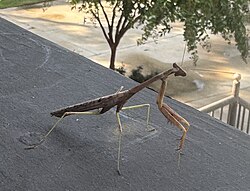
The mantis is one of the most recognizable and formidable predators in the insect world. Known for their striking posture and lethal efficiency, these insects belong to the order Mantodea. While often colloquially called "praying mantises" due to the prayer-like position of their forelegs, they are a diverse group of insects found predominantly in tropical regions, though some have adapted to temperate climates.
The term "mantis" is derived from the Ancient Greek words mántis (prophet) and eîdos (form). Historically, the term "mantid" referred specifically to the family Mantidae; however, modern taxonomy has expanded the order to include 28 other families, meaning only a small fraction of the 430 known genera are technically mantids.
Key Facts
- Species Diversity: Over 2,400 recognized species across approximately 430 genera.
- Classification: Part of the superorder Dictyoptera, which also includes cockroaches and termites.
- Life Cycle: Hemimetabolous insects, meaning they undergo incomplete metamorphosis (egg, nymph, adult).
- Fossil Record: Confirmed fossils date back to the Early Cretaceous, with some reports extending to the Upper Jurassic.
- Diet: Primarily carnivorous ambush predators, though some may supplement their diet with pollen.
Taxonomy and Evolutionary History
The evolutionary lineage of the mantis is closely tied to other Dictyoptera. They are thought to have evolved from cockroach-like ancestors. While they were once grouped with stick insects (Phasmatodea) and cockroaches in the order Orthoptera, they are now classified within the superorder Dictyoptera.
The Fossil Record
Fossil evidence of mantises is relatively rare, with only 37 species identified as of 2022. Some of the most significant finds include Santanmantis axelrodi from the Crato Formation in Brazil, a 10 mm long specimen from the Early Cretaceous that already possessed the specialized front legs used for capturing prey.
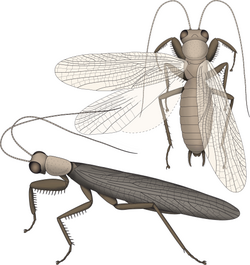
Other fossils have been discovered in amber, particularly from Japan, where nymphs have been preserved with spines on their front legs, mirroring the anatomy of modern species. Recent discoveries, such as the taxon Lovec from the Karabastau Formation, suggest their presence may date back to the Upper Jurassic.
Biology and Anatomy
The mantis is a marvel of biological engineering, designed for stealth and precision. Their most distinctive feature is the raptorial forelegs, which allow them to seize prey with incredible speed.
Vision and Sensory Systems
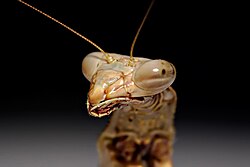
Mantises possess highly developed compound eyes that provide a wide field of view and the ability to perceive depth, which is critical for calculating the distance of a strike.
Life Cycle and Development
As hemimetabolous insects, mantises do not have a pupal stage. Instead, they progress through three distinct stages:
- Egg: Eggs are laid in a protective case called an ootheca. Hatching typically takes 3–4 weeks for small species and 4–6 weeks for larger ones.
- Nymph: Nymphs resemble miniature adults but lack wings. They undergo five to 10 molts, shedding their exoskeleton to grow. Some early-stage nymphs mimic ants to avoid predation.
- Adult: After the final molt, most mantises develop wings, though some females remain wingless or brachypterous (short-winged).
Lifespans vary significantly by size; smaller species may live only 4–8 weeks, while larger species can survive for 4–6 months.
Behavior and Ecology
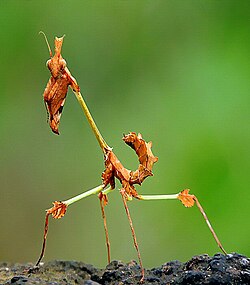
Mantises are opportunistic predators. While they primarily hunt other insects, some species are known to prey on small vertebrates, including birds and fish. To avoid their own predators, many mantises employ camouflage or mimicry, such as the orchid mantis which mimics a flower to deceive pollinators.
Sexual Cannibalism
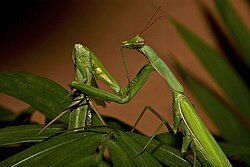
One of the most famous behaviors associated with the mantis is sexual cannibalism, where the female consumes the male during or after mating. While widely publicized, this behavior is not universal across all species and is often influenced by the female's nutritional state.
Human Interaction and Cultural Impact
Beyond biology, the mantis has left a mark on human culture, art, and science. They are popular as pets due to their fascinating behavior, with dozens of species bred in captivity across the US, UK, and Netherlands.
Cultural and Practical Influence
- Martial Arts: The "Southern Praying Mantis" style of Kung Fu is inspired by the insect's movements.
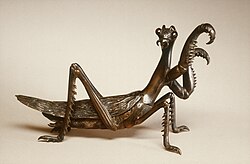
- Art: Mantises have appeared in art for centuries, from Edo-period Japanese bronze ink brush rests to modern literature.
- Technology: The unique design of mantis legs has served as a blueprint for robotics research.

Summary of Mantis Characteristics
| Feature | Details |
|---|---|
| Scientific Order | Mantodea |
| Superorder | Dictyoptera |
| Estimated Species | 2,400+ |
| Metamorphosis Type | Hemimetabolous (Incomplete) |
| Primary Habitat | Tropical and Temperate regions |
| Key Adaptation | Raptorial forelegs and binocular vision |
Frequently Asked Questions
Do all female mantises eat the males?
No. Sexual cannibalism occurs in some species, such as Mantis religiosa, but it is not a universal trait for all mantises. It is often linked to the female's hunger levels.
What is the difference between a mantid and a mantis?
Technically, "mantid" refers only to members of the family Mantidae. Because the order Mantodea contains 28 other families, most species are mantises but not mantids.
How long do mantises live?
Lifespans vary by species. Smaller species may live between 4 and 8 weeks, while larger species typically live between 4 and 6 months.
What are hemimetabolous insects?
Hemimetabolous insects are those that undergo incomplete metamorphosis, meaning they transition from egg to nymph to adult without a pupal (cocoon) stage.
Where did mantises evolve from?
Evidence suggests that mantises evolved from cockroach-like ancestors, which is why they are grouped with cockroaches and termites in the superorder Dictyoptera.