Insects: The Diverse and Dominant Class of Animal Life
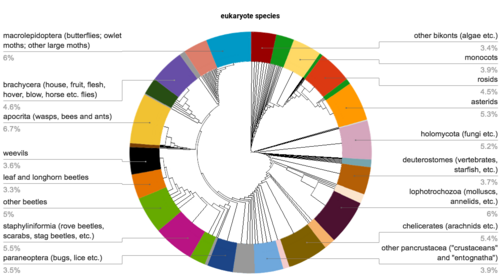
From the smallest garden dweller to the most complex social structures, insects represent one of the most successful groups of organisms on Earth. Belonging to the class Insecta within the phylum Arthropoda, these creatures have occupied nearly every habitat on the planet since their emergence during the Carboniferous period. Today, they are so abundant that they account for approximately half of all known eukaryotes.
Key Facts

- Body Structure: Insects are characterized by a three-part body consisting of a head, thorax, and abdomen.
- Appendages: They possess exactly six legs.
- Evolutionary History: Their temporal range extends from the Carboniferous period to the present day.
- Diversity: They include a vast array of groups, such as Lepidoptera (butterflies and moths) and Coleoptera (beetles).
- Metamorphosis: Many insects undergo complex life-cycle changes, either through incomplete or complete metamorphosis.
Distinguishing Insects from Other Arthropods
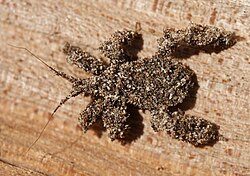
In common language, the term "bug" is often used loosely, but scientifically, insects have specific anatomical requirements that distinguish them from other arthropods. For example, while a spider has eight legs and a two-part body, an insect must have six legs and a three-part body. Other similar-looking creatures include centipedes, which have one pair of legs per segment, and millipedes, which have two pairs per segment.
| Organism | Leg Count | Body Segmentation |
|---|---|---|
| Insect | 6 | 3 parts (Head, Thorax, Abdomen) |
| Spider | 8 | 2 parts |
| Woodlouse | 14 (7 pairs) | 7 segments + head/tail |
| Centipede | Many | 1 pair per segment |
| Millipede | Many | 2 pairs per segment |
Morphology and Internal Systems
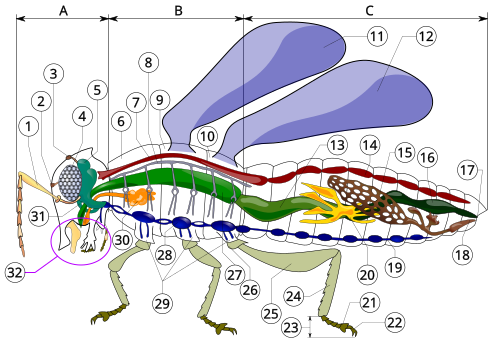
The physical structure of an insect is highly specialized for survival. The exoskeleton provides external support and protection, while the body is divided into three distinct regions: the head (sensory and feeding), the thorax (locomotion), and the abdomen (digestion and reproduction).
Sensory and Locomotion Capabilities
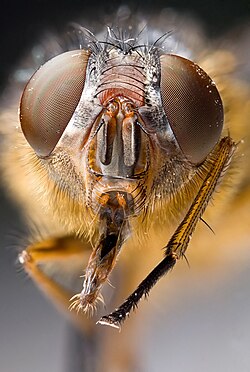
Insects rely on sophisticated sensory organs to navigate their environments. Most possess a pair of large compound eyes and antennae, which allow them to detect chemical stimuli and rapid movements. These adaptations facilitate various forms of locomotion, including walking, swimming, and highly agile flight.
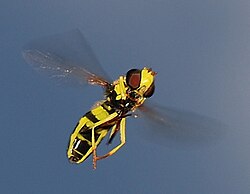
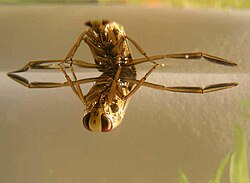
Flight is one of the most significant evolutionary advantages for insects. Some, like hoverflies, are capable of incredibly rapid and agile maneuvers, while others have adapted limbs for specialized movement, such as the paddle-like hindlegs of the backswimmer Notonecta glauca.
Internal Physiology
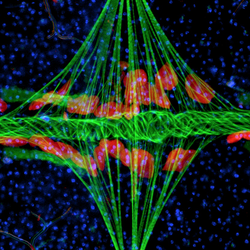
Internally, insects possess complex systems to maintain life. Their circulatory system often involves a tube-like heart that moves hemolymph through the body. Their respiratory system utilizes tracheal tubes and spiracles (small openings) to facilitate gas exchange, rather than lungs.
Reproduction and Life Cycles
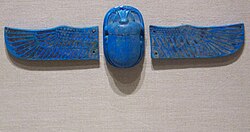
Insects exhibit diverse developmental strategies known as metamorphosis. This process allows different life stages to occupy different ecological niches, reducing competition between parents and offspring.
Complete vs. Incomplete Metamorphosis
Complete metamorphosis involves four distinct stages: egg, larva, pupa, and adult. A classic example is the butterfly, which undergoes a total transformation from a caterpillar to a winged adult. In contrast, incomplete metamorphosis involves stages that look more like miniature versions of the adult, such as the various instars seen in a locust.
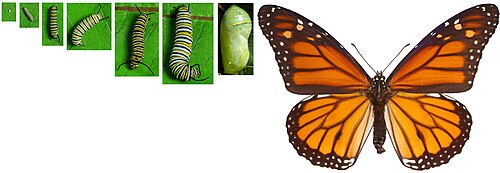
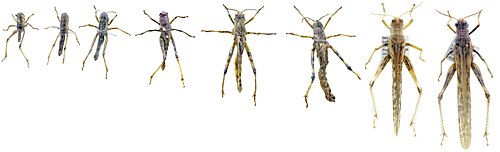
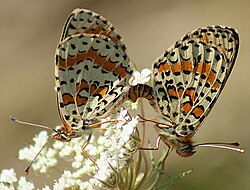
Mating behaviors also vary widely, ranging from the simple pairing of butterflies to the complex social structures found in eusocial insects like ants, which use pheromones (chemical signals) to communicate with their colony members.
![Social insects such as ants have multiple types of pheromonal glands, producing different semiochemicals for communication with other insects.[105]](/images/05/b4/05b4b774609134510f127feffea1c62a5f1233a3e6dd7506e5f7573d40bb0a83.png)
Ecological and Human Importance
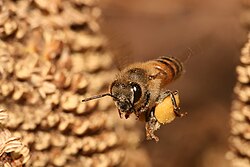
Insects play critical roles in global ecosystems, acting as pollinators, decomposers, and prey for other animals. However, their relationship with humans is multifaceted. While some are essential for agriculture—such as the European honey bee, which carries pollen back to the hive—others are viewed as pests or disease vectors.
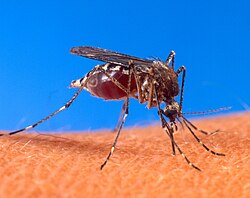
The Aedes aegypti mosquito, for instance, is a well-known vector for several diseases. Conversely, insects provide significant resources for humans; silkworms have been domesticated for silk production for over 5,000 years, and certain species, like witchetty grubs, are valued as high-protein food sources.
![Silkworms were domesticated for silk over 5,000 years ago.[157][158] Here, silk cocoons are being unrolled.](/images/06/7d/067db88bb5fafafa991bd38e65c708cc1078900977ef1ce28cf4707e47bf921c.jpg)
![Witchetty grubs are prized as high-protein foods by Aboriginal Australians.[189]](/images/00/43/0043bdeec48a1aa898e2247fdb2de74048eddce9cb936cd8552c43f55117ad9b.jpg)
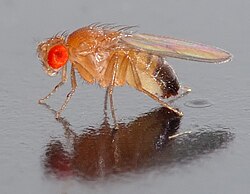
In the scientific community, certain insects serve as vital model organisms. The fruit fly, Drosophila melanogaster, is widely used in genetic and biological research due to its manageable life cycle and well-understood genome.
Frequently Asked Questions
How can I tell if a creature is an insect?
Look for three specific anatomical markers: a body divided into three parts (head, thorax, and abdomen), exactly six legs, and typically up to two pairs of wings.
What is the difference between complete and incomplete metamorphosis?
Complete metamorphosis includes a pupal stage where the insect undergoes a total transformation (e.g., butterfly). Incomplete metamorphosis involves gradual changes through several stages (instars) without a pupal phase (e.g., locust).
Why are insects important to the environment?
Insects are essential for pollination, which allows plants to reproduce, and they serve as a primary food source for many other animals, maintaining the balance of ecosystems.
Can insects communicate with each other?
Yes, many insects use chemical signals called pheromones to communicate, especially social insects like ants, to coordinate activities within their groups.
Are all insects harmful to humans?
No. While some insects are pests or carry diseases, many are beneficial, such as pollinators that support food crops or species used in scientific research and silk production.