Mangrove Ecosystems: Ecological Value and Coastal Protection
Mangroves are specialized coastal forests that thrive in the intertidal zone—the area between the high tide and low tide marks. These unique ecosystems serve as a critical bridge between land and sea, providing essential services that sustain marine life, protect human infrastructure, and regulate the global climate. From filtering pollutants to buffering shorelines against devastating storms, mangroves are indispensable to the health of our planet's coastlines.
Key Facts
- Biodiversity Hubs: Support hundreds of species, including commercial fish, crustaceans, and migratory birds.
- Water Filtration: Act as natural wastewater treatment systems by removing pollutants and nutrients before they reach coral reefs.
- Climate Mitigation: Store atmospheric carbon in biomass and waterlogged soils, known as blue carbon stocks.
- Storm Defense: Can reduce wave energy by up to 75% over a 200-meter stretch of forest.
- Critical Loss: At least 35% of global mangroves have been destroyed in the last decade, a rate exceeding that of tropical rainforests.
Sustaining Marine Fisheries and Wildlife
Mangroves function as vital nursery habitats for a vast array of wildlife, particularly commercial fish and crustaceans. By providing shelter and nutrients, they ensure the continued abundance of shellfish and fish populations globally. The scale of this biodiversity is evident in regional records: 133 species in Queensland, Australia; 128 in the Philippines; 119 in Selangor, Malaysia; 83 in Kenya; and 59 in Puerto Rico.
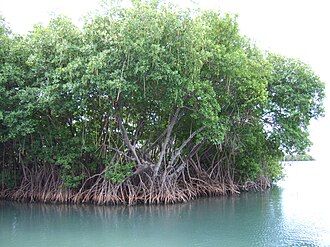
The economic impact of these nurseries is profound. In South Florida, 90% of commercial species and 75% of game fish depend on mangrove ecosystems. Similarly, in Queensland, Australia, an estimated 75% of commercially caught fish and prawns rely on mangroves for part of their life cycles or the nutrients exported from these forests to other habitats.
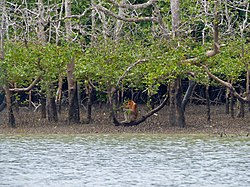
Beyond the water, mangroves support diverse terrestrial and avian wildlife, including tigers, deer, monkeys, crocodiles, and honey bees. They serve as rookeries—specialized nesting areas—for coastal birds like roseate spoonbills and brown pelicans. Furthermore, they are essential stopovers for migratory species. For example, approximately two million migratory shorebirds on the East Asian-Australasian Flyway rely on wetlands, including those in Oceania, to forage during their annual journey from the Arctic Circle to Australia and New Zealand.
Improving Coastal Water Quality
Mangroves act as a biological filter, maintaining water quality through the retention and cycling of pollutants, nutrients, and particulate matter. Their complex root systems slow the flow of water, which allows sediment to deposit. During this process, toxins and nutrients are bound to sediment or clay particles and removed from the water column.
Because of this efficiency, mangroves are often used as receiving areas for effluent, and constructed mangrove wetlands are increasingly employed to treat sewage and aquaculture waste. This filtration is part of a larger functional link between coastal ecosystems. Terrigenous sediments (land-derived materials) are filtered sequentially by coastal forests, then mangrove wetlands, and finally seagrass beds before reaching coral reefs.
This buffering capacity is essential for maintaining oligotrophic conditions—environments with very low nutrient levels—which coral reefs require to prevent algae from overgrowing the coral. By supplying controlled nutrients and filtering runoff, mangroves sustain the primary production and general health of adjacent seagrass and reef communities.
Climate Change Mitigation and Blue Carbon
Mangroves play a significant role in regulating the global climate. They absorb carbon dioxide from the atmosphere and sequester it within their living biomass and the anaerobic, waterlogged soils in which they grow. These deposits are referred to as coastal blue carbon stocks, making mangroves one of the most effective natural tools for climate change mitigation.
Coastal Protection and Human Development
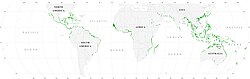
The intricate, entangled root systems of mangroves provide a physical barrier that protects shorelines. By absorbing wave energy and reducing water velocity, they prevent intertidal sediment from eroding during harsh weather. A 200-meter stretch of mangrove forest can reduce wave energy by 75%, offering a level of protection that unvegetated shorelines cannot match.
Despite these benefits, human development and coastal engineering have led to a devastating decline in mangrove populations. This loss creates a negative chain reaction, affecting all dependent ecosystems. While man-made structures like seawalls are often installed to prevent erosion, they can actually increase erosion in front of the structure or on adjacent properties due to altered coastal currents. In contrast, mangroves are a more sustainable and cost-effective alternative.
The importance of this natural defense was starkly highlighted during the 2004 Indian Ocean earthquake and tsunami. A study by the World Conservation Union (IUCN) in Sri Lanka found that in one settlement protected by dense mangrove and scrub forest, only two people died. In a nearby village without such vegetation, up to 6,000 people perished, proving that mangroves serve as a critical natural wall during high-impact disasters.
Summary of Mangrove Ecological Values
| Function | Primary Benefit | Key Impact/Statistic |
|---|---|---|
| Fisheries Nursery | Supports commercial fish/shellfish | 90% of commercial species in South Florida depend on them |
| Water Filtration | Removes pollutants and toxins | Protects coral reefs from algal overgrowth |
| Carbon Sequestration | Climate change mitigation | Stores carbon in biomass and waterlogged soils (Blue Carbon) |
| Shoreline Defense | Wave attenuation and erosion control | Reduces wave energy by 75% over 200 meters |
| Wildlife Habitat | Shelter and nesting (rookeries) | Supports 2 million migratory birds on the East Asian-Australasian Flyway |
Frequently Asked Questions
How do mangroves protect the coastline from erosion?
Mangroves use their intricately entangled root systems to absorb wave energy and reduce the velocity of water passing through the barrier. This prevents intertidal sediment from being washed away and reduces wave energy by up to 75% over a distance of 200 meters.
What is "blue carbon" in the context of mangroves?
Blue carbon refers to the carbon captured by the world's ocean and coastal ecosystems. Mangroves contribute to these stocks by absorbing carbon from the atmosphere and storing it in their biomass and the waterlogged soils where they grow.
How do mangroves benefit coral reefs?
Mangroves act as a filter for terrigenous sediments and nutrients. By removing these materials before they reach the sea, they maintain the oligotrophic (low-nutrient) conditions that coral reefs need to prevent algae from overgrowing the coral.
Why are mangroves better than seawalls for coastal protection?
Unlike seawalls, which can increase erosion in front of the structure or on adjacent properties due to coastal currents, mangroves provide a natural, flexible barrier. They are generally less expensive to maintain and provide additional ecological benefits like habitat and water filtration.
What is the current state of global mangrove populations?
Mangrove populations are in a devastating decline due to human development and coastal engineering. In the last decade alone, at least 35% of the world's mangroves have been destroyed, a rate of loss that exceeds that of tropical rainforests.