Manchu: The Linguistic Heritage of the Tungusic Tradition
Manchu (Manju gisun) is a member of the Tungusic language family, specifically within the Southern Jurchenic branch. Historically native to the Manchuria region of China, the language is closely related to the Manchu–Xibe language group. While it once served as a primary language of administration and culture, it has undergone significant shifts from widespread use to a period of decline, followed by modern revitalization efforts.
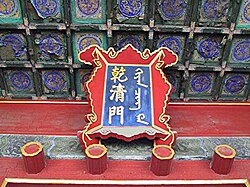
Key Facts
- Language Family: Tungusic (Southern Jurchenic)
- Writing System: Manchu alphabet
- Native Region: Manchuria, China
- Linguistic Roots: Derived from early Jurchen forms
- Revitalization: Movements began in the 1980s
- Current Status: Very few L1 native speakers (approximately 20 as of 2007), with thousands of L2 learners
Historical Evolution and Decline
The history of Manchu is deeply intertwined with the political shifts in East Asia. During the Qing dynasty, Manchu studies were highly formalized, involving the Hanlin (an imperial academy) and extensive translation work between Chinese and Manchu. However, the language experienced a gradual decline in the imperial garrisons and the capital, eventually reaching a late-stage decline.
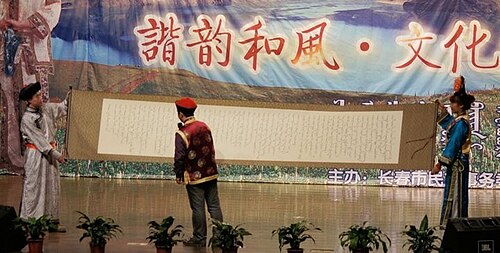
In recent decades, revitalization movements have sought to preserve this ancestral tongue. Efforts include linguistic activities by government bodies and students, such as those seen in Changchun, to ensure the language is not lost to history.
Phonology and Sound Systems
The Manchu sound system is characterized by a structured arrangement of consonants and vowels. The consonant system includes labial, dental, palatal, velar, and nasal sounds, categorized by whether they are unaspirated or aspirated plosives.
![Vowels of Manchu[70]](/images/fc/fd/fcfd3ae9fba527a0c828a775efc029e79a4e6664a5e8e742c868a44d718f1b8a.webp)
Consonants
Manchu consonants are organized into several functional groups:
- Nasals: m, n, ɲ (ni), and ŋ (ng)
- Plosives (Unaspirated): p (b), t (d), tʃ (j), and k (g)
- Plosives (Aspirated): pʰ (p), tʰ (t), tʃʰ (c), and kʰ (k)
- Fricatives: f, s, ʃ (š), and x (h)
- Approximants and Rhotics: r, l, j (y), and w
Vowels and Vowel Harmony
Manchu utilizes a system of vowel harmony, where the vowels in a stem and its suffixes must correspond according to specific patterns. The vowel system includes front, central, and back vowels across high, mid, and low positions.
| Position | Front | Central | Back |
|---|---|---|---|
| High | i | u | |
| Mid-high | ʊ (ū) | ||
| Mid | ə ~ ɤ (e) | ɔ (o) | |
| Low | ɑ (a) |
Grammatical Structure
Manchu is an agglutinative language, meaning it uses various suffixes to indicate grammatical relationships such as case, number, and tense. It employs a complex system of cases to define the role of nouns in a sentence.
The Case System
- Nominative: Marks the subject of the sentence.
- Accusative: Indicates the direct object.
- Genitive: Indicates possession or relationships (e.g., "the master of the house").
- Dative-Locative: Indicates the recipient of an action or a location in space and time.
- Ablative: Indicates a starting point in space or time, or is used for comparison.

Verbs and Participles
Verbs in Manchu are highly flexible, utilizing various suffixes to express mood and aspect. Common forms include the imperative (commands), conditional, and desiderative (expressing desire). The language also makes extensive use of converbs—non-finite verb forms that allow multiple actions to be linked within a single sentence.
Numerical System
The Manchu numbering system follows a logical progression, with specific terms for powers of ten and large numbers like tumen (10,000). Fractions are often constructed using the word ubu (part).
| Number | Manchu Term |
|---|---|
| 1 | emu |
| 2 | juwe |
| 3 | ilan |
| 5 | sunja |
| 10 | juwan |
| 100 | tanggū |
| 1,000 | minggan |
| 10,000 | tumen |
Frequently Asked Questions
What is the relationship between Manchu and Jurchen?
Manchu is considered a descendant of the earlier Jurchen language, representing an evolution within the Tungusic language family.
How is the Manchu script written?
Manchu uses a specific alphabet designed for its phonetic requirements, which was historically used for official documents and imperial records.
Is Manchu still a spoken language?
While native L1 speakers are extremely rare, there is a significant community of L2 learners and scholars involved in revitalization and study.
What is vowel harmony in Manchu?
Vowel harmony is a linguistic rule where the vowels in a word's suffix must match the vowel type (such as front or back) of the word's stem.
What does "tumen" mean?
In the Manchu numbering system, "tumen" refers to the number 10,000.