Lustre in Minerals: How Light Defines Gemstones and Rocks
In the world of geology and gemology, lustre (or luster in American English) describes the way light interacts with the surface of a crystal, rock, or mineral. Derived from the Latin word lux, meaning "light," lustre refers to the radiance, gloss, or brilliance a specimen exhibits when viewed under light.
Lustre exists on a wide continuum rather than in rigid categories. Because there are no sharp boundaries between types, different experts may describe the same mineral differently. Furthermore, lustre can vary significantly even within a single mineral species. To account for this, geologists often combine terms—such as "vitreous greasy"—to describe intermediate appearances.
Key Facts
- Lustre is the visual quality of light reflecting off a mineral's surface.
- Vitreous (glassy) is one of the most common types of lustre.
- Adamantine lustre is the highest form, characterized by a high refractive index of 1.9 or more.
- Optical phenomena like asterism and chatoyancy create unique visual patterns within stones.
- Lustre is a primary tool for identifying minerals and gemstones.
Types of Mineral Lustre
Adamantine and Subadamantine
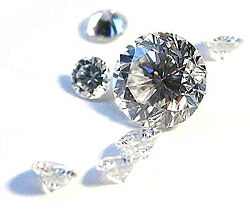
Adamantine minerals possess a superlative brilliance. These specimens are typically transparent or translucent and have a high refractive index (1.9 or higher). While true adamantine lustre is uncommon, it is most famously seen in diamonds, as well as zircon, cerussite, and cubic zirconia.
Minerals with a slightly lower but still high degree of brilliance are termed subadamantine, with garnet and corundum serving as primary examples.
Vitreous, Waxy, and Greasy
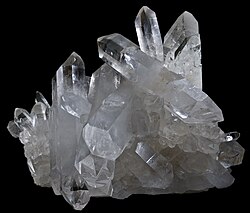
Vitreous lustre, from the Latin vitrum (glass), is the most frequent type. It occurs in transparent or translucent minerals with relatively low refractive indices, such as quartz, calcite, topaz, beryl, tourmaline, and fluorite.
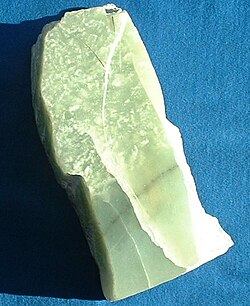
Waxy lustre resembles the surface of wax and is commonly found in minerals like jade and chalcedony.
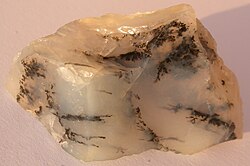
Greasy lustre makes a mineral look like it is covered in fat or grease. This often happens in minerals with many microscopic inclusions, such as jadeite, cordierite, and opal. These minerals often feel greasy to the touch.
Metallic and Submetallic
Metallic (or splendent) minerals look like polished metal and can act as reflective surfaces. Examples include pyrite, magnetite, and galena.
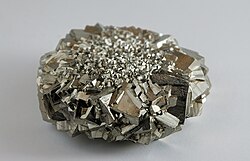
Submetallic minerals are similar to metals but are duller and less reflective. This is common in near-opaque minerals with very high refractive indices, such as sphalerite, cuprite, anthracite, and cinnabar.
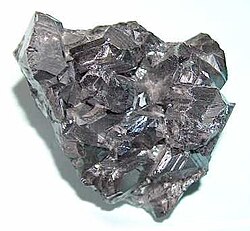
Pearly, Silky, and Resinous
Pearly lustre occurs in minerals composed of thin, transparent co-planar sheets, creating a look reminiscent of pearls. These minerals, such as stilbite and muscovite, possess perfect cleavage.
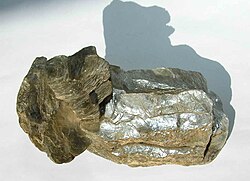
Silky lustre is caused by a parallel arrangement of extremely fine fibres. Examples include ulexite, asbestos, and the satin spar variety of gypsum. A similar but coarser texture is known as fibrous lustre.
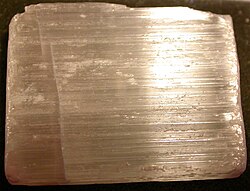
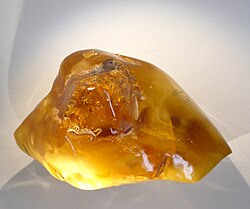
Resinous minerals look like smooth plastic, chewing gum, or resin. A primary example is amber, which is fossilized resin.
Dull and Earthy
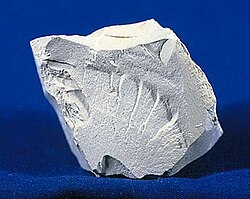
Dull (or earthy) minerals show little to no lustre. This is caused by coarse granulations that scatter light in all directions, acting as a Lambertian reflector. Kaolinite is a classic example. Earthy minerals are generally coarser and even less lustrous than those simply described as dull.
Summary of Lustre Types
| Lustre Type | Visual Characteristic | Example Minerals |
|---|---|---|
| Adamantine | Superlative brilliance, high refractive index | Diamond, Zircon |
| Vitreous | Glass-like | Quartz, Topaz |
| Metallic | Polished metal, highly reflective | Pyrite, Galena |
| Pearly | Iridescent sheets, pearl-like | Muscovite, Stilbite |
| Silky | Fine fibrous sheen | Satin Spar, Asbestos |
| Greasy/Waxy | Fatty or wax-like appearance | Jade, Opal |
| Dull/Earthy | No reflection, light-scattering | Kaolinite |
Special Optical Phenomena
Asterism and Chatoyancy
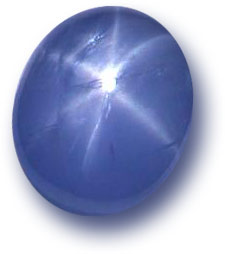
Some minerals exhibit unique light patterns. Asterism is the appearance of a star-shaped luminous area, often seen in rubies and sapphires due to rutile impurities. It can also occur in spinel, diopside, and garnet.
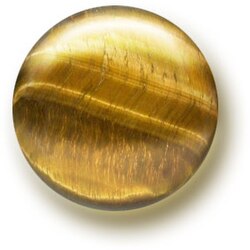
Chatoyancy creates luminous bands that move as the specimen is rotated. This is caused by parallel fibres or inclusions that reflect light perpendicularly. Tiger's eye and cymophane are the most famous examples, though it also appears in moonstone, tourmaline, and aquamarine.
Aventurescence and Schiller
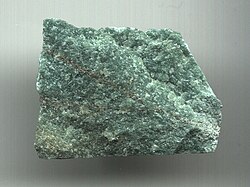
Aventurescence (or aventurization) creates a glitter-like effect caused by numerous, oriented mineral platelets. In aventurine quartz, these platelets can be iron oxides (red stone) or chrome-bearing fuchsite (green stone).
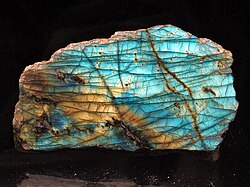
Schiller is a metallic iridescence originating from below the surface, caused by light reflecting between mineral layers. It is seen in labradorite and moonstone.
Iridescence and Colour Change
Iridescence is the "fire" of rainbow colours caused by thin regular structures beneath the surface that interfere with reflected light, most notably in precious opal.
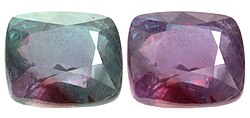
Colour change is a rare property where a gem changes hue based on the light source. Alexandrite (a variety of chrysoberyl) is the most famous example; it can appear green in daylight and red under incandescent light. This is caused by chromium oxide replacing aluminium. Similar effects are found in some garnets, sapphires, and spinels.
Frequently Asked Questions
What is the difference between adamantine and vitreous lustre?
Adamantine lustre is far more brilliant and is associated with a high refractive index of 1.9 or more, whereas vitreous lustre is a more common, glass-like appearance found in minerals with lower refractive indices.
What causes the "star" effect in some gemstones?
This effect is called asterism. It is caused by the presence of needle-like impurities, such as rutile, which reflect light in a star-shaped pattern.
Why do some minerals look like they are covered in grease?
A greasy lustre typically occurs in minerals that contain a high density of microscopic inclusions, which alters how light reflects off the surface.
How does alexandrite change colour?
Alexandrite changes colour due to the replacement of aluminium by chromium oxide. This makes the stone sensitive to the light source, often shifting from green in daylight to red in incandescent light.
What is the difference between silky and fibrous lustre?
Both involve fibres, but silky lustre is produced by extremely fine fibres, while fibrous lustre has a coarser texture.