Lupinus: The Diverse and Ecological World of Lupines
The genus Lupinus represents a remarkable group of plants within the Fabaceae (legume) family. Known commonly as lupines, these plants range from small annuals to impressive shrubs and even trees. While they are often recognized for their striking floral displays, they play a critical role in their ecosystems, serving as vital food sources for various butterfly and moth species.
It is important to distinguish the Lupinus genus from lucerne, a similar-looking fodder crop. While they may share visual similarities, they belong to different botanical classifications.
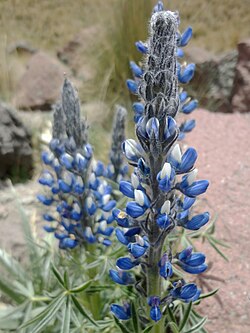
Key Facts
- Growth Forms: Mostly herbaceous perennials (0.3–1.5 meters), but includes annuals, shrubs, and even a tree species.
- Taxonomy: Belongs to the order Fabales and the family Fabaceae.
- Ecological Role: Essential larval food plants for several lepidopteran species, including the Mission blue butterfly.
- Diversity: Contains numerous subgenera, including Platycarpos and Lupinus.
- Notable Species: Includes the white lupine (L. albus) and the largeleaf lupine (L. polyphyllus).
Botanical Classification and Diversity
Lupines exhibit an extraordinary range of physical characteristics. Most species are herbaceous perennials—plants that live for more than two years—typically reaching heights between 0.3 and 1.5 meters (1–5 feet). However, the genus is highly adaptable.
Some species function as annuals, while others grow as shrubs reaching up to 3 meters (10 feet). A striking exception is the chamis de monte (Lupinus jaimehintonianus) found in Oaxaca, Mexico, which grows as a tree reaching up to 8 meters (26 feet) in height.
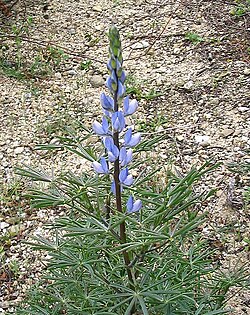
Subgenera and Species Groups
The genus is divided into several subgenera. One major group is Subgenus Platycarpos, which contains a vast array of species such as the silver bush lupine (L. albifrons), the Arctic lupine (L. arcticus), and the yellow bush lupin (L. arboreus).
Another significant group is Subgenus Lupinus, which includes well-known species like:
- Lupinus albus: The white lupine.
- Lupinus angustifolius: The blue or narrow-leafed lupin.
- Lupinus luteus: The yellow lupin.
- Lupinus pilosus: The blue lupine.
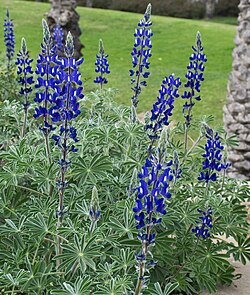
Ecological Importance: A Haven for Lepidoptera
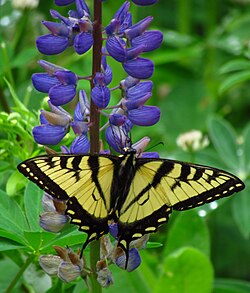
Beyond their aesthetic value, lupines are foundational to local biodiversity. They serve as primary larval food plants for many species of lepidopterans (butterflies and moths). This means the caterpillars of these insects rely specifically on lupines to survive and grow.
Several notable species depend on these plants, including:
- Mission blue butterfly (Iraricia icarioides missionensis), whose larvae are limited to Lupinus.
- Frosted elfin (Callophrys irus), recorded on L. perennis.
- Karner blue (Plebejus melissa samuelis).
- Persius duskywing (Erynnis persius).
Summary of Lupine Characteristics
| Feature | Description |
|---|---|
| Family | Fabaceae |
| Common Growth Habit | Herbaceous perennial |
| Height Range | 0.3m to 8m (depending on species) |
| Primary Ecological Role | Host plant for butterfly larvae |
| Key Subgenera | Platycarpos, Lupinus |
Frequently Asked Questions
Are all lupines the same size?
No. While most are herbaceous perennials between 0.3 and 1.5 meters, some are annuals, some are shrubs, and the Lupinus jaimehintonianus can grow as a tree up to 8 meters tall.
Is Lupinus the same as lucerne?
No. Although they may look similar, Lupinus is a distinct genus and should not be confused with the fodder crop lucerne.
Why are lupines important for butterflies?
Lupines act as essential host plants. Many butterfly species, such as the Mission blue, have larvae that are specifically limited to feeding on Lupinus plants.
What is the type species for the genus?
The type species for the genus Lupinus is Lupinus albus.
Can lupines be used ornamentally?
Yes, lupines are widely cultivated for ornamental purposes in various parts of the world, including the UK, Japan, New Zealand, and Argentina.