Luiz Inácio Lula da Silva: The Political Journey of Brazil's 35th and 39th President
Luiz Inácio Lula da Silva is a defining figure in modern Brazilian history, serving as the nation's 35th and 39th president. From his humble beginnings as a metalworker to his leadership on the global stage, Lula's trajectory reflects the complex social and political evolution of Brazil. His career is marked by a commitment to labor rights, poverty reduction, and a proactive approach to international diplomacy.
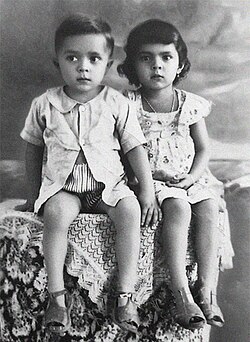
Born on October 27, 1945, in Garanhuns, Pernambuco, Lula's early life was shaped by the challenges of the working class. He received his education through the National Service for Industrial Training, which prepared him for a career in the industrial sector.
From the Factory Floor to Union Leadership
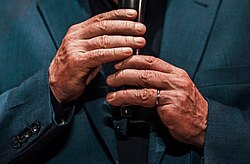
Lula began his professional life as a metalworker, a role that exposed him to the harsh realities of industrial labor. In 1964, a work-related accident resulted in the amputation of his left little finger, an event that became a symbolic part of his identity as a man of the people.
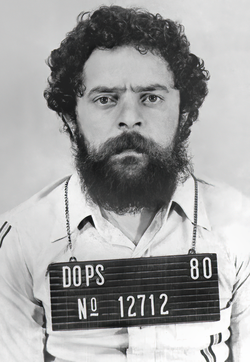
His natural leadership abilities led him into trade unionism. He rose through the ranks of the ABC Metalworkers' Union, serving as an Alternate Director starting around 1969, then as First Secretary in 1972, and eventually as President of the union from 1975 to 1981. This period established him as a powerful voice for workers' rights during a time of significant political tension in Brazil.
The Rise of a Political Powerhouse
In 1980, Lula became a founding member and later the National President of the Workers' Party (PT), a left-wing political organization. His transition to formal politics included a term in the Chamber of Deputies representing São Paulo from 1987 to 1991.
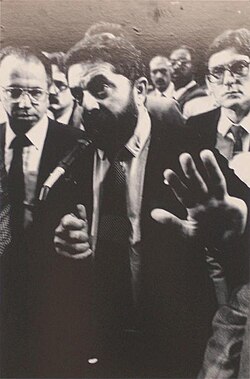
Lula's path to the presidency was a long one, characterized by several unsuccessful bids in 1989, 1994, and 1998. However, his persistence paid off in 2002 when he won the presidential election with 61.27% of the vote in the runoff, serving his first two terms from 2003 to 2011.
First Presidency (2003–2011): Growth and Social Reform
Lula's first tenure was defined by significant economic growth and the implementation of aggressive social welfare programs. Most notably, he launched Bolsa Família, a conditional cash transfer program designed to reduce poverty and hunger.
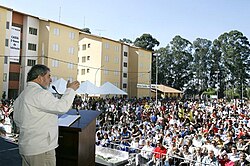
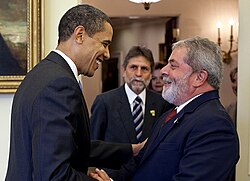
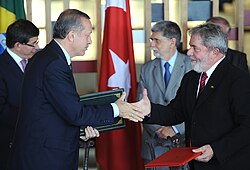
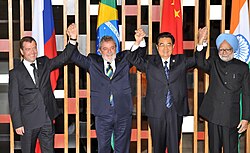
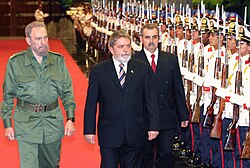
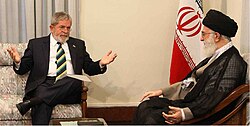
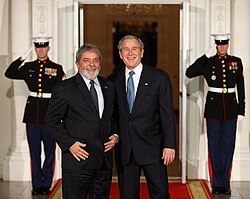
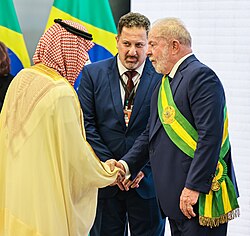
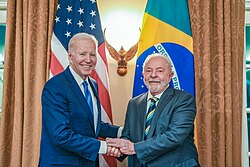
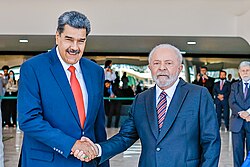
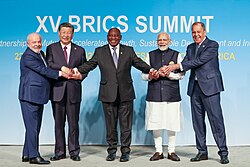
During this era, Brazil enhanced its global standing. Lula was a key proponent of the BRIC (Brazil, Russia, India, and China) grouping, seeking to create a more multipolar world order. He maintained diverse diplomatic ties, ranging from the United States to Cuba and Iran.
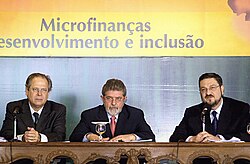
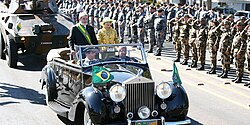
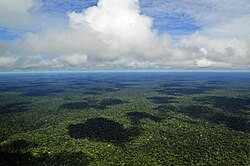
Environmental policy also saw progress, with a decline in the deforestation rate of the Amazon rainforest during his administration.
![Brazil's deforestation rate declined during Lula's time in office, and reversed under Bolsonaro[83][84]](/images/00/9d/009dfc9a5cc4b377a73519c6b8694a57dd05d9f0976dd8a80db5f5a008fff3d9.webp)
Legal Challenges and Political Return
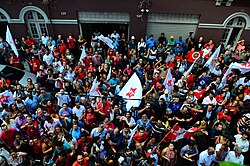
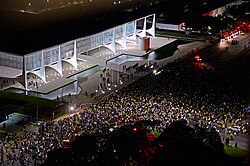
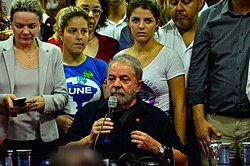
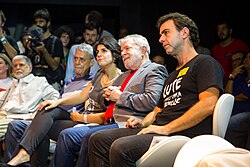
Following his presidency, Lula faced severe legal turmoil. He was caught up in Operation Car Wash, a massive corruption investigation. This led to a guilty verdict, sentencing, and a period of imprisonment. However, his convictions were later annulled, allowing him to return to active politics.
Second Presidency (2023–Present)
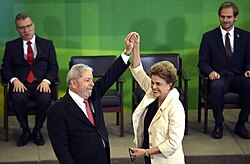
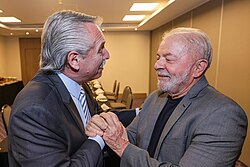
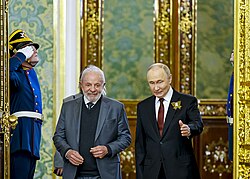
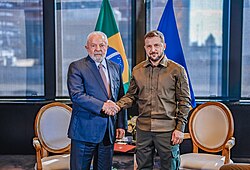
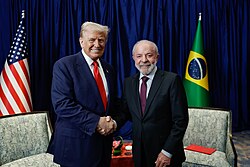
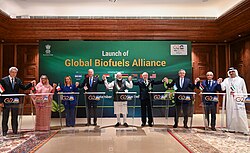
Lula returned to the presidency on January 1, 2023, after winning the 2022 election with 50.90% of the vote in the runoff. His current term focuses on restoring environmental protections in the Amazon and navigating a complex geopolitical landscape involving the Russian invasion of Ukraine and tensions in Gaza.
Key Facts
- Full Name: Luiz Inácio Lula da Silva.
- Political Party: Workers' Party (PT).
- Presidencies: 35th (2003–2011) and 39th (2023–Present).
- Key Achievement: Implementation of the Bolsa Família poverty reduction program.
- Union Background: Former President of the ABC Metalworkers' Union.
- Global Role: Strong advocate for BRICS and South-South cooperation.
| Year | Office | Coalition | Runoff Result | Outcome |
|---|---|---|---|---|
| 1989 | President | Popular Brazil Front | 46.97% | Not elected |
| 1994 | President | Brazilian Popular Front for Citizenship | N/A | Not elected |
| 1998 | President | Union of the People Change Brazil | N/A | Not elected |
| 2002 | President | Lula President | 61.27% | Elected |
| 2006 | President | The Strength of the People | 60.83% | Elected |
| 2022 | President | Brazil of Hope | 50.90% | Elected |
Frequently Asked Questions
What is the Workers' Party (PT)?
The Workers' Party (Partido dos Trabalhadores) is a left-wing political party in Brazil founded in 1980, of which Lula has been a primary leader and National President.
What was the impact of Bolsa Família?
Bolsa Família was a social welfare program launched during Lula's first presidency to provide financial aid to poor families, significantly reducing hunger and poverty across Brazil.
Why was Lula imprisoned and then released?
Lula was convicted of corruption as part of Operation Car Wash. However, his convictions were later annulled by the courts, which paved the way for his return to political eligibility and his 2022 victory.
What is Lula's stance on the environment?
Lula has prioritized the reduction of deforestation in the Amazon rainforest, a trend that was observed during his first two terms and has been a central focus of his current presidency.
How has Lula influenced international relations?
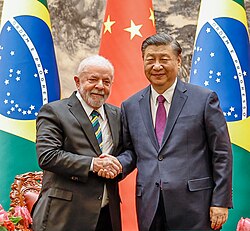
Lula has focused on diversifying Brazil's alliances, strengthening the BRICS bloc, and promoting diplomacy with nations in the Global South, while maintaining relations with major powers like the US and China.