Louisiana African American Heritage Trail
The Louisiana African American Heritage Trail (French: Sentier de l'héritage afro-américain de la Louisiane) is a curated cultural journey designed to honor the profound contributions of African Americans to the identity of Louisiana and the United States. Spanning from the vibrant streets of New Orleans along the Mississippi River to Baton Rouge and Shreveport, the trail connects 38 designated sites that tell a story of resilience, art, and cultural evolution.
While several landmarks in New Orleans are conveniently located within walking distance, exploring the full breadth of the trail—including sites in small towns and historic plantations—requires auto travel.
Key Facts
- Total Sites: 38 designated locations across the state.
- Geographic Reach: Extends from New Orleans to Baton Rouge and Shreveport.
- Diverse Landmarks: Includes museums, churches, universities, and plantation complexes.
- Evolution: Established with 26 sites in 2008, with expansions in 2012, 2019, and 2022.
- Purpose: To highlight African American contributions and promote cultural tourism for the state's economy.
The Evolution of the Trail
The initiative was championed by Mitch Landrieu during his tenure as Lieutenant Governor. The goal was twofold: to provide a formal recognition of the African American experience in Louisiana and to develop these sites as tourism destinations to bolster the state's economy.
The trail has grown steadily over the last decade. It began in 2008 with 26 initial sites. Following additions in 2012 and 2019, Lieutenant Governor Billy Nungesser announced the expansion to the current 38 sites in 2022.
Diverse Sites of Significance
The trail offers a comprehensive look at the African American experience through various lenses, from the struggle of enslavement to the triumphs of academia and the arts.
Museums and Cultural Centers
Visitors can explore a wide array of museums dedicated to history, art, and culture. Notable stops include the New Orleans African American Museum and the Arna Bontemps African American Museum, the birthplace of the influential Harlem Renaissance writer.
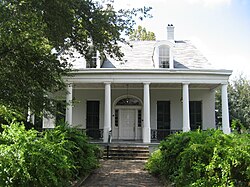
Faith and Education
The trail features the first two churches founded by and for free people of color, reflecting the early pursuit of autonomy and community. Additionally, the trail recognizes the intellectual legacy of the region by including two historically black universities: Grambling State University and Southern University.
Plantations and National Parks
The trail includes the Cane River Creole National Historical Park and two extensive plantation complexes. These sites are particularly significant for their surviving slave quarters; in one instance, these quarters were occupied until 1930, and in another, as late as the 1960s.
Trail Site Summary
| Category | Notable Examples | Location(s) |
|---|---|---|
| Cultural & Art Museums | New Orleans African American Museum, Black Heritage Art Gallery, Southern University Museum of Art | New Orleans, Lake Charles, Shreveport |
| Historic Landmarks | Congo Square, French Market, St. Louis Cemeteries No. 1 and No. 2 | New Orleans |
| Plantations & Parks | Whitney Plantation, Laura Plantation, Evergreen Plantation, Cane River Creole National Historical Park | Wallace, Vacherie, Natchitoches |
| Education | Grambling State University, Southern University | Grambling, Baton Rouge |
| Biographical Sites | Madam C.J. Walker's birthplace, Mahalia Jackson's grave | Delta, Metairie |
Frequently Asked Questions
How many sites are on the Louisiana African American Heritage Trail?
There are currently 38 designated sites across the state of Louisiana.
Can I visit the trail sites without a car?
In New Orleans, several sites are located within walking distance of one another. However, auto travel is required to reach sites in other cities, small towns, and plantations.
Which universities are included on the trail?
The trail includes two historically black universities: Grambling State University and Southern University.
What is the significance of the plantation sites on the trail?
The trail includes extensive plantation complexes that feature surviving slave quarters, providing a stark look at the living conditions of enslaved people, with some quarters used as late as the 1960s.
Who was responsible for establishing the trail?
The trail was supported by Mitch Landrieu during his time as Lieutenant Governor to highlight African American contributions and promote tourism.