Louis the German: The Founder of the East Frankish Kingdom
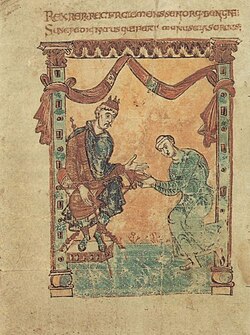
Louis the German (c. 806–876 AD), also known as Louis II of Germany, stands as a pivotal figure in European history as the first king of East Francia. A grandson of the legendary emperor Charlemagne and the third son of emperor Louis the Pious, Louis navigated a lifetime of dynastic strife to carve out a realm that would eventually evolve into the kingdom of Germany.
His reign was defined by a constant struggle for legitimacy and territory, not only against external threats like the Vikings and Moravians but also within his own family. Through a series of treaties and bloody conflicts, Louis transitioned from a regional sub-king to the sovereign of a vast eastern territory.

Key Facts
- Role: First King of East Francia (843–876 AD).
- Dynasty: Carolingian.
- Major Achievement: Established the foundation of the German kingdom via the Treaty of Verdun.
- Key Territories: Bavaria, Saxony, Franconia, and Thuringia.
- Death: Died of a stroke on August 28, 876, in Frankfurt am Main.
Early Life and Rise to Power
Louis spent his formative years in the courts of his father and grandfather. In 817, under the Ordinatio Imperii (a decree establishing the imperial succession), his father assigned him the kingship of Bavaria. This role included jurisdiction over Carantania, Bohemia, and various dependent Slavic and Avar groups.
Ruling from Regensburg, the Bavarian capital, the young Louis relied on experienced royal administrators. He quickly proved his military capabilities, engaging in wars with the Sorbs and Polabian Slavs (known to the Franks as Wends) in 825, and successfully repelling Bulgarian invasions of Pannonia in 828 and 829.
Dynastic Conflict and the Treaty of Verdun
The stability of the Carolingian Empire was shattered when emperor Louis the Pious altered succession plans in 829 to provide for his youngest son, Charles. This sparked decades of civil war between the emperor and his older sons. Louis of Bavaria was repeatedly disinherited and reinstated, eventually engaging in open warfare against his brother Lothair.
Following the death of Louis the Pious in 840, the conflict reached a climax. Louis the German allied with his half-brother Charles the Bald to defeat Lothair I. This struggle culminated in the Battle of Fontenoy on June 25, 841, described by the Annals of Fulda as one of the bloodiest encounters in Frankish history.
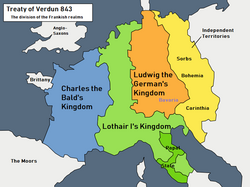
Peace was finally brokered through the Treaty of Verdun in 843. This landmark agreement divided the empire into three parts. Louis received East Francia, comprising the lands east of the Rhine, including Bavaria, Saxony, Franconia, and Thuringia.
Expansion and Internal Struggles
Once established as king, Louis sought to expand his influence. Between 858 and 859, he attempted to seize West Francia from Charles the Bald, even issuing a charter claiming the throne. However, due to military desertions and the loyalty of Aquitanian bishops to Charles, the venture failed, leading to a peace vow at Koblenz in 860.
Louis also expanded his borders through the Treaty of Meerssen in 870, which granted him portions of Lotharingia. Despite these gains, his later years were marred by rebellions from his own sons: Carloman of Bavaria, Louis the Younger, and Charles the Fat. By 865, Louis was forced to divide his realm among them to maintain peace.
Later Years and Legacy
In his final years, Louis maintained diplomatic ties with the Eastern Roman Empire, receiving ambassadors from Emperor Basil I in Regensburg. He spent his last efforts attempting to secure the imperial title for his descendants, though he was beaten to the goal by Charles the Bald in 875.
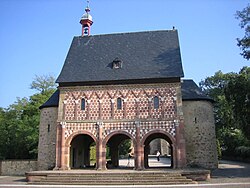
Louis died on August 28, 876, and was buried in Lorsch Abbey. His reign is noted by historians for a decline in the production of written administrative documents compared to his predecessors, a trend that persisted into the Ottonian era.
Summary of Louis the German's Reign
| Category | Details |
|---|---|
| Reign (East Francia) | 843 – 876 AD |
| Reign (West Francia) | 858 – 859 AD (Briefly) |
| Key Treaties | Treaty of Verdun (843), Treaty of Meerssen (870) |
| Capital/Seat | Regensburg |
| Spouse | Emma of Altdorf |
| Successors | Carloman of Bavaria, Louis the Younger, Charles the Fat |
Frequently Asked Questions
Why is he called "the German"?
He received the appellation Germanicus shortly after his death because the realm he ruled, East Francia, became known as the kingdom of Germany.
What was the significance of the Treaty of Verdun?
The Treaty of Verdun (843) formally divided the Carolingian Empire among the three sons of Louis the Pious, effectively creating the precursor to the modern nations of France and Germany.
Did Louis the German ever become Emperor?
No. Although he attempted to claim the title of Emperor and sought control of Italy toward the end of his life, he was unsuccessful, and the title was obtained by Charles the Bald in 875.
Who were the primary enemies of Louis the German?
His primary adversaries included his own brothers (Lothair I and Charles the Bald), his rebellious sons, the Moravians, the Vikings, and various Slavic tribes such as the Sorbs.
Where was Louis the German buried?
He was buried in Lorsch Abbey, though some historians note that the identity of the remains in the sarcophagus cannot be determined with absolute certainty.