Louis Lartet: The Geologist Who Discovered Cro-Magnon
In the annals of paleoanthropology—the study of ancient humans through fossils—few names are as pivotal as Louis Lartet. A distinguished French geologist and paleontologist, Lartet is most renowned for uncovering the original Cro-Magnon skeletons, a discovery that fundamentally reshaped our understanding of early human history and the diversity of prehistoric hominids.
Born on December 18, 1840, in Castelnau-Magnoac, France, Lartet was born into a legacy of scientific inquiry. His father, Édouard Lartet, was a prominent prehistorian and geologist who spent the 1860s and 1870s gathering evidence that humans existed during the Quaternary period, the current geological period characterized by repeated glaciations.
Following in his father's footsteps, Louis Lartet dedicated his career to exploring the intersection of geology and human prehistory. He joined the Société géologique de France (Geological Society of France) in 1863, marking the beginning of a prolific academic journey that would take him from the landscapes of France to the shores of the Dead Sea.
The Discovery of Cro-Magnon
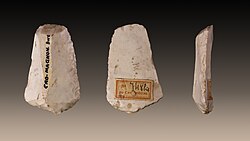
The defining moment of Lartet's career occurred in 1868. After workmen near the French village of Les Eyzies stumbled upon flint tools, human skulls, and the bones of extinct animals in a rock shelter, Lartet was called in to lead the excavations.
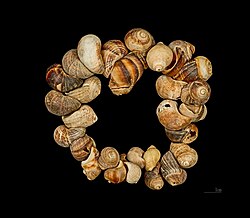
During his meticulous work, Lartet discovered the partial skeletons of four prehistoric adults and one infant. Beyond the skeletal remains, he recovered significant cultural artifacts, including:
- Perforated shells used as ornaments.
- An object crafted from ivory.
- Worked reindeer antler.
These findings were revolutionary. The remains, later known as Cro-Magnon, were identified as a prehistoric human race distinct from the Neanderthal fossils that had been discovered in Germany in 1856. This distinction provided critical evidence regarding the complexity and evolution of early modern humans.
Academic Career and Contributions
Beyond his work in Les Eyzies, Lartet was a scholar of international standing. He participated in an expedition organized by the Duke of Luynes to explore Palestine, which culminated in his doctoral thesis and the publication of Exploration géologique de la mer Morte (Geological Exploration of the Dead Sea) between 1876 and 1877.
Lartet's academic influence grew as he entered the world of higher education. He began teaching geology at the University of Toulouse in 1873 and achieved the rank of tenured professor in 1879. His expertise was recognized by several prestigious institutions, leading to memberships in the Académie des sciences and the Société d'histoire naturelle in 1882, among others.
| Category | Details |
|---|---|
| Lifespan | December 18, 1840 – August 16, 1899 |
| Primary Fields | Geology and Paleontology |
| Major Discovery | Cro-Magnon skeletons (Les Eyzies, France) |
| Academic Post | Professor of Geology, University of Toulouse |
| Key Publication | Exploration géologique de la mer Morte (1876-7) |
Key Facts
- Louis Lartet discovered the original Cro-Magnon skeletons in a rock shelter near Les Eyzies.
- He identified Cro-Magnon humans as a distinct race from the Neanderthals.
- His father, Édouard Lartet, was a pioneer in proving human existence during the Quaternary period.
- Lartet was a tenured professor of geology at the University of Toulouse starting in 1879.
- He conducted significant geological research in Palestine, focusing on the Dead Sea.
Frequently Asked Questions
Who was Louis Lartet?
Louis Lartet was a French geologist and paleontologist (1840–1899) best known for discovering the Cro-Magnon skeletons and teaching at the University of Toulouse.
What is the significance of the Cro-Magnon discovery?
The discovery was significant because it identified a prehistoric human race that was distinct from the Neanderthals, providing deeper insight into early human evolution.
What artifacts were found alongside the Cro-Magnon skeletons?
Lartet found perforated shells used as ornaments, an ivory object, and worked reindeer antler, indicating the cultural and artistic capabilities of these early humans.
Where did Louis Lartet conduct his geological research outside of France?
Lartet participated in an expedition to Palestine, where he studied the geology of the Dead Sea and surrounding areas for his doctoral thesis.
How did Louis Lartet's father influence his work?
His father, Édouard Lartet, was a prominent geologist and prehistorian; Louis continued his father's research into human prehistory and the Quaternary period.