Louie Bellson: The Jazz Legend Who Revolutionized the Drums
In the world of jazz, few figures have left as indelible a mark on the rhythm section as Louie Bellson. A virtuoso drummer, composer, and educator, Bellson didn't just play the drums; he expanded the physical and sonic possibilities of the instrument. Best known for pioneering the use of two bass drums, Bellson's career spanned nearly eight decades, bridging the gap between the golden age of big bands and the modern era of jazz fusion.
Key Facts
- Innovation: Pioneered the simultaneous use of two bass drums at age 15.
- Major Collaborations: Performed with jazz giants including Duke Ellington, Benny Goodman, and Count Basie.
- Accolades: Named an NEA Jazz Master in 1994 and inducted into the Modern Drummer Hall of Fame in 1985.
- Versatility: Composed over 300 works, including the first concerto written specifically for a jazz drummer and full symphony orchestra.
- Public Profile: Along with his wife Pearl Bailey, he had the second-highest number of White House appearances, trailing only Bob Hope.
Early Life and the Invention of Double Bass Drumming
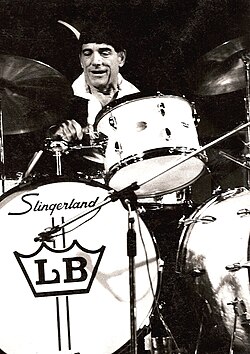
Born Luigi Paolino Alfredo Francesco Antonio Balassoni in Rock Falls, Illinois, in 1924, Bellson was immersed in music from birth; his father owned a local music store. He began playing the drums at the age of three. While attending high school in Moline, Illinois, Bellson experienced a breakthrough in an art class where he conceived the idea of using two bass drums simultaneously. This innovation allowed for a level of power and rhythmic complexity previously unheard of in jazz.
His early talent was quickly recognized on a national scale. At 17, Bellson won the Slingerland National Gene Krupa contest, beating out approximately 40,000 other drummers to secure his place in the spotlight.
A Career Among Giants
After graduating high school in 1942, Bellson entered the professional circuit, working with the most prestigious big bands of the 1940s. His resume included tenures with Benny Goodman, Tommy Dorsey, and Harry James. However, it was his work with the Duke Ellington Orchestra that cemented his legacy.
Bellson's relationship with Ellington was deeply spiritual and artistic. During the 1960s, he returned to Ellington's orchestra for the Emancipation Proclamation Centennial production, My People, and the A Concert of Sacred Music. Ellington famously described Bellson's drumming as the "thunder" that accompanied the "lightning" of the creation story, reflecting the deep religious convictions shared by both men.
Collaborations and Influence
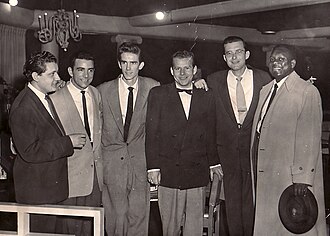
Throughout his career, Bellson worked with an elite roster of sidemen, including Ray Brown, Clark Terry, and Blue Mitchell. He cited Jo Jones, Sid Catlett, and Chick Webb as his primary influences, acknowledging Jo Jones as the "Papa" of modern jazz drumming. His prestige was such that Buddy Rich, often cited as the world's greatest drummer, once asked Bellson to lead his band on tour while Rich recovered from a back injury.
Beyond the Drum Kit: Composition and Education
Bellson was far more than a performer; he was a prolific creator. His compositions spanned jazz, jazz-rock fusion, and symphonic works. In 1987, he performed the Concerto for Jazz Drummer and Full Orchestra, a landmark piece that was the first of its kind. He also ventured into poetry, lyric writing, and even Broadway with the 1958 production Portofino.
Dedicated to the next generation, Bellson conducted countless clinics at colleges and high schools. He also contributed to the technical evolution of the instrument as a vice president at Remo, a leading drum company, where he helped develop new drum technology.
Personal Life and Legacy
In 1952, Bellson married the renowned actress and singer Pearl Bailey. Their partnership was both personal and professional, with Bellson serving as her music director. Following Bailey's death in 1990, he married Francine Wright, a physicist and engineer from MIT, who later became his manager.
Bellson passed away on February 14, 2009, at the age of 84, due to complications from Parkinson's disease and a broken hip. He is buried in Riverside Cemetery in Moline, Illinois.
| Category | Details |
|---|---|
| Primary Instrument | Drums (Pioneer of double bass drums) |
| Key Orchestras | Duke Ellington, Benny Goodman, Tommy Dorsey, Harry James |
| Major Awards | NEA Jazz Master (1994), Modern Drummer Hall of Fame (1985) |
| Creative Output | 100+ albums, 300+ compositions, 12+ books on percussion |
| Academic Honors | Honorary Doctor of Humane Letters (Northern Illinois University) |
Frequently Asked Questions
What was Louie Bellson's biggest contribution to drumming?
Louie Bellson is most famous for pioneering the use of two bass drums played simultaneously, which significantly expanded the rhythmic and dynamic possibilities for jazz drummers.
Who were some of the most famous musicians Bellson worked with?
He performed and recorded with legendary figures such as Duke Ellington, Count Basie, Benny Goodman, Harry James, and Ella Fitzgerald.
Did Louie Bellson do more than just play the drums?
Yes, he was an accomplished composer, arranger, bandleader, and author. He wrote over 300 compositions and published more than a dozen books on percussion.
What was the significance of the "Concerto for Jazz Drummer and Full Orchestra"?
Performed in 1987, this was the first piece of music ever written specifically for a jazz drummer to perform alongside a full symphony orchestra.
How was Bellson involved in the business side of music?
Bellson served as a vice president for the drum company Remo, where he helped create and develop new drum technology.