Los Glaciares National Park
Located in the Santa Cruz Province of Argentina, Los Glaciares National Park is a breathtaking federal protected area and the largest national park in the country. Established on May 11, 1937, this vast wilderness serves as a critical sanctuary for the biodiversity of the west Patagonian steppe and the Magellanic subpolar forest. Because of its extraordinary natural value, UNESCO designated the park as a World Heritage Site in 1981.
The park is named after the massive ice cap in the Andes, which is the largest ice mass outside of Antarctica, Greenland, and Iceland. This ice cap feeds 47 large glaciers, 13 of which flow toward the Pacific Ocean. Uniquely, while glaciers in other parts of the world typically begin at altitudes of 2,500 meters (8,200 ft), the sheer scale of this ice cap allows glaciers here to start as low as 1,500 meters (4,900 ft) and slide down to 200 meters (660 ft).
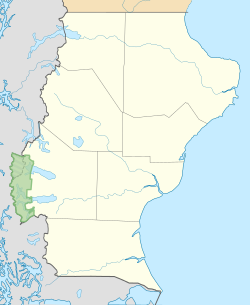
Key Facts
- Total Area: 726,927 hectares (2,806.68 sq mi).
- UNESCO Status: World Heritage Site since 1981.
- Ice Coverage: Approximately 30% of the park is covered by ice.
- Visitor Volume: 688,837 visitors in 2023.
- Major Landmarks: Perito Moreno, Upsala, and Spegazzini Glaciers.
- Border: Shares a southern border with Torres del Paine National Park in Chile.
Geography and Glacial Systems
The park's geography is defined by two massive lakes that divide the region into northern and southern sectors, separated by a non-touristic area known as the Zona Centro.
The Southern Sector
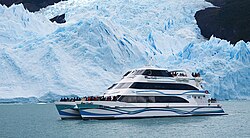
The southern region is dominated by Lake Argentino, the largest lake in Argentina, covering 1,466 square kilometers (566 sq mi). This area is home to the park's most famous ice formations, including the Perito Moreno Glacier, which is accessible by land, as well as the Upsala and Spegazzini Glaciers. Many visitors use excursion boats to navigate between icebergs to reach Onelli Bay and the more remote glaciers.
The Northern Sector
The northern half centers around Lake Viedma (1,100 sq km or 420 sq mi) and the Viedma Glacier. This region is a magnet for trekking and climbing enthusiasts, featuring iconic peaks such as Mount Fitz Roy and Cerro Torre.
Both Lake Argentino and Lake Viedma feed the Santa Cruz River, which eventually flows eastward to Puerto Santa Cruz on the Atlantic coast.
Climate and Ecology
The park experiences a cool and moist temperate climate. Summer mean temperatures average 13.4 °C (56.1 °F), while winter means drop to 0.6 °C (33.1 °F). In high-altitude areas, the mean annual temperature can hover around −3 °C (26.6 °F). Rainfall is distributed evenly throughout the year, ranging from 500 mm (20 in) in the west to 900 mm (35 in) in the east, with frequent snowfall during winter.
Flora and Fauna
The Andes mountains act as a barrier, trapping Pacific humidity and creating the arid Patagonian steppe on the Argentine side. This dry landscape is inhabited by rheas, cougars, guanacos, and the endangered South American gray fox. The area also supports over 100 bird species, including condors and eagles.
Between the ice fields and the steppe lies a fertile belt of Magellanic subpolar forests. These forests consist primarily of lengas, guindos, and ñires (native southern beech trees) and provide a habitat for the torrent duck and the huemul deer.
Conservation Challenges and Human Use
Despite its protected status, the park faces several environmental threats. Overgrazing by livestock has historically caused a decline in guanaco populations and introduced invasive species such as European hares, cattle, and certain trout species. Additionally, forest fires have degraded significant portions of the park's vegetation.
Tourism is a primary human activity in the region. Most visitors begin their journeys in El Calafate, the city where the park's administration is headquartered, or in the village of El Chaltén, located at the foot of Mount Fitz Roy. Other notable points of interest include Lago Roca and Lago del Desierto.
| Feature | Details |
|---|---|
| Established | May 11, 1937 |
| IUCN Category | II (National Park) |
| Governing Body | National Parks Administration |
| Primary Lakes | Lake Argentino, Lake Viedma |
| Key Wildlife | Guanaco, Huemul deer, Condor, South American gray fox |
Frequently Asked Questions
Which is the most famous glacier in the park?
The Perito Moreno Glacier is the most famous, largely because it is one of the few major glaciers that is easily reachable by land.
What are the best starting points for visiting the park?
The city of El Calafate is the primary gateway for those visiting Lake Argentino, while the village of El Chaltén is the ideal starting point for trekking near Mount Fitz Roy.
Why is the park a UNESCO World Heritage Site?
It was inscribed in 1981 based on natural criteria (vii and viii) due to its exceptional natural beauty and its representative sample of glaciers and Patagonian biodiversity.
What animals can be found in the Patagonian steppe?
The steppe is home to the guanaco, cougar, rhea, and the endangered South American gray fox, along with various birds of prey like condors and eagles.
How does the climate vary within the park?
The park is generally cool and moist, but temperatures drop significantly at higher altitudes, where the mean annual temperature can be around −3 °C (26.6 °F).