Lord Lyon King of Arms: Scotland's Sovereign Heraldic Authority
The Lord Lyon King of Arms serves as the chief officer of heraldry in Scotland, overseeing the Court of the Lord Lyon. This ancient office is responsible for the regulation and granting of armorial bearings (coats of arms) and the preservation of Scottish heraldic tradition. Unlike many other heraldic offices, the Lord Lyon operates within a legal framework, ensuring that the use of arms is governed by statutory law.
The current holder of the office is Dr. Joseph John Morrow, who was appointed in 2014. As a member of the Faculty of Advocates with degrees in both Theology and Law, Dr. Morrow continues the tradition of combining legal expertise with heraldic scholarship.
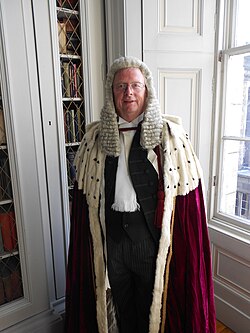
Key Facts
- Jurisdiction: The office governs all heraldic matters within Scotland.
- Governing Body: The Court of the Lord Lyon.
- Legal Status: The office is supported by several statutory acts, including the Lyon King of Arms Acts of 1592, 1669, 1672, and 1867.
- Key Record: The official Public Register of All Arms and Bearings was established by Sir Charles Erskine of Cambo.
- Current Incumbent: Dr. Joseph John Morrow (appointed 2014).
Symbols of Office
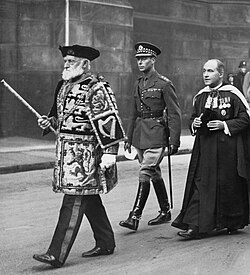
The Lord Lyon possesses distinct regalia that symbolize the authority of the Scottish Crown. A significant piece of this regalia is the collar of state; the current version, consisting of 40 gold links, was created in 1998 to replace an original item lost after the Battle of Culloden.
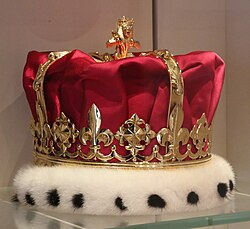
Additionally, a new crown was crafted for the Lord Lyon in 2003. This crown is modeled after the Scottish royal crown found among the Honours of Scotland. To avoid lèse majesté (an offense against the dignity of a reigning sovereign), the crown features removable arches which are taken off during coronations.
Historical Evolution of the Office

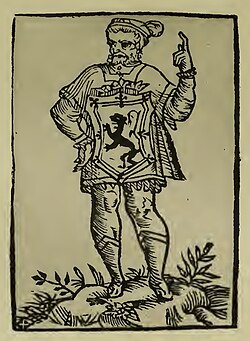
The office of Lord Lyon has evolved from a courtly position to a formal judicial role. In the early Renaissance, holders like Sir David Lindsay of the Mount (1542–1554) were not only heralds but also diplomats and poets, reflecting the cultural breadth of the Scottish court.
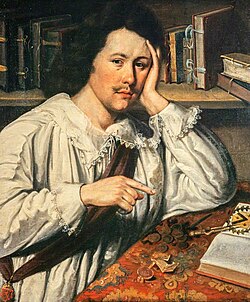
Throughout the centuries, the office has seen periods of high scholarly rigor and periods of decline. Sir James Balfour (1630–1654) was a noted antiquary and scholar, though he was eventually deprived of his office by Oliver Cromwell.
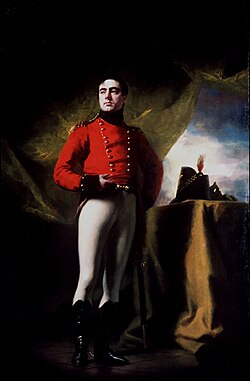
By the 19th century, the office occasionally became a sinecure—a position requiring little to no actual work. For example, Thomas Hay-Drummond, 11th Earl of Kinnoull (1804–1866), largely delegated his duties to the Lyon Depute. This trend was reversed by George Burnett (1866–1890), who restored the office to an efficient and reliable heraldic court.
The Role of the Lyon Depute
The Lyon Depute acts as the primary assistant or deputy to the Lord Lyon. In times when the Lord Lyon was unable or unwilling to perform heraldic tasks, the Depute managed the executive functions of the court. Many notable heralds, including George Burnett, served as Lyon Depute before ascending to the primary office.
Notable Holders of the Office
The history of the Lord Lyon is marked by figures who shaped Scotland's national identity. Sir Charles Erskine of Cambo is credited with establishing the official Public Register of All Arms and Bearings, ensuring a permanent record of Scottish lineage and honor.
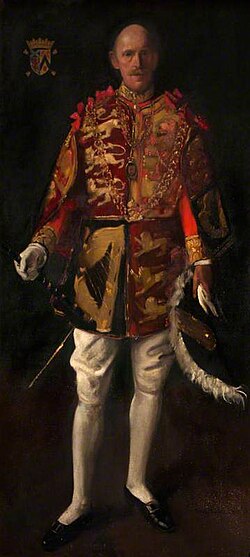
In the 20th century, figures such as Sir James Balfour Paul (1890–1926) contributed extensively to the study of Scotland's heritage through numerous publications. More recently, the appointment process has modernized; Robin Orr Blair (2001–2008) was the first Lord Lyon appointed via public advertisement in accordance with European Union public service rules.
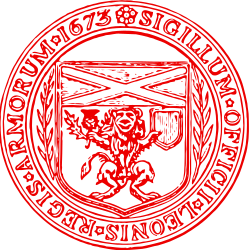
The visual identity of the office is further represented by the official seal, created in 1673, which depicts the arms of the Lord Lyon.
Chronology of Selected Lord Lyons
| Name | Dates of Office | Key Contribution/Note |
|---|---|---|
| Sir David Lindsay of the Mount | 1542–1554 | Poet laureate and diplomat; completed the Register of Arms of the Scottish Nobility. |
| Sir Charles Erskine of Cambo | 1663–1677 | Established the official Public Register of All Arms and Bearings. |
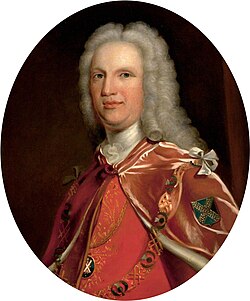
| Alexander Brodie, 19th of that Ilk | 1727–1754 | Strictly enforced laws of arms regardless of the peer's rank. |
| Sir James Balfour Paul | 1890–1926 | Prolific scholar and author on Scottish heritage. |
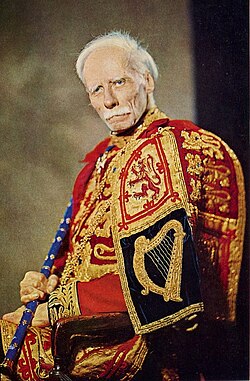
| Sir Thomas Innes of Learney | 1945–1969 | Served during the mid-20th century; wore the tabard of the Royal arms. |
| Dr. Joseph John Morrow | 2014–Present | Current Lord Lyon; member of the Faculty of Advocates. |
Frequently Asked Questions
What is the primary responsibility of the Lord Lyon?
The Lord Lyon is responsible for regulating heraldry in Scotland, which includes granting new coats of arms and maintaining the Public Register of All Arms and Bearings.
How is the Lord Lyon's crown different from the royal crown?
While modeled on the Scottish royal crown, the Lord Lyon's crown has removable arches. These are removed during coronations to ensure there is no hint of lèse majesté toward the sovereign.
What happens if a Lord Lyon treats the office as a sinecure?
Historically, when the Lord Lyon did not actively perform heraldic duties, the work was carried out by the Lyon Depute, who managed the executive functions of the court.
Is the office of Lord Lyon a legal position?
Yes, the Lord Lyon presides over a court of law (the Court of the Lord Lyon) and his authority is derived from various statutory acts of the Scottish Parliament.
Who is the current Lord Lyon King of Arms?
The current Lord Lyon is the Reverend Canon Dr. Joseph John Morrow, who has held the office since January 17, 2014.