LNER: Powering the East Coast Main Line
The London North Eastern Railway (LNER) is a primary operator of long-distance inter-city services in the United Kingdom. Operating from its headquarters in York, LNER manages the vital artery known as the East Coast Main Line (ECML), connecting the capital with the North of England and Scotland.
LNER took over the InterCity East Coast franchise on June 24, 2018, after the previous private operator, Virgin Trains East Coast (VTEC), returned the franchise to the government due to financial difficulties. Originally intended as a short-term measure, LNER was granted a direct award to continue operations until June 25, 2023, marking one of the longest single-operator tenures on the line since the era of the Great North Eastern Railway (GNER).
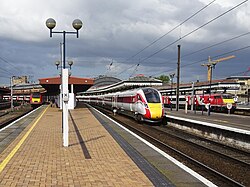
Key Facts
- Operator: DfT Operator for the Department for Transport.
- Primary Hub: London King's Cross.
- Network Reach: Calls at 54 stations, directly operating 11.
- Core Destinations: Leeds, York, Newcastle upon Tyne, and Edinburgh.
- Modern Fleet: Primarily utilizes the Hitachi-built Azuma fleet.
- Future Expansion: Order placed for tri-mode "Serenza" trains for 2028 delivery.
Service Network and Destinations
LNER provides extensive connectivity across several main regions, including Greater London, the East of England, East Midlands, Yorkshire and the Humber, North East England, and Scotland.
Routes to Yorkshire and Lincoln
Services from London King's Cross provide frequent access to the North and East, including hourly trains to Leeds and half-hourly services to York and Lincoln. Some services extend further to destinations such as Skipton, Middlesbrough, and Hull.
Routes to Newcastle and Scotland
The long-distance corridor to Scotland is a cornerstone of LNER's operation. High-speed services run to Edinburgh Waverley and Newcastle, with some trains extending further north to Aberdeen and Inverness.
Named Services
LNER maintains several prestigious named services that highlight the history of the route:
- Flying Scotsman: The iconic early morning service between Edinburgh Waverley and London King's Cross.
- Highland Chieftain: The longest LNER route, connecting Inverness to London.
- Northern Lights: Connecting Aberdeen to the capital.
- Carolean Express: A key midday link between Edinburgh and London.
- West Riding Limited: Connecting Bradford Forster Square to London.
Rolling Stock Evolution
The transition of LNER's fleet represents a shift from legacy diesel and electric locomotives to modern multiple units (trains where the engines are integrated into the carriages rather than a separate locomotive).
The Azuma Era
Introduced in May 2019, the Azuma brand consists of Hitachi A-train platform units. This includes the Class 800 (bi-mode, capable of running on both electric and diesel power) and the Class 801 (electric only). The introduction of the Azuma fleet led to the complete withdrawal of the InterCity 125 trains by December 2019.
Legacy Fleet: InterCity 225
While most InterCity 225 sets were phased out, LNER retained a limited number of these electric trains to maintain capacity and meet timetable requirements. These units underwent overhauls at the Wabtec plant in Doncaster to extend their operational life.
The Future: Serenza
Looking ahead, LNER has ordered 10 ten-car tri-mode trains from CAF, designated as Class 897 and branded as "Serenza." These trains will utilize electric, diesel, and battery power, with delivery expected in 2028.
| Fleet Name | Class | Type | Top Speed | Status |
|---|---|---|---|---|
| Azuma | 800 / 801 | Bi-mode / Electric | 125 mph | Current |
| InterCity 225 | 91 / Mark 4 | Electric | 125-140 mph | Limited Use |
| InterCity 125 | 43 / Mark 3 | Diesel | 125 mph | Withdrawn |
| Serenza | 897 | Tri-mode | TBA | Expected 2028 |
Operational Infrastructure
To maintain its high-speed fleet, LNER utilizes several depots. These include LNER-managed facilities like the Aberdeen Clayhills Carriage Maintenance Depot, and Hitachi-managed sites at Bounds Green (London), Craigentinny (Edinburgh), and Doncaster Carr Rail Depot. Additional support is provided via Northern-managed depots at Heaton (Newcastle) and Neville Hill (Leeds).
Frequently Asked Questions
What is the Azuma train?
The Azuma is LNER's modern fleet of high-speed trains based on the Hitachi A-train platform, consisting of Class 800 bi-mode and Class 801 electric multiple units.
Which stations does LNER operate?
LNER calls at 54 stations across its network, though it directly manages 11 of those stations.
What is a tri-mode train?
A tri-mode train, such as the upcoming Class 897 Serenza, is capable of operating using three different power sources: electricity, diesel, and battery power.
Does LNER still use the InterCity 225?
Yes, while most have been replaced by Azumas, LNER has retained a limited number of InterCity 225 sets to support specific timetable requirements.
What is the longest route operated by LNER?
The longest route is the Highland Chieftain, which connects Inverness to London King's Cross.