Liverworts: The Ancient and Diverse World of Marchantiophyta
Often overlooked due to their diminutive size, liverworts are a fascinating group of non-vascular plants that have inhabited Earth for hundreds of millions of years. Belonging to the division Marchantiophyta, these resilient organisms play a unique role in various ecosystems, ranging from humid forests to harsh Arctic and desert environments.
While many people walk past them without a second glance, liverworts are essential components of the botanical world. Some species grow in small, isolated clusters, while others can form expansive, vibrant mats covering rocks, trees, and soil.
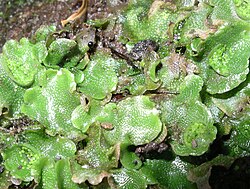
Key Facts
- Temporal Range: Evidence of liverwort-like spores dates back to the Middle Ordovician, approximately 470 million years ago.
- Diversity: There are an estimated 9,000 species of liverworts.
- Morphology: They are categorized into two main forms: thallose (flattened bodies) and leafy (stem-like structures with overlapping scales).
- Leafy Dominance: At least 85% of all known liverwort species belong to the leafy group.
- Model Organism: Marchantia polymorpha is a primary model organism for molecular and genomic studies in plant biology.
Physical Characteristics and Morphology
Liverworts are typically small, with individual plants usually measuring less than 10 cm (4 in) in length and between 2 to 20 mm (0.08 to 0.8 in) in width. Despite their small stature, their physical structures vary significantly between groups.
Thallose Liverworts
The most recognizable form of liverwort is the thallose liverwort. These plants possess a thallus, which is a prostrate, flattened, and often ribbon-like or branching plant body. This structure allows them to spread across surfaces like a living carpet.
Leafy Liverworts
The majority of liverwort species are leafy liverworts (also known as scale liverworts). Instead of a flat body, these plants produce flattened stems adorned with overlapping scales or leaves arranged in two or more ranks. Interestingly, the middle rank of these leaves is often visually distinct from the outer ranks.
Evolutionary History and Classification
The evolutionary lineage of liverworts is a subject of intense scientific study. Phylogenies suggest that liverworts are part of the embryophytes (land plants) and are closely related to mosses and hornworts. A significant evolutionary milestone noted in the liverwort lineage is the apparent loss of ancestral stomata—the microscopic pores used for gas exchange in many other land plants.
The fossil record provides a window into their ancient past. While fossils like Metzgeriothallus sharonae from the Middle Devonian of New York are well-documented, even older evidence exists. In 2010, fossilized spores found in Argentina were dated to the Middle Ordovician, roughly 470 million years ago, suggesting liverworts were among the earliest pioneers of land life.
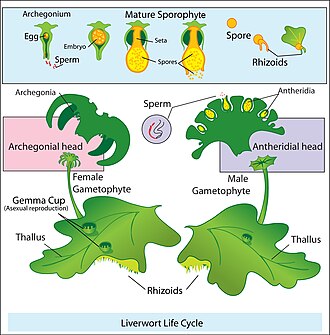
Scientific Classification
The classification of Marchantiophyta is complex and has been updated by various researchers over time. The division is broadly organized into several classes, including:
- Haplomitriopsida: Includes orders such as Calobryales and Treubiales.
- Marchantiopsida: Contains the thalloid groups like Marchantiales and Lunulariales.
- Jungermanniopsida: The largest class, comprising the majority of the leafy liverworts, including orders like Jungermanniales and Metzgeriales.
Summary of Liverwort Characteristics
| Feature | Description |
|---|---|
| Division | Marchantiophyta |
| Common Forms | Thallose and Leafy |
| Typical Size | 2–20 mm wide; < 10 cm long |
| Preferred Habitat | Humid locations (though desert and Arctic species exist) |
| Estimated Species | Approximately 9,000 |
Frequently Asked Questions
What is the difference between thallose and leafy liverworts?
Thallose liverworts have a flattened, ribbon-like plant body called a thallus. Leafy liverworts have stems with overlapping leaves or scales arranged in multiple ranks.
Are liverworts considered weeds?
In certain environments, such as shady greenhouses or specific garden settings, some species of liverwort can be considered a nuisance or a weed.
How old are liverworts?
Fossilized spores found in Argentina suggest that liverworts have existed for at least 470 million years, dating back to the Middle Ordovician period.
Why is Marchantia polymorpha important to scientists?
Marchantia polymorpha was the first liverwort to have its genome sequenced (in 2017). It is now widely used as a model organism for molecular and genetic research in plants.
Where can I find liverworts in nature?
Liverworts are found globally in almost every habitat. While they most commonly thrive in humid environments, there are also species adapted to the Arctic and desert regions.