Lieutenant J. Manners: A Life of Service and Sacrifice
The story of Lieutenant J. Manners is a poignant reflection of a generation of young men from Britain's aristocracy who served during the First World War. Born as the eldest son of John Manners-Sutton, the 3rd Baron Manners, he followed a traditional path of elite education and military service before meeting a tragic end in the early months of the Great War.
Early Life and Education
Manners received a prestigious education, beginning at Eton, where he was an active athlete. A highlight of his school years was playing cricket in the renowned Eton v Harrow match in 1910. Following his time at Eton, he pursued higher education at Balliol College, Oxford, preparing him for a life of leadership and responsibility.
Military Career and the Great War
In 1912, Manners entered professional military service when he was commissioned as an officer into the second battalion of the Grenadier Guards, one of the most elite infantry regiments of the British Army.
When war broke out in August 1914, Manners was deployed to Belgium as part of the British Expeditionary Force (the initial British army sent to France and Belgium). His service culminated in a tragic engagement on September 1, 1914, in the forests surrounding Villers-Cotterêts.
The Action at Villers-Cotterêts
During the retreat from Mons, Manners's platoon, part of No. 4 Company within the 4th (Guards) Brigade, was tasked with acting as a rear-guard—a defensive force that protects the main army as it withdraws. Due to a failure in communication, Manners's platoon and another unit did not receive the order to retire.
Cut off from their main force, the units were overwhelmed. Lieutenant Manners, alongside Lieutenant George Edward Cecil and approximately 160 guardsmen, were killed in the action. While his body was never officially identified, a later account from Private Walter Titcombe, recorded in a letter by the author Rudyard Kipling, suggested that Manners died instantly after being shot through the head.
Commemorations and Legacy
Because his remains were not recovered, Manners is commemorated at the La Ferté-sous-Jouarre memorial on the south bank of the River Marne in France.
His memory is further preserved through several artistic and architectural tributes in England. At All Saints Chapel in Thorney Hill—a baroque chapel designed by Detmar Blow in 1906 to honor his sister, Christine—there is a bronze effigy of Manners created by Sir Bertram Mackennal, with inscriptions carved by the artist Eric Gill.
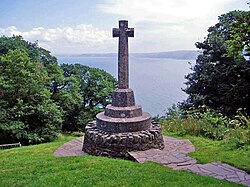
Additionally, he is remembered at Mount Pleasant, Clovelly, on land donated to the National Trust by his aunt, Christine Hamlyn.
As the first son of a peer, his name is also permanently inscribed on the wooden panels of the war memorial located in the Royal Gallery at the House of Lords.
Key Facts
- Regiment: Second battalion of the Grenadier Guards.
- Education: Eton and Balliol College, Oxford.
- Date of Death: September 1, 1914.
- Location of Death: Forests around Villers-Cotterêts, Belgium.
- Casualties: Approximately 160 guardsmen died alongside Lieutenants Manners and Cecil.
- Primary Memorial: La Ferté-sous-Jouarre memorial, France.
| Category | Details |
|---|---|
| Family | Eldest son of John Manners-Sutton, 3rd Baron Manners |
| Military Unit | No. 4 Company, 4th (Guards) Brigade, Grenadier Guards |
| Conflict | World War I (Retreat from Mons) |
| Artistic Tributes | Effigy by Sir Bertram Mackennal; lettering by Eric Gill |
| Official Recognition | House of Lords Royal Gallery war memorial |
Frequently Asked Questions
How did Lieutenant J. Manners die?
He was killed on September 1, 1914, during a rear-guard action in the forests of Villers-Cotterêts. His platoon was cut off after failing to receive orders to retire during the retreat from Mons.
Was his body ever recovered?
No, the body of Lieutenant Manners was never identified.
Where can people visit memorials dedicated to him?
He is commemorated at the La Ferté-sous-Jouarre memorial in France, All Saints Chapel in Thorney Hill, Mount Pleasant in Clovelly, and the Royal Gallery at the House of Lords.
Who provided the account of his final moments?
Private Walter Titcombe, a member of Manners's platoon, provided an account to Rudyard Kipling, stating that Manners died instantly from a gunshot wound to the head.
What was the significance of the All Saints Chapel memorial?
The chapel was originally built in 1906 by Detmar Blow to commemorate Manners's sister, Christine; it later became the site of a bronze effigy of Lieutenant Manners.