Levett Family History: From Sussex Landowners to Global Diaspora
The history of the Levett name in England is a narrative of shifting fortunes, spanning from the heights of landed gentry to the struggles of the working class. While the name has appeared in various forms—including Levet, Lyvet, Levytt, Livett, Delivett, Levete, Leavett, Leavitt, and Lovett—its trajectory reflects the broader socio-economic changes of English society over several centuries.
The Early Sussex Estates and Financial Decline
In the early stages of their recorded history, the Levetts were established landowners in Sussex, specifically in Warbleton and Salehurst. They held the manor of Firle until 1440, when the debts of Thomas Levett led to the loss of the manor and the property at Catsfield, East Sussex. This pattern of financial instability continued into the 17th century.
By 1620, John Levett of Sedlescombe faced severe financial hardship. He was forced to sell his half-interest in Bodiam Castle, along with inherited lands in Ewhurst, Salehurst, and Battle in Sussex, and Hawkhurst in Kent, to Sir Thomas Dyke for £1,000. This transaction effectively marked the end of the Levetts as prominent landowners in the region.
Geographic Expansion and Social Diversity
Following the decline of the Sussex estates, families bearing the Levett name and its variants settled across a wide array of English counties, including Gloucestershire, Yorkshire, Worcestershire, Suffolk, Warwickshire, Wiltshire, Kent, Bedfordshire, and Staffordshire.
The family's presence was felt across all social strata. While some maintained status, others faced hardship. Records show Levetts involved in bastardy cases, residing in poorhouses, or facing criminal charges. For example, in the nineteenth century, John Levett, a guard on the London to Brighton coach, was convicted of petty theft and transported to Australia.
Prominent Lineages and Estates
By the mid-twentieth century, two primary prominent families remained: those of Milford Hall and Wychnor Hall (and Packington Hall), both located in Staffordshire.
- Milford Hall: This estate eventually passed through the female line to the Haszard family. A descendant, the Levett-Scrivener family, still retains the ruins of Sibton Abbey, providing access to historical societies and researchers.
- Wychnor Hall: This property was sold to Lt-Col W. E. Harrison in 1913 and later became a country club. A branch of this family, the Levett-Prinseps, was unable to maintain Croxall Hall, which was sold and the estate broken up in 1920.
Questioning the Pedigree
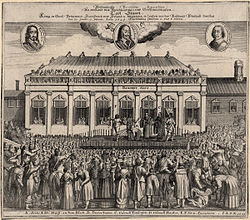
Despite family traditions suggesting a common ancestor for the Milford Hall and Wychnor Park lines, historical records from 1871 show different origins. The Milford Hall line traces back to William Levett of Savernake, Wiltshire, who served as a page to King Charles I until the King's death in 1649. The Wychnor Park line traces back to Theophilus Levett, who died in 1746. Notably, even the 1847 edition of Burke's—known for including unproven traditions—mentions no Norman origins for either family.
Notable Individuals and Global Ventures
The Levett name extended far beyond English borders through trade and migration. Francis Levett served as a factor (a commercial agent) in Livorno, Italy, traveling to Constantinople for the Levant Company. Although he later failed as a planter in British East Florida, his son, Francis Jr., returned to America and became the first person to grow Sea Island cotton.
Another colorful figure was Robert Levet, a Yorkshireman who worked as a waiter in Paris before training as an apothecary. Upon returning to England, he practiced in London's impoverished neighborhoods. Levet, who married a woman described as a grifter and prostitute, was eventually taken in by the famous poet Samuel Johnson. Interestingly, while Johnson hosted Robert as a boarder, he was simultaneously dealing with another, wealthier Levett who held the mortgage on Johnson's mother's home in Lichfield.
Summary of Levett Family History
| Branch/Individual | Location/Association | Key Detail/Outcome |
|---|---|---|
| Sussex Levetts | Firle, Bodiam Castle | Lost landownership by 1620 due to debt. |
| Milford Hall Line | Staffordshire / Wiltshire | Descended from William Levett, page to Charles I. |
| Wychnor Hall Line | Staffordshire | Descended from Theophilus Levett (d. 1746). |
| Francis Levett | Italy / East Florida | Levant Company agent; father of Sea Island cotton pioneer. |
| Robert Levet | London / Paris | Apothecary and boarder of Samuel Johnson. |
Key Facts
- Name Variants: The name appears as Levett, Levet, Lyvet, Levytt, Livett, Delivett, Levete, Leavett, Leavitt, and Lovett.
- Land Loss: The Sussex Levetts lost the manor of Firle in 1440 and Bodiam Castle interests in 1620.
- Agricultural Milestone: Francis Levett Jr. was the first to grow Sea Island cotton in America.
- Royal Connection: William Levett of Savernake was a page to King Charles I.
- Literary Connection: Robert Levet was a boarder of the poet Samuel Johnson.
Frequently Asked Questions
What were the primary estates held by the Levett family?
The family originally held the manor of Firle and interests in Bodiam Castle in Sussex. Later, prominent families were associated with Milford Hall and Wychnor Hall in Staffordshire.
Did the Levett family have Norman origins?
There is no documented evidence of Norman origin in the pedigrees of the Milford Hall or Wychnor Park families, even in historical publications like Burke's from 1847.
Who was Francis Levett Jr. known for?
Francis Levett Jr. is recognized as the first person to grow Sea Island cotton in America.
How did Robert Levet come to know Samuel Johnson?
Robert Levet, an apothecary who had previously worked in Paris, was taken in as a boarder by Samuel Johnson.
What happened to the Wychnor Park estate?
The Levetts sold Wychnor Park to Lt-Col W. E. Harrison in 1913, and it subsequently became a country club.