Letters Patent: The History and Function of Public Legal Instruments
In the realm of law and governance, a letters patent is a specialized legal instrument issued by a head of state—such as a monarch or president—to grant a specific right, office, monopoly, title, or status to an individual or corporation. Unlike private correspondence, letters patent are designed to be public documents, serving as an open proclamation of the sovereign's will.
The term originates from the Latin litterae patentes, meaning "open letters." This name refers to the physical nature of the document: the originator's seal was attached so that it hung from the page, allowing the document to be read without breaking the seal. This accessibility distinguishes them from letters close (litterae clausae), which were sealed and intended only for the eyes of the recipient.
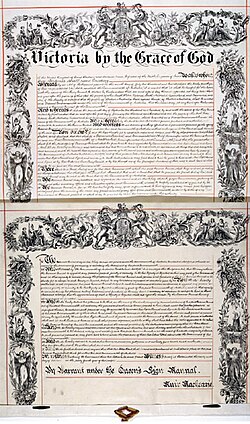
Key Facts
- Purpose: Used to create government offices, grant city status, appoint representatives of the Crown, or establish corporations.
- Public Nature: Designed to be accessible to the public to validate the authority of the appointee or the legality of a grant.
- Modern Evolution: The modern intellectual property patent (utility or design patent) is a direct evolution of this legal form.
- Legal Standing: In the UK and Commonwealth, they are treated as statute law and issued under the royal prerogative.
- Variety: The UK Ministry of Justice recognizes 92 different types of letters patent.
The Evolution of Patents and Legal Authority
From Royal Decrees to Intellectual Property
While letters patent were originally broad tools of statecraft, a specific application evolved into the modern intellectual property patent. In this context, the "patent" (open) nature of the document is critical; it allows other inventors to consult the design to avoid infringement while the patent is active and to utilize the technology once the rights expire.
Historically, in the Holy Roman Empire, Austrian Empire, and Austria-Hungary, the imperial patent served as the highest form of binding legal regulation, exemplified by the Serfdom Patent and the Patent of Toleration.
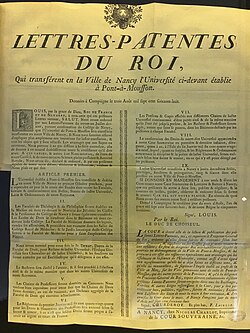
Letters Patent vs. Acts of Parliament
There is a fundamental difference between letters patent and an Act of Parliament. An Act is a written order involving the assent of both Parliament and the monarch. In contrast, letters patent are an exercise of extra-parliamentary power (the royal prerogative), requiring only the signature or seal of the monarch without explicit government approval in the document itself.
In modern governance, this power is limited. Most letters patent are now issued with informal government approval or generated by the government, with the monarch's seal acting as a formality.
Global Applications
United Kingdom and Commonwealth Realms
In these jurisdictions, letters patent function as royal decrees. They are frequently used for the appointment of governors and governors-general, as well as the creation of Royal Commissions or Special Commissions of Inquiry. For example, vice-regal offices were created via letters patent in Canada (1947) and New Zealand (1983).
The United States
In the U.S., letters patent primarily take the form of land patents and intellectual property patents. They serve as both personal certificates and public records. The legal importance of these documents is highlighted by the fact that forging a presidential letter patent is a federal crime (18 U.S.C. § 497).
The necessity of these documents was a central issue in the landmark Supreme Court case Marbury v. Madison, which arose when William Marbury petitioned for the delivery of his appointment letters.
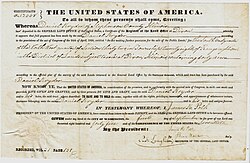
The Formal Structure in the U.S.
U.S. letters patent conclude with a specific formal ending known as the eschatocol, which typically follows this format:
- "GIVEN under my hand, in [city] the [date] in the year of our Lord [year] and of the Independence of the United States the [years since July 4, 1776]."
- Followed by the signature of the issuing public official.
Summary of Legal Instruments
| Instrument | Accessibility | Primary Purpose | Authority Source |
|---|---|---|---|
| Letters Patent | Public/Open | Granting rights, offices, or monopolies | Head of State (Prerogative) |
| Letters Close | Private/Sealed | Personal correspondence | Head of State |
| Act of Parliament | Public | General legislation/law | Legislature + Monarch |
Frequently Asked Questions
Why are they called "letters" if they are single documents?
The term comes from the Latin litterae, which was used by medieval scribes to denote a written message or document, as opposed to littera, which refers to a single character of the alphabet.
What is the difference between a letter patent and a modern patent?
A modern intellectual property patent is a specific type of letter patent. While the original form could grant anything from a title to a government office, the modern version specifically grants exclusive rights to an invention or design.
Do letters patent require parliamentary approval?
No. In the UK and Commonwealth, letters patent are issued under the royal prerogative and do not require the consent of parliament, although they are typically issued with informal government agreement today.
What happens if a U.S. presidential letter patent is forged?
Under 18 U.S.C. § 497, the forgery of letters patent granted by the president is a crime that can result in a fine, imprisonment for up to ten years, or both.
How were letters patent made public in the past?
While the exact historical method is debated, it is believed they may have been left in royal palaces for inspection by courtiers, who then spread the information to the gentry. Today, a similar tradition exists where the British prime minister may leave documents in the library of the House of Commons for public perusal.