Legio V Macedonica: The Longest-Serving Legion of the Roman Empire
Among the vast military machine of ancient Rome, few units boast a legacy as enduring as Legio V Macedonica (the Fifth Macedonian Legion). Established in 43 BC, this unit navigated the transition from the Roman Republic to the Roman Empire and eventually into the East Roman (Byzantine) era. Spanning nearly seven centuries of active service, it is widely considered one of the longest-lived, if not the single most long-lived, legion in Roman history.
Originally raised by the consul Gaius Vibius Pansa Caetronianus and Gaius Julius Caesar Octavianus (the future Emperor Augustus), the legion served as a cornerstone of Roman authority in the Balkan provinces. Throughout its existence, it evolved from a standard Marian-style infantry legion into a comitatensis unit—a mobile field army designed for rapid response across the empire.
Key Facts
- Active Period: 43 BC to approximately AD 635–637.
- Primary Regions: Macedonia, Moesia, and Dacia.
- Mascots: The bull and the eagle.
- Peak Size: 5,000 to 6,000 men during the Principate.
- Distinctions: Awarded titles including Pia Fidelis (Faithful and Loyal) and Pia Constans (Faithful and Reliable).
Early History and the First Century
Legio V was one of the twenty-eight original legions raised by Octavian. In its early years, it may have been known as V Gallica or V Urbana before receiving its permanent cognomen (nickname), Macedonica, after being stationed in Macedonia from 30 BC to AD 6.
The legion's early career was marked by high-stakes conflict, including the pivotal Battle of Actium in 31 BC. By AD 45, it was deployed to Moesia to suppress Thracian rebellions. Its operational reach extended far beyond the Balkans; vexillationes (detachments) of the Fifth fought in Armenia during Nero's Parthian War and played a critical role in the First Jewish-Roman War (AD 66–70), where they conquered Mount Gerizim.
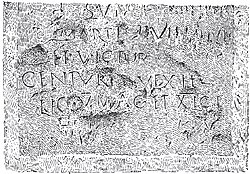
The Hadrian Connection
The legion also served as a training ground for future leadership. Before ascending to the throne, the Emperor Hadrian served as a tribunus militum (military tribune), an officer rank, within Legio V Macedonica around AD 95.
Deployment in Dacia and the Near East
In AD 101, the legion moved to Dacia to support Emperor Trajan's campaigns against King Decebalus. Following the war's conclusion in AD 106, the unit was based at Troesmis near the Danube Delta. However, the legion remained highly mobile; Hadrian later redeployed them to Judea to suppress the Bar Kokhba revolt.
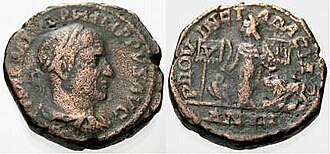
By AD 166, under Marcus Aurelius, the legion returned to Dacia Porolissensis, establishing a basecamp at Potaissa to defend against attacks from the Marcomanni, Iazyges, and Quadi. Their loyalty and effectiveness in these frontier wars earned them the title Pia Constans ("Faithful and reliable") around AD 185–187.
Evolution and Final Years
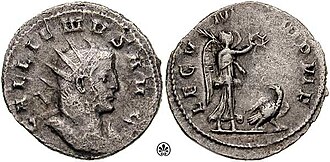
During the 3rd century, the legion continued to earn honors under emperors Valerian and Gallienus, receiving the titles III Pia III Fidelis and VII Pia VII Fidelis, respectively. These honors were likely granted for their role as a mobile cavalry unit fighting against usurpers like Ingenuus and Regalianus.
By the 4th century, the legion had transitioned into a comitatensis unit under the Magister Militum per Orientis. Records from the Notitia Dignitatum (a document of the administrative organization of the late Roman Empire) place the legion in Dacia Ripensis, with detachments stationed in the East and Egypt.
The final archaeological and epigraphic evidence of the legion appears in inscriptions from Antaeopolis and Heliopolis in Egypt, dated to AD 635 or 636. It is believed that the legion, or its remaining detachments, were destroyed during the Muslim conquest of Egypt between AD 639 and 646.
Legion Summary Table
| Category | Details |
|---|---|
| Founded | 43 BC by Octavian and Gaius Vibius Pansa Caetronianus |
| Primary Bases | Oescus, Troesmis, Potaissa |
| Key Engagements | Battle of Actium, Trajan's Dacian Wars, First Jewish-Roman War |
| Symbols | Bull and Eagle |
| Final Station | Egypt (Memphis, Heliopolis, Antaeopolis) |
Frequently Asked Questions
Why is Legio V Macedonica considered the longest-lived Roman legion?
Because evidence of its existence spans from its founding in 43 BC to inscriptions in Egypt dated as late as AD 635–636, covering approximately 680 years of history.
What were the primary roles of the legion?
The legion primarily served as infantry assault forces with some cavalry support, acting as both frontier guards in the Balkans and as a mobile response force (comitatensis) in the later empire.
What do the titles "Pia Fidelis" and "Pia Constans" mean?
These were honorary titles awarded for loyalty and reliability; "Pia Fidelis" translates to "Faithful and Loyal," while "Pia Constans" means "Faithful and Reliable."
Where was the legion based for most of its history?
The legion spent the majority of its time in the Balkan provinces, specifically in Macedonia, Moesia (at Oescus and Troesmis), and Dacia (at Potaissa).
How did the legion eventually end?
While not definitively recorded, it is widely assumed the legion was destroyed during the Muslim conquest of Egypt in the mid-7th century, as the last known records place them in Egypt just before the invasion.