Born as Gaius Octavius in 63 BC, the man history remembers as Augustus transformed the crumbling Roman Republic into a sprawling, stable empire. His journey from a teenage heir to the first Roman emperor is a masterclass in political maneuvering, military strategy, and the art of public image. By balancing the facade of traditional republican values with the reality of absolute power, he established the Principate—a system of government that would define Western civilization for centuries.
Augustus did not simply seize power; he engineered it. Through a series of strategic alliances and brutal conflicts, he eliminated his rivals and restructured the Roman state, ushering in an era of relative peace and stability known as the Pax Romana.
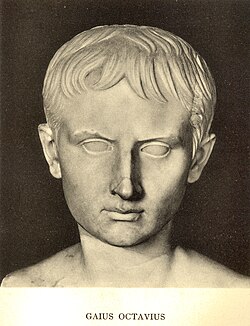
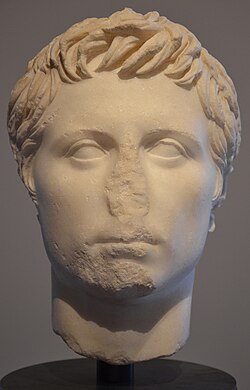
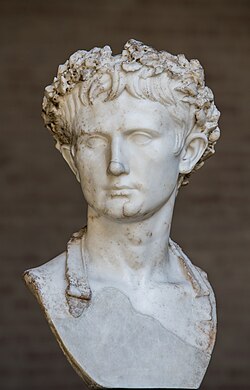
An idealized Roman sculpted portrait of Octavius as a teenager, possibly produced posthumously or when he was much older, now located in the Vatican Museums[23]
Key Facts
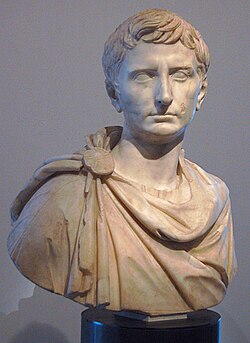
Bust of Octavian, c. 30 BC. Capitoline Museums, Rome
Birth Name: Gaius Octavius (born September 23, 63 BC).
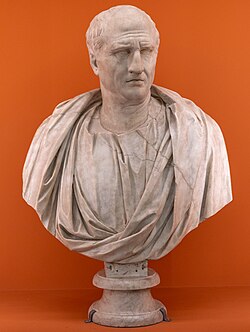
Bust of Marcus Tullius Cicero, 1st century AD, Capitoline Museums, Rome
Heir to Julius Caesar
The trajectory of Octavian's life changed forever when his great-uncle, Julius Caesar, adopted him in his will. This adoption provided Octavian with not only a name and wealth but a powerful political claim. However, the transition was violent; the assassination of Caesar left a power vacuum that Octavian was determined to fill.
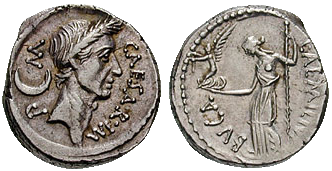
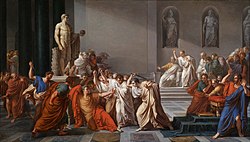
Denarius from 44 BC, showing Julius Caesar on the obverse and the goddess Venus on the reverse of the coin. Caption: CAESAR IMP. M. / L. AEMILIVS BVCAThe Death of Caesar by Vincenzo Camuccini, 1805, Galleria Nazionale d'Arte Moderna, Rome
The Second Triumvirate and Civil War
To stabilize Rome, Octavian formed the Second Triumvirate in 43 BC, a formal alliance with Mark Antony and Marcus Aemilius Lepidus. This period was marked by proscriptions—state-sanctioned purges of political enemies—and the Battle of Philippi in 42 BC, where the assassins of Caesar were defeated.
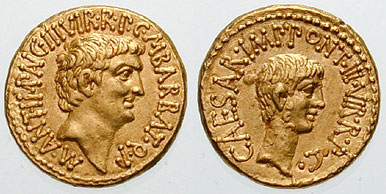
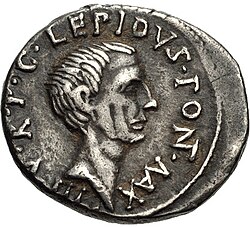
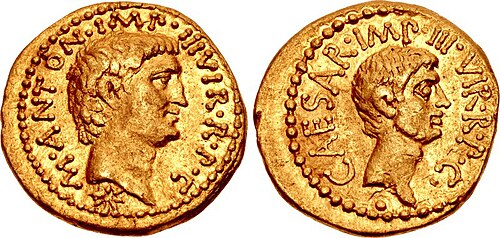
Aureus bearing the portraits of Mark Antony (left) and Octavian (right), issued in 41 BC to celebrate the establishment of the Second Triumvirate. Both sides bear the inscription III vir rpc, meaning 'Three Men for the regulation of the Republic'. Caption: m ant imp aug[j] iiivir rpc m barbat[k] q p / caesar imp pont iiivir rpc.[127][128]Denarius of 42 BC depicting Marcus Aemilius Lepidus; the inscription reads III v(ir) r(ei) p(ublicae) c(onstituendae) Lepidus pont(ifex) max(imus) ('Triumvir for the regulation of the republic, Lepidus, Pontifex maximus').
As the alliance frayed, Octavian systematically marginalized Lepidus and entered a protracted struggle for dominance against Mark Antony. This conflict was further complicated by Antony's alliance with Cleopatra VII of Egypt, which Octavian used to paint Antony as a man corrupted by foreign influence.
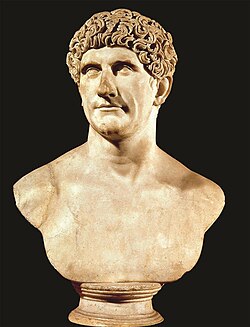
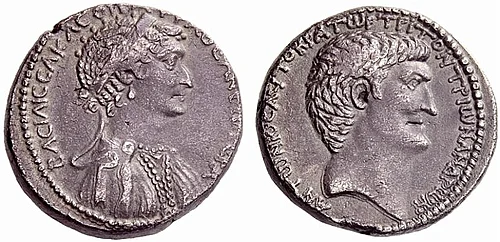
Flavian-era bust traditionally identified as Mark Antony, Vatican MuseumsCleopatra and Mark Antony on the obverse and reverse, respectively, of a silver tetradrachm struck at the mint of Antioch in 36 BC, with Greek legends
The Path to Sole Rule
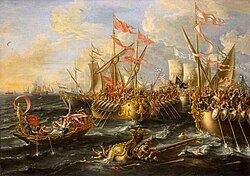
The rivalry culminated in the Battle of Actium in 31 BC, a decisive naval engagement that left Octavian as the undisputed master of the Roman world. Following the suicides of Antony and Cleopatra, Octavian seized control of Egypt, incorporating its vast wealth into the Roman treasury.
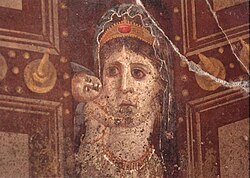
The Battle of Actium, by Laureys a Castro, painted 1672 National Maritime Museum, LondonThis mid-1st-century BC Roman wall painting in the House of Marcus Fabius Rufus, Pompeii, is most likely a depiction of Cleopatra VII of Ptolemaic Egypt as Venus Genetrix, with her son Caesarion as Cupid, similar in appearance to the now-lost statue of Cleopatra erected by Julius Caesar in the Temple of Venus Genetrix (within the Forum of Caesar). Its owner walled off the room with this painting, most likely in immediate reaction to the execution of Caesarion on orders of Augustus in 30 BC, when artistic depictions of Caesarion would have been considered a sensitive issue for the ruling regime.[249]
The Principate: A New Order
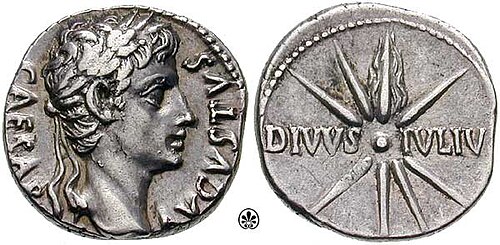
A denarius coin of Augustus minted c. 18 BC. Obverse: CAESAR AVGVSTVS; reverse: Caesar's comet with eight rays and an upward tail; DIVVS IVLIV[S], "divine Julius".
In 27 BC, Octavian performed a calculated political maneuver: he ostensibly "returned" his powers to the Senate. In exchange, the Senate granted him the title Augustus ("the revered one"). This established the Principate, where Augustus ruled as Princeps (First Citizen), maintaining the illusion of a Republic while holding total control over the military and provinces.
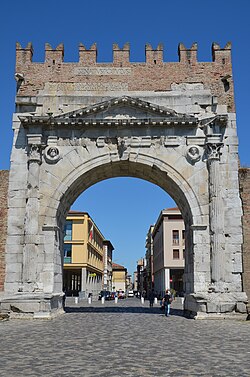
The Arch of Augustus in Rimini (Ariminum), dedicated to Augustus by the Senate in 27 BC, is one of the oldest preserved triumphal arches in Italy.[332]
Consolidation of Power
Augustus expanded his authority through several "settlements" with the Senate, granting himself imperium (supreme command) over key provinces and the powers of a tribune, which gave him the right to veto legislation and protect the plebeians. He also assumed the role of Pontifex Maximus, the chief priest of the Roman state, in 12 BC.
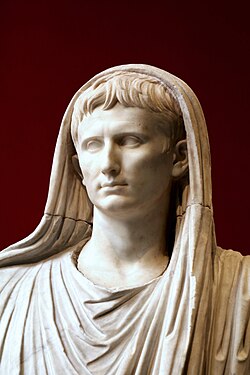
The head of the Via Labicana Augustus statue depicting the emperor as pontifex maximus, Roman artwork of the late Augustan period, last decade of the 1st century BC
Administrative and Revenue Reforms
Beyond politics, Augustus overhauled the Roman economy and infrastructure. He implemented revenue reforms to stabilize the treasury and launched massive building projects, famously claiming to have found Rome a city of brick and left it a city of marble.
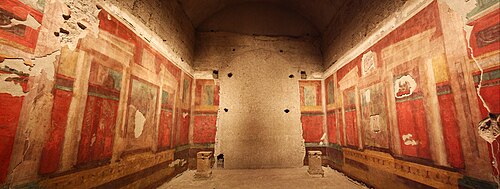
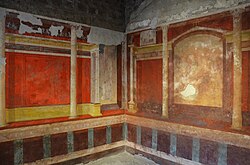
Fresco paintings inside the House of Augustus, his alleged but not verified residence on the Palatine Hill during his reign as emperor[280]A corner of the lower cubiculum in the House of Augustus on the Palatine Hill in Rome, with Pompeian second style frescos
Legacy and Succession
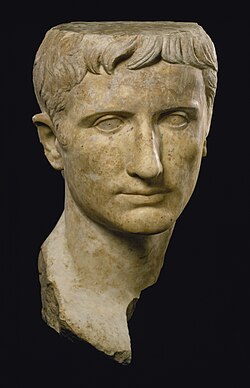
Sculpted marble head of triumvir Octavian dated roughly to the Battle of Philippi in 42 BC, Archaeological Museum of Spoleto
Augustus spent his final years securing a stable succession. After the deaths of several potential heirs, he designated Tiberius as his successor. Augustus died in Nola on August 19, AD 14, at the age of 75. Following his death, he was deified, becoming a god in the eyes of the Roman state.
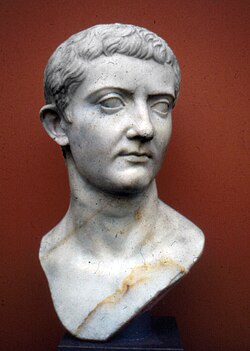
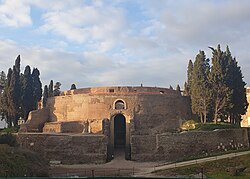
Bust of Tiberius, a successful military commander under Augustus who was designated as his heir and successor, Ny Carlsberg Glyptotek, CopenhagenThe Mausoleum of Augustus restored, 2021
Cultural and Artistic Impact
The "Augustan Age" was a golden era for Roman literature and art. Augustus patronized poets like Virgil, whose epic The Aeneid linked the origins of Rome to the gods and the Julian line. In art, Augustus used idealized portraiture to project an image of eternal youth, wisdom, and divine favor.
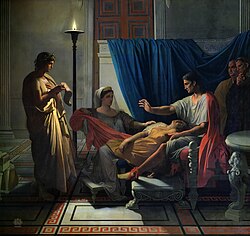
Portraits of Augustus show the emperor with idealized features.Virgil reading The Aeneid before Augustus, Livia and Octavia, by Jean-Auguste-Dominique Ingres, 1812, Musée des Augustins; Octavia the Younger allegedly fainted during a public reading of the Aeneid in Rome by Virgil, becoming emotionally overwhelmed during the passage about the death of her son Marcus Claudius Marcellus.[604]
Category
Details
Early Name
Gaius Octavius
Key Alliances
Second Triumvirate (Antony, Lepidus)
Major Conflicts
Battle of Philippi, Battle of Actium
Government Model
The Principate
Key Spouse
Livia (m. 38 BC)
Death
AD 14 in Nola
Frequently Asked Questions
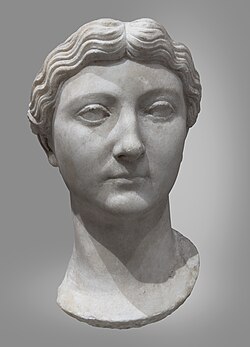
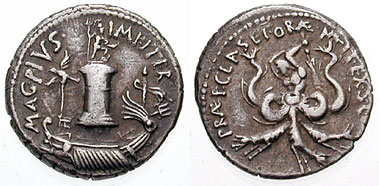
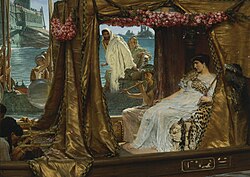
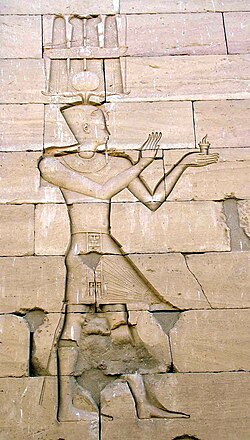
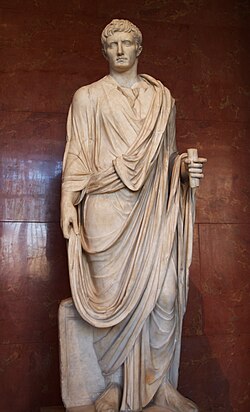
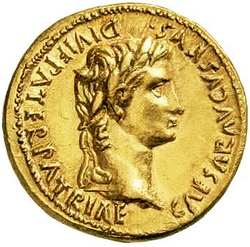
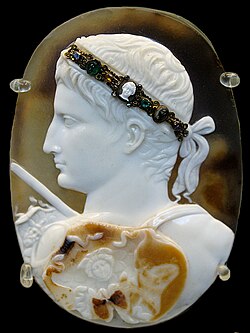
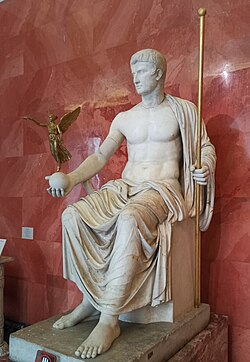
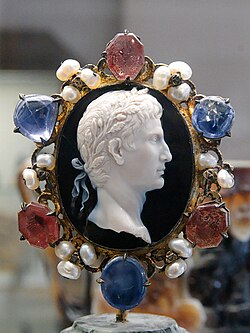
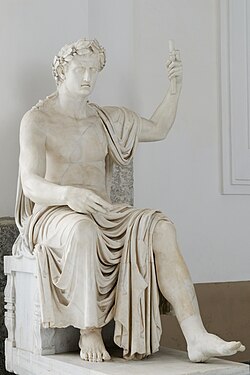
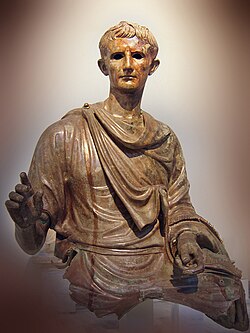
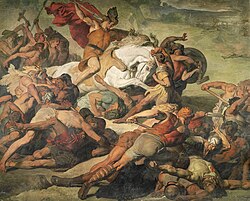
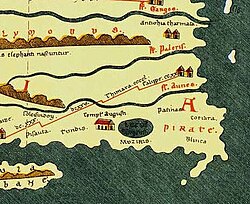
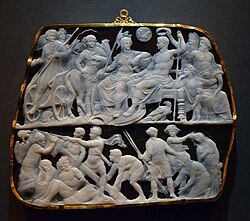
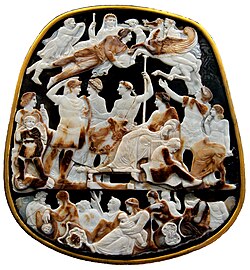
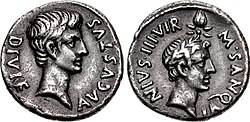
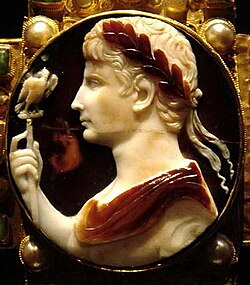
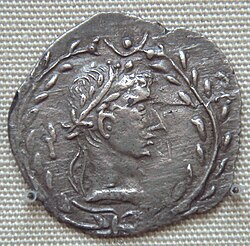
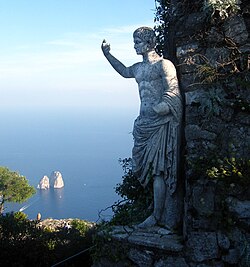
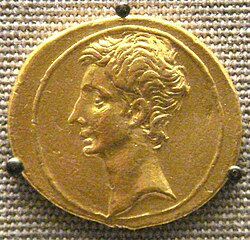
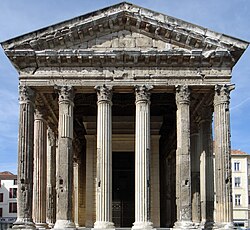
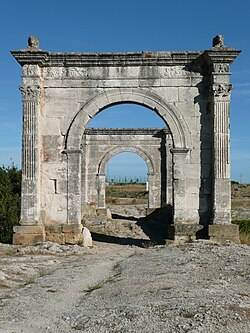
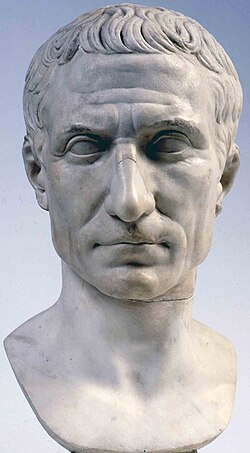
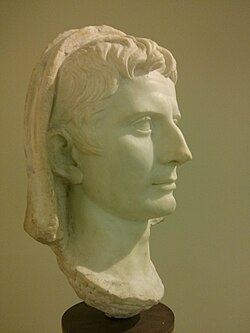
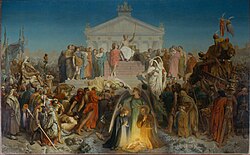
Roman aureus bearing the portraits of Mark Antony (left) and Octavian (right), issued to celebrate their reconciliation in October 40 BCA Roman bust of Livia, Augustus's third wife, Musée Saint-Raymond, FranceA denarius of Sextus Pompey, minted for his victory over Octavian's fleet. Obverse: the place where he defeated Octavian, Pharus of Messina decorated with a statue of Neptune; before that galley adorned with aquila, sceptre & trident; MAG. PIVS IMP. ITER. Reverse, the monster Scylla, her torso of dogs and fish tails, wielding a rudder as a club. Caption: PRAEF[ECTUS] CLAS[SIS] ET ORAE MARIT[IMAE] EX S. C.Antony and Cleopatra, by Lawrence Alma-Tadema, painted 1885Augustus as Roman pharaoh in an Egyptian-style stone carving at the Temple of Kalabsha in Nubia; Augustus was commonly depicted in Egyptian art performing sacrifices to Egyptian deities.[268]Octavian as a magistrate. The statue's marble head was made c. 30–20 BC, the body sculpted in the 2nd century AD (Louvre, Paris)Aureus coin of Augustus minted c. AD 13, marked: Caesar Augustus Divi F Pater PatriaeThe Blacas Cameo showing Augustus wearing a gorgoneion on a three layered sardonyx cameo, and wearing a diadem that was added during the Middle Ages,[348] and original artwork dated to AD 20–50Augustus as Jupiter, holding a scepter and orb (first half of the 1st century AD), Hermitage MuseumPortrait of Augustus. Sardonyx cameo; gilt silver mount with pearls, sapphires and red glass beads, 16th/17th centuries.A colossal statue of Augustus from the Augusteum of Herculaneum, seated and wearing a laurel wreathBust of Augustus wearing the Civic Crown, at Glyptothek, MunichA fragment of an equestrian statue of Augustus, 1st century BC, National Archaeological Museum, AthensDer siegreich vordringende Hermann (The Victorious Advancing Hermann), depiction of the Battle of the Teutoburg Forest, by Peter Janssen, 1873Muziris in the Chera Kingdom of Southern India, as shown in the Tabula Peutingeriana, with depiction of a temple of Augustus (Templum Augusti)The Gemma Augustea, a two-layered sardonyx depicting Augustus seated next to the goddess Roma, with Augustus equated as Jupiter as he looks on at a figure riding in a chariot (likely his heir Tiberius celebrating his triumph for victories in Germania), 9–12 AD, Kunsthistorisches Museum, Vienna[491]The deified Augustus hovers over Tiberius and other Julio-Claudians in the Great Cameo of France, 1st century ADA coin of Augustus struck at Rome in 17 BC depicting Augustus on the obverse and the deified Julius Caesar beneath Caesar's comet on the reverseThe Roman cameo of Augustus at the center of the medieval Cross of Lothair, housed in the Aachen Cathedral TreasuryCoin of the Himyarite Kingdom in the southern Arabian peninsula, in imitation of coins of Augustus, 1st century ADStatue of Augustus at Monte Solaro on the island of Capri in Campania, Italy, overlooking the Gardens of AugustusAureus of Octavian, c. 30 BC, British MuseumThe Temple of Augustus and Livia in Vienne, France, late 1st century BCRemains of the Pont Flavien bridge along the Via Julia Augusta in Saint-Chamas, Bouches-du-Rhône, FranceThe Chiaramonti Caesar bust, a posthumous portrait of Julius Caesar in marble, 44–30 BC, Museo Pio-Clementino, Vatican MuseumsVeiled head of Augustus, 1st century BC, National Archaeological Museum of the MarchesThe Age of Augustus, the Birth of Christ, c. 1852–1854, by Jean-Léon Gérôme, Musée de Picardie
How did Octavian become Augustus?
After defeating Mark Antony and Cleopatra at the Battle of Actium, Octavian consolidated power. In 27 BC, he nominally returned his emergency powers to the Senate, which in turn granted him the honorary title "Augustus," marking the formal beginning of his reign as the first emperor.
What was the Second Triumvirate?
The Second Triumvirate was a legal political alliance formed in 43 BC between Octavian, Mark Antony, and Lepidus. Its primary goal was to stabilize the Roman state and eliminate the assassins of Julius Caesar.
What is the Principate?
The Principate was the first period of the Roman Empire, characterized by a system where the emperor (the Princeps) held absolute power but maintained the outward appearance and traditional titles of the Roman Republic to avoid appearing as a tyrant.
Who succeeded Augustus?
Augustus was succeeded by his stepson and adopted son, Tiberius, who became the second Roman emperor in AD 14.
What was the Pax Romana?
The Pax Romana, or "Roman Peace," was a long period of relative stability and minimal expansionist warfare within the Roman Empire, initiated by the reign of Augustus.