Least Concern Species and the IUCN Red List
In the global effort to protect biodiversity, scientists use standardized systems to determine which animals and plants need urgent protection. One of the most common designations used by the International Union for Conservation of Nature (IUCN) is the category of Least Concern. This classification identifies species that are currently plentiful in the wild and do not require immediate conservation intervention.
A species is designated as Least Concern when it has been evaluated and found not to qualify as threatened, near threatened, or conservation dependent. Essentially, these species are considered stable enough that they are not a primary focus of wildlife conservation efforts.
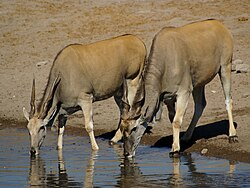
The Evaluation Process
It is a common misconception that any common animal is automatically labeled as Least Concern. In reality, a species cannot be assigned this category without a formal evaluation. Experts must gather adequate information to make a direct or indirect assessment of the species' risk of extinction, focusing specifically on its distribution (the geographic area where it is found) and its population status.
Evolution of the Classification System
The way these species are coded has changed over time. Since 2001, following the IUCN 2001 Categories & Criteria (version 3.1), the abbreviation LC has been used. Prior to 2001, Least Concern was a subcategory of "Lower Risk," denoted by the codes LR/lc or lc.
Interestingly, a significant portion of the database still reflects these older standards. Approximately 20% of Least Concern taxa—specifically 3,261 out of 15,636—still carry the LR/lc code, indicating they have not undergone re-evaluation since the year 2000.
Species Statistics and Distribution
While the IUCN does not consider Least Concern to be a "red listed" category (as it does not signify a threat), the 2006 IUCN Red List assigned this status to 15,636 taxa (groups of one or more natural closely related organisms).
The breakdown of these classifications reveals a wide variety of life forms:
- Animals: 14,033 species, including several undescribed species such as a frog from the genus Philautus, and 101 animal subspecies.
- Plants: 1,500 taxa, consisting of 1,410 species, 55 subspecies, and 35 varieties.
- Humans: Homo sapiens were formally assessed as a species of Least Concern in 2008.
In contrast, the kingdoms of fungi and protista have seen very little activity in this regard; only four species across both kingdoms have been evaluated by the IUCN, and none have been classified as Least Concern.
| Group | Number of Taxa | Notes |
|---|---|---|
| Total Taxa | 15,636 | Overall LC classification |
| Animals | 14,134 | Includes 14,033 species and 101 subspecies |
| Plants | 1,500 | Includes species, subspecies, and varieties |
| Fungi/Protista | 0 | None of the 4 evaluated species fit LC |
Key Facts
- LC is the current abbreviation for Least Concern, replacing the pre-2001 LR/lc code.
- A species must be formally evaluated based on population and distribution before being labeled Least Concern.
- Humans (Homo sapiens) were officially categorized as Least Concern in 2008.
- As of 2006, over 14,000 animal species were classified in this category.
- Least Concern species are not considered "red listed" because they are not currently threatened.
Frequently Asked Questions
What does it mean for a species to be of Least Concern?
It means the species has been evaluated by the IUCN and determined to be plentiful enough in the wild that it does not qualify as threatened or near threatened, and therefore is not a primary focus of conservation.
Can a species be Least Concern without being studied?
No. A species cannot be assigned the Least Concern category unless it has undergone a population status evaluation with enough data to assess its risk of extinction.
Why do some species still have the code LR/lc?
The code LR/lc was used before 2001. Species still carrying this code have not been re-evaluated under the current IUCN 2001 Categories & Criteria (version 3.1).
Are humans considered a Least Concern species?
Yes, humans (Homo sapiens) were formally assessed and categorized as a species of Least Concern in 2008.
Which kingdoms have the fewest Least Concern classifications?
Fungi and protista have the fewest; in fact, none of the four evaluated species in these kingdoms have been classified as Least Concern.